


How Oklahoma's prison chief handed a million-dollar AI contract to a private company, then walked straight through the door to work for them — leaving the state's most dangerous prison in chaos and no one held accountable.
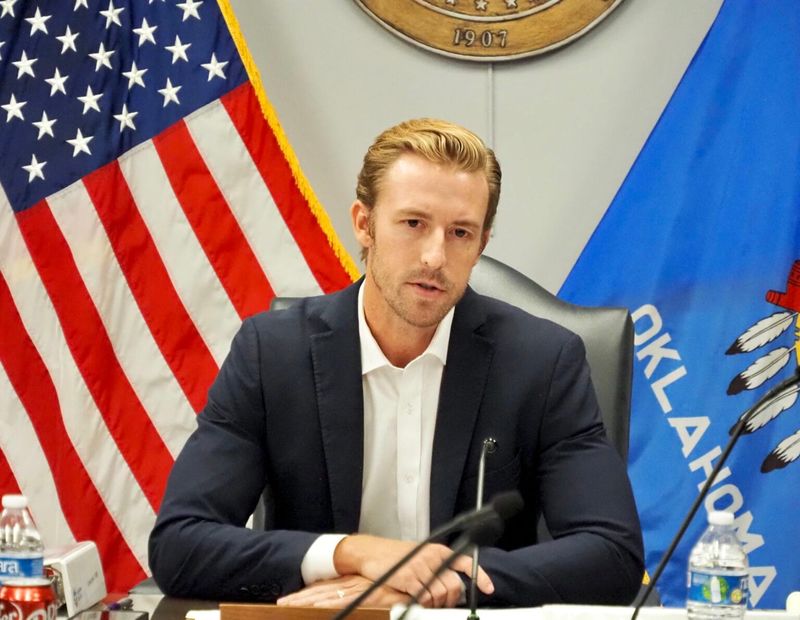
On April 3, 2025, Steven Harpe sat behind the desk of the Oklahoma Department of Corrections director and signed his name to a contract worth more than a million dollars. The deal gave LEO Technologies — an Austin, Texas-based artificial intelligence company — access to seven state prisons, including the Oklahoma State Penitentiary in McAlester, to deploy software that monitors and analyzes inmate phone calls.
Five months later, he was gone — not just from the corrections department, but into the employ of the very company he had just paid. On October 3, 2025, Harpe posted on LinkedIn that he had accepted the position of chief product officer at LEO Technologies. More than 80 people congratulated him, including two members of the state's Board of Corrections.
What followed was not a swift reckoning. It was something far more familiar to Oklahomans who have watched powerful men navigate the state's porous ethics landscape: a cascade of statements, investigations announced but not concluded, laws written but not yet enforced, and a contract that — as of this writing — remains active through 2027, still funneling taxpayer dollars to the company that now employs the man who approved it.
For the communities of Eastern Oklahoma, where the penitentiary in McAlester has anchored local life and local grief for over a century, this is not just a story about a bureaucrat gaming the system in Oklahoma City. It is about what happens to a prison — and the people inside it, and the guards watching over them — when the people at the top treat public institutions as stepping stones to private profit.
The Governor's Man
To understand how Steven Harpe came to run Oklahoma's prisons, you have to understand how Kevin Stitt runs Oklahoma.
Stitt, a Tulsa mortgage executive who had never held public office before winning the governorship in 2018, built his administration around a core belief: that government should operate more like a business, and that the people best suited to make it do so were the ones who had already succeeded in the private sector. The results have been uneven at best. At worst, they produced a parade of politically connected appointees with thin public-sector experience and thick personal ties to the governor's world.
Harpe was, by almost any measure, a Stitt loyalist. He worked as chief information officer for Stitt's Gateway Mortgage Group before entering state government in 2019. From there he rose to lead the Oklahoma Office of Management and Enterprise Services, and eventually the corrections department — one of the most consequential agencies in state government, responsible for more than 24,000 inmates across dozens of facilities, including the Oklahoma State Penitentiary, whose limestone walls have loomed over McAlester since 1908.
At the DOC, Harpe developed a reputation as a technology evangelist. He promoted artificial intelligence aggressively, in media interviews, at out-of-state conferences, and eventually before Congress itself. In July 2025 — just months before his departure — he traveled to Washington to represent the American Correctional Association at a congressional briefing on AI in public safety, touting surveillance systems that could use facial recognition to track inmates in real time, detect concealed contraband, and flag suicidal behavior.
"What if I was able to take that labor and instead of using people to do it, I was using facial recognition AI," he told lawmakers. "I always know where they are."
It was a compelling pitch. It was also, in retrospect, a promotional tour for the very category of products that LEO Technologies sells — and that Harpe had just agreed to buy from them.
The Contract and the Clock
The timeline, when laid out plainly, is difficult to explain away.
On April 3, 2025, Harpe authorized the one-year, $1.017 million deal with LEO Technologies. Final agency approval came April 8. In July, he was in Washington promoting AI prison technology to Congress. In late August, he announced he was leaving state service to "rejoin the private sector" — without naming which company. His last day was September 30. Three days later, he was on LinkedIn announcing his new role at LEO Technologies.
Oklahoma law is clear on paper. Title 74, Section 590 of the Oklahoma Statutes forbids a state officer or employee who exercises decision-making authority in awarding a contract from becoming an employee of that business within one year of the award date. The law has been on the books since 1999. In 2009, the legislature updated it to include sanctions for companies that hire a violating official.
But the law has a flaw that proved, in this case, to be a gap large enough to drive a career through: it does not specify which state agency is responsible for enforcing it. The Ethics Commission pointed toward the attorney general. The attorney general's office, months after announcing an investigation, produced no charges. And so the clock on the one-year cooling-off period quietly ran out while agencies argued over who was supposed to be watching the door.
"It's a sad day in this state when directors of agencies even recommend the award of a contract and months later go to work for that same company," said Bob Burke, an Oklahoma City attorney and historian. "The appearance stinks."
Big Mac, Understaffed and Unraveling
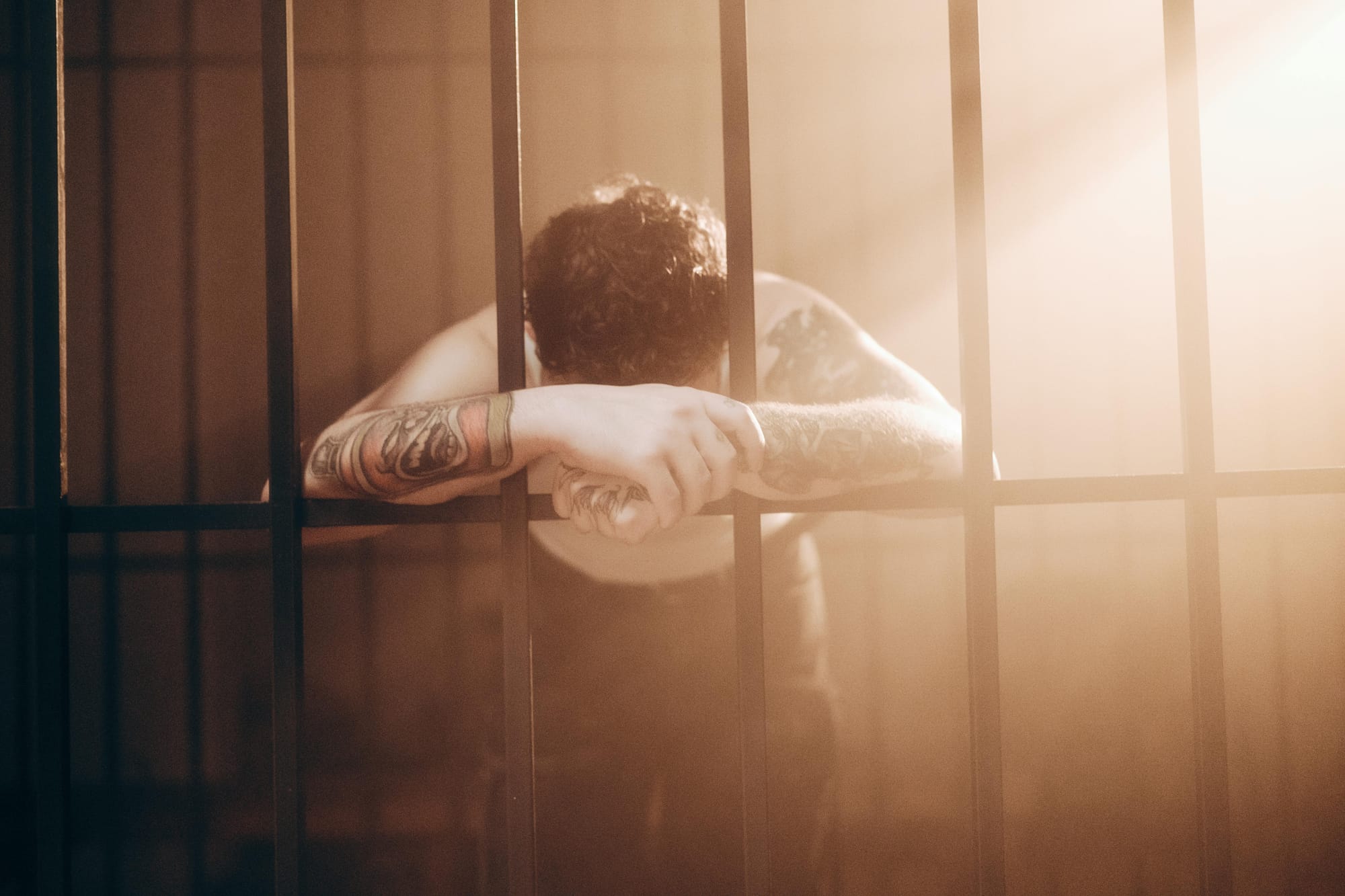
Five hours southeast of Oklahoma City, past rolling hills and small towns and the Ouachita foothills, the Oklahoma State Penitentiary sits on the outskirts of McAlester like a fortress from another era. Known statewide as "Big Mac," it is a maximum-security facility that houses death row and some of the state's most dangerous offenders. It is also, by almost every available measure, a prison in crisis.
While Harpe was evangelizing AI surveillance on Capitol Hill, the people actually working inside facilities like Big Mac were sounding very different alarms. At a legislative interim study in October 2024, a former warden testified that conditions had deteriorated to a degree he had never seen in his career. Contraband, he said, was at its highest level in memory. The director's position, which once required a master's degree, now required only five years of professional experience and no degree at all.
Bobby Cleveland, executive director of Oklahoma Corrections Professionals, told lawmakers flatly: "They don't respect the inmates, and they don't respect the employees."
One case, brought to the legislature's attention by Rep. Justin Humphrey of Lane, cut to the heart of what institutional neglect looks like at its worst. A young man named Mar'Quiel Ross had been sentenced for being a passenger in an allegedly stolen vehicle — a minor conviction that typically sends someone to minimum security. Instead, he was placed at the Oklahoma State Penitentiary. He was killed by other inmates. His family found out he was dead not from the Department of Corrections, but from another inmate. The DOC did not contact the family until seven days after his body had been sent to a funeral home. When legislators began asking questions, documents surfaced suggesting that his scheduled release date had been altered — possibly to obscure the fact that he died after he should have already been free.
These are not the failures of a department running well but afflicted by one bad actor. They are the symptoms of an institution that has, for years, lacked the experienced leadership and culture of accountability that safe prisons require.
A Pattern, Not an Anomaly
Harpe's revolving door is not an isolated incident. It is one thread in a pattern that critics — including legislators from the governor's own party — have traced across multiple agencies.
Humphrey, in letters demanding an attorney general investigation, did not limit his accusations to the LEO Technologies contract. He alleged that Harpe gave himself an unauthorized $90,000 raise, taking his salary to $275,000 annually — among the highest for a corrections director in the country, even though Oklahoma's DOC is smaller than those of many comparable states. He alleged that Harpe replaced experienced career employees with friends who had no relevant experience. He alleged missing funds and mismanagement of contracts at the Office of Management and Enterprise Services, which Harpe had also led.
None of these claims have been formally adjudicated. The picture they paint, even if only partially accurate, is of a man who treated state leadership not as a public trust but as a career platform.
The governor's office said it was unaware of Harpe's employment plans when he resigned. That answer strained credulity given how closely Harpe had been tied to Stitt's agenda — but it has not been formally disputed. Meanwhile, Harpe appeared in promotional videos for LEO Technologies as early as February 2026, burnishing the company's credibility with his state credentials at the same time the AG's office was supposedly investigating whether his hiring violated the law.
Closing the Door — Maybe
In April 2026, Oklahoma lawmakers moved to address the loophole. House Bill 3279, advanced by Rep. John Pfeiffer with the support of the attorney general's office, would give the AG explicit authority to terminate agreements and seek monetary damages when a state employee violates the cooling-off period. It would also bar the offending company from doing business with the state for at least three years.
On the House floor, Pfeiffer declined to name Harpe directly. "This will fix a scenario that we had with a certain agency director signing contracts and then going to work for them," he said.
The bill passed unanimously out of the Senate Retirement and Government Resources Committee. Whether it becomes law, and whether it does anything to address the harm already done — to taxpayers, to the state's credibility, and most of all to the people locked inside facilities like the Oklahoma State Penitentiary — remains to be seen.
For the families in McAlester and across Eastern Oklahoma who depend on that prison for jobs, who have loved ones behind its walls, or who simply live in communities that bear the consequences when the corrections system fails, a bill that closes a future loophole is cold comfort. The man who walked through the door is already on the other side. The contract is still running. And the prison he left behind is no safer for his having been there.
What Accountability Looks Like — and What It Doesn't
There is a version of this story that ends with a perp walk. In Oklahoma's history, that has happened before — to governors, to Supreme Court justices, to hundreds of county commissioners in what became the largest public corruption case in American history at the time. The FBI and the IRS have, more than once, done what state officials could not or would not do.
This story has not ended that way. Not yet, and perhaps not ever. What it has produced instead is a familiar Oklahoma outcome: a law that should have prevented wrongdoing, a violation that appears to have occurred in plain sight, investigations announced with fanfare and concluded with silence, and a new law being written to ensure it doesn't happen again — with nothing done about the time it already did.
For Eastern Oklahomans, that is not an abstract disappointment. The Oklahoma State Penitentiary is a fact of life in Pittsburg County the way the Arkansas River is a fact of life in Muskogee — it shapes the economy, the family histories, the daily rhythms of communities that have no choice but to live alongside it. When it is run well, with experienced leadership and honest stewardship of public dollars, it functions. When it is run by political appointees more interested in their next career move than in the hard, unglamorous work of managing a maximum-security prison, people get hurt.
Mar'Quiel Ross got hurt. The guards who show up every day to an understaffed facility get hurt. The inmates who are supposed to be held safely get hurt. And the taxpayers of Eastern Oklahoma — who funded the salary of a man apparently auditioning for a private-sector job while holding public office — get hurt.
The revolving door at Big Mac is not just a metaphor. It is a policy failure, an accountability failure, and a human failure. And until someone is actually held responsible for it, it will keep spinning.
EastOklahoma.com — Independent Journalism for Eastern Oklahoma
This report draws on public records, legislative testimony, and reporting by Oklahoma Watch, the Oklahoma Voice, and the Oklahoma House of Representatives public record. Tips or documents related to this story? Contact the EastOklahoma.com newsroom.