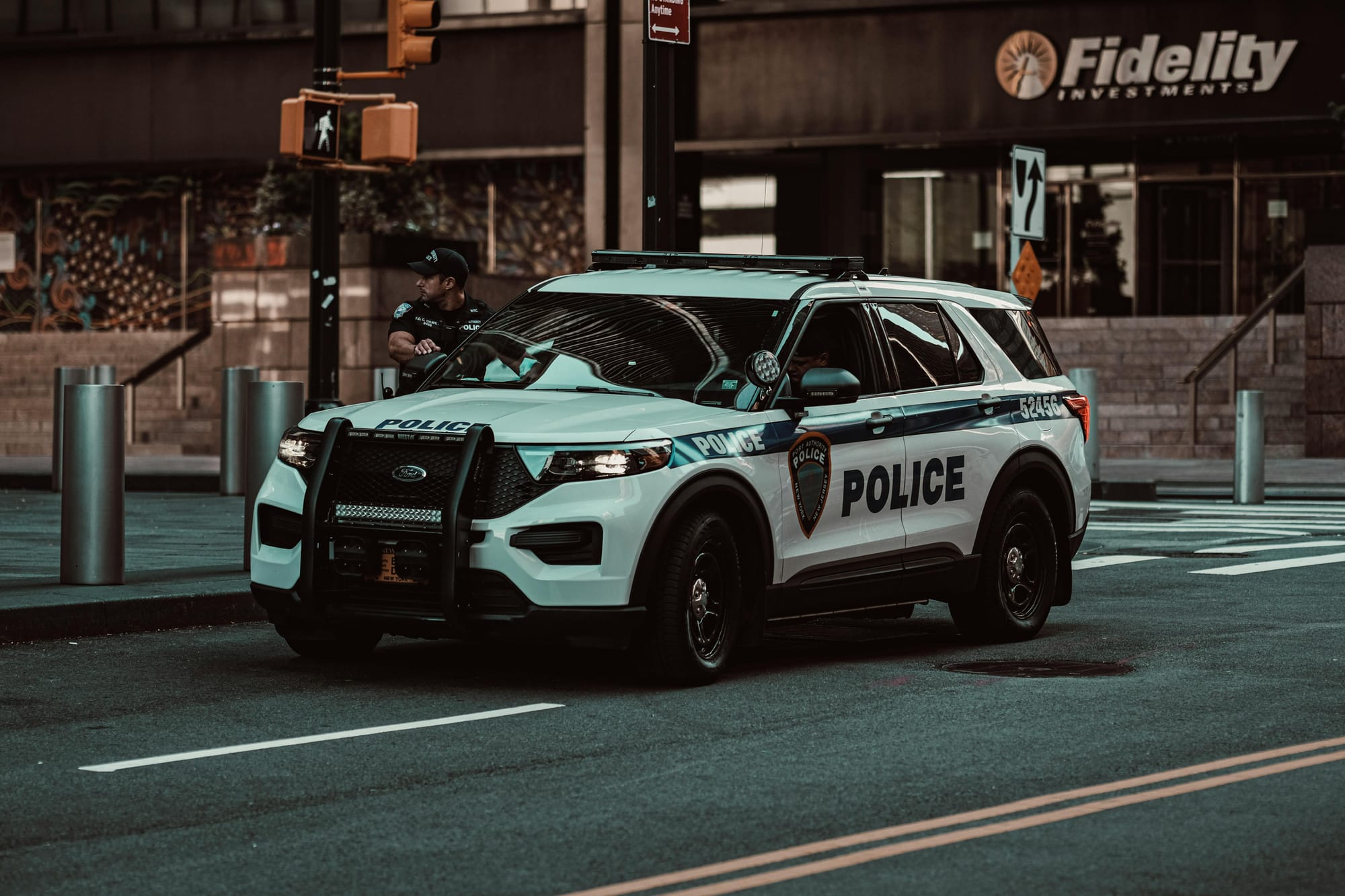


On the night of November 2, 2022, a woman named K.H. was riding in a car on a rural road in Pittsburg County when a Savanna Police Department cruiser lit up behind her. She had no reason to believe the stop would be anything more than routine. Her boyfriend was driving. The license issue, if there was one, was his. She was a passenger.
What happened over the next several minutes — inside a patrol car belonging to a police department serving a town of fewer than 700 people, nine miles south of McAlester on U.S. Highway 69 — would eventually land a federal officer in prison for 40 years, put Eastern Oklahoma at the center of a national legal milestone, and raise questions about small-town police oversight that still haven't been fully answered.
The officer's name was Jeffrey Scott Smith. It was his first solo shift.
A Town and Its Police Department
Savanna is the kind of Eastern Oklahoma town that most people pass through without stopping. It sits just off Highway 69, a flat stretch of Pittsburg County where the landscape opens up south of McAlester's prison and courthouse complex. The 2020 census counted 623 residents. The town traces its roots to a Choctaw Nation settlement in the 1860s, boomed briefly on coal mining in the 1880s, and has spent the better part of a century shrinking. Median household income hovers around $28,000. About 15 percent of families live below the poverty line.
Its police department is correspondingly small — a chief, an assistant chief, and a handful of officers covering a jurisdiction of roughly 1.4 square miles. Like most micro-department forces in rural Oklahoma, it operates on tight budgets, limited oversight, and the assumption that the officers it hires are who they say they are.
Jeffrey Scott Smith was 35 years old when he was hired. Court documents and federal prosecutors did not disclose his prior employment history or how long the hiring process took. What is documented is the fact that on November 2, 2022, he was working his very first solo patrol shift — meaning he had not yet completed supervised field training. He was, by any standard definition, a rookie officer, alone in a cruiser for the first time, given the full powers of arrest and the full authority of the badge.
What he did with that authority that night is now a matter of federal record.
The Stop
According to evidence presented at trial and in federal court documents, dispatch notified Smith that evening that the license of one of the vehicle's occupants was expired. He pulled the car over. Running the licenses of K.H. and her boyfriend, J.G., he confirmed that J.G.'s license had recently expired. He told the two passengers to get out and swap seats, placing K.H. behind the wheel. He then wrote J.G. a speeding ticket.
At that point, the stop should have been over.
Instead, Smith began asking personal questions. He asked K.H. how long she and J.G. had been in a relationship. He asked her where she worked. She reluctantly told him she danced at a gentlemen's club. According to prosecutors, it was at that moment — after she disclosed her occupation — that Smith's behavior shifted.
He asked to search the vehicle. During the search, he looked through K.H.'s purse and found a pre-rolled promotional marijuana cigarette from her workplace — the kind distributed as promotional merchandise by cannabis businesses. He did not issue a citation. He did not arrest her. He walked back to his patrol car.
Once there, he manually deactivated his dashboard camera.
He had already, earlier in the stop, manually deactivated his body-worn camera.
Both cameras off, he brought K.H. into the patrol vehicle. Then he sexually assaulted her.
K.H. reported the assault. Not days later. Not after deliberating about whether to come forward, weighing whether anyone would believe her, calculating the risk of going up against a police officer in a county where his colleagues would investigate the complaint. She reported it immediately. That decision would eventually make history.
The Legal Gap That Let Officers Escape Felony Charges
For decades before November 2022, the federal law governing civil rights violations by law enforcement had a built-in loophole that advocates for sexual assault survivors considered a scandal in its own right.
Under the existing statute — 18 U.S.C. § 242, the deprivation of rights under color of law — most sexual assaults committed by officers acting in their official capacity were classified as misdemeanors unless the assault also involved additional factors like a weapon, physical force causing bodily injury, or kidnapping. The reasoning, such as it was, reflected a legal structure built around physical violence as the primary harm.
The consequence was stark: an officer who punched a handcuffed suspect in the face, causing a cut, faced a felony charge carrying up to 10 years. An officer who used the coercive power of the badge — the threat of arrest, the authority to detain, the physical reality of a locked patrol car — to sexually assault a victim could walk away with a misdemeanor charge and minimal prison time.
As the Justice Department's Office on Violence Against Women described it after the law changed: such offenders "do not need to resort to causing bodily injury, using an actual weapon, or employing physical force during a sexual assault because they wield the weapon of authority to gain submission." The law was treating assaults by officers against women as categorically less serious than physical assaults by officers against men — a disparity that civil rights advocates had raised for years.
The 2022 reauthorization of the Violence Against Women Act, signed by President Biden on March 15, 2022, changed that. A new statute, 18 U.S.C. § 250, created graduated felony penalties specifically for civil rights violations involving sexual misconduct — bringing the penalty structure in line with the existing penalties for physical force. Sexual assault under color of law was now a federal felony carrying up to 40 years.
The ink was barely dry when Jeffrey Scott Smith committed his crime. The assault on K.H. occurred on November 2, 2022 — less than eight months after the new law took effect.
The Investigation, the Indictment, and the Trial
After K.H. reported the assault, the Oklahoma State Bureau of Investigation and the FBI Oklahoma City Field Office launched a joint investigation. The case was referred to federal prosecutors in Muskogee — the seat of the U.S. Attorney's Office for the Eastern District of Oklahoma, which handles the 26 counties of eastern Oklahoma, the only federal district in the country lying entirely within Indian Country.
Smith was fired from the Savanna Police Department. In August 2023, a federal grand jury in Muskogee returned a three-count indictment against him: one count of deprivation of rights under color of law — the civil rights violation — and two separate counts of obstruction of justice, one for each camera he had deliberately deactivated.
The obstruction counts were notable in their specificity. Prosecutors were not arguing that cameras malfunctioned or that recordings were accidentally lost. The evidence showed Smith had manually turned off the body-worn camera while still in the early stages of the stop — before the search, before bringing K.H. to his vehicle. He then manually deactivated the dashboard camera at the moment he returned to the patrol car. The sequence, prosecutors argued, was deliberate and calculated: he eliminated the electronic record of what he was about to do before he did it.
Smith maintained his innocence. His defense attorney, John Cannon, said after the verdict that Smith "respects the jury's verdict but maintains his innocence."
The trial took place in early March 2024 in federal court. K.H. testified. The jury deliberated and returned guilty verdicts on all three counts. Smith was immediately detained pending sentencing.
On March 13, 2025, a federal judge sentenced him to 40 years in federal prison — the maximum available under the new VAWA enhanced penalties on the civil rights count.
It was the first conviction, and the first sentence, ever handed down under 18 U.S.C. § 250. Eastern Oklahoma had become the place where a law two years in the making was used for the first time.
What the Officials Said — and What They Didn't
The reaction from federal officials was expansive. The Department of Justice, the FBI, and the U.S. Attorney's office all issued statements.
"Smith's despicable acts traumatized the victim and soiled the reputation of the law enforcement community," said U.S. Attorney Christopher J. Wilson. "The sentence imposed is just punishment."
"The entire law enforcement profession is disparaged when an officer betrays the oath to protect and serve," said FBI Special Agent in Charge Doug Goodwater. "That is exactly what Mr. Smith did on his first solo shift as a police officer."
"Sexual assaults perpetrated by police officers are heinous crimes and a disgraceful breach of the public trust in law enforcement," said Assistant Attorney General Kristen Clarke of the DOJ's Civil Rights Division, who had called the conviction historic at the time of trial. "We acknowledge the victim's courage in coming forward and immediately reporting this abuse, and for her strength as she testified in trial."
What was notably absent from the public record was any statement from the Savanna Police Department itself. The department's Facebook page, which had previously posted routine updates, went quiet on the subject. The town of Savanna, population 623, offered no public accounting of how Smith was hired, what vetting process he underwent, whether his training was complete, or what changes — if any — the department made to its hiring and field training protocols afterward.
EastOklahoma.com sought comment from the Savanna Police Department and the City of Savanna for this article. No response was received by publication time.
The Questions That Remain Unanswered
The conviction and sentencing resolved the criminal matter. But several questions of substantial public interest remain open.
How was Smith hired, and what did the vetting process look like? Small police departments in rural Oklahoma frequently struggle to attract applicants. The competitive pressure to fill positions can, in some agencies, lead to compressed background checks or shortened pre-employment screening. Smith was on his first solo shift — meaning he had not yet completed field training. Was his hiring process standard? Were any red flags overlooked? Neither the department nor state regulators have addressed this publicly.
What is the status of the Savanna Police Department today? The department's leadership, listed publicly as a chief and assistant chief, has not commented on reforms undertaken in the wake of the case. Whether the department has updated its policies on body camera use, field training requirements, or officer conduct review is unknown.
Did K.H. pursue civil action? Federal criminal conviction does not automatically result in civil remedies for victims. Whether K.H. has filed or is pursuing a civil rights lawsuit against Smith and/or the City of Savanna is not reflected in publicly available court records as of this writing, but would be a significant development worth monitoring.
What does this mean for future prosecutions? Justice Department officials indicated at the time of the conviction that the Smith case would not be the last use of Section 250. The law is now established, tested, and upheld. How aggressively federal prosecutors — in Oklahoma and nationally — use it going forward remains to be seen, particularly given ongoing shifts in DOJ priorities under changing administrations.
Why K.H.'s Decision Matters
It is worth pausing on what K.H. did the night of November 2, 2022.
She had just been sexually assaulted by a uniformed police officer in his locked patrol car. She was a woman who worked in a profession that carries social stigma. She had a small amount of marijuana-related material in her purse — even if it was a promotional item, not a controlled substance she had purchased. She had every reason, by any realistic calculation of risk, to say nothing.
Women in her situation routinely say nothing. Research consistently shows that sexual assaults by law enforcement officers are among the most significantly underreported crimes in the country, precisely because the perpetrator is a person with institutional power, and because victims anticipate — often correctly — that they will not be believed, that they will be investigated rather than helped, and that nothing will happen.
K.H. reported it immediately anyway. She cooperated with investigators. She testified in open federal court. And because she did, a law that existed only on paper was invoked for the first time in American history, a man who might otherwise have faced a misdemeanor was sentenced to 40 years, and every officer in the country who might contemplate the same crime now operates under a different legal reality.
"We acknowledge the victim's courage in coming forward and immediately reporting this abuse," the Justice Department said, "and for her strength as she testified in trial."
That phrasing — formal, restrained, institutional — understates what K.H.'s decision actually accomplished. She changed the law's practical meaning by forcing it to be used. She did that in a federal courtroom in Muskogee, at the end of a process that started on a dark road in Pittsburg County because she refused to stay silent.
The Larger Pattern: Small Departments, Big Risks
The Savanna case is extreme in its outcome — 40 years in prison, a national legal first — but it is not unique in its setting. Rural and small-town police departments across Eastern Oklahoma and the broader region face structural challenges that create conditions for misconduct to go undetected.
Small agencies often have minimal internal affairs capacity. Oversight from county sheriffs or state regulators is limited. Community members who experience misconduct may know the officer personally, may fear retaliation, or may simply not know their rights. Body cameras, when they exist, may have inconsistent use policies — or, as in the Smith case, may be manually defeated by officers who know exactly what they're about to do and want no record of it.
Oklahoma's Council on Law Enforcement Education and Training, or CLEET, certifies officers and can revoke certification for misconduct. Smith's certification would have been revoked following his conviction. But CLEET certification records are not proactively published in a searchable public format, and the decertification process is reactive — it responds to documented misconduct rather than predicting it.
The broader national picture is sobering. A 2019 investigation by the Associated Press found that roughly 1,000 officers had been decertified for sexual misconduct over a ten-year period — and that an unknown additional number had resigned before formal action was taken, in some cases moving to other jurisdictions and continuing to work in law enforcement. The "wandering officer" problem — in which officers fired or pressured out of one department turn up hired by another — is particularly acute in rural areas where hiring pools are thin and information sharing between agencies is limited.
Whether Jeffrey Smith had a prior history in law enforcement before joining the Savanna Police Department is a matter of public record that this outlet was unable to confirm at the time of publication. It is a question worth asking.
A Precedent Set in Eastern Oklahoma
Federal cases tend to be decided in large cities — courthouses in Oklahoma City, Tulsa, Houston, Chicago. The cases that define legal eras tend to be associated with those places, with the institutions and resources they represent.
The first conviction under the enhanced VAWA civil rights penalties was handed down in Muskogee. The crime occurred in Pittsburg County. The defendant policed a town of 623 people. The victim was a woman driving home from work.
This corner of Oklahoma — the Eastern District, Indian Country, the piney hills and small county seats that the rest of the country rarely notices — is where the law changed. Prosecutors here, working with FBI agents out of Oklahoma City, took a case that in any prior era would have resulted at most in a misdemeanor plea and instead made it a national landmark.
That matters for residents of Eastern Oklahoma. It means that when an officer in a small department in Pittsburg County, or Latimer County, or Choctaw County, or any of the 26 counties of the Eastern District, abuses the authority of the badge in a sexual crime, the law now treats it as the felony it has always been. The maximum exposure is 40 years. The precedent is set.
Whether small departments in the region are taking that precedent seriously — updating training, strengthening oversight, reviewing their field protocols — is a question that deserves a public answer.
Savanna has not given one yet.
EastOklahoma.com welcomes tips and information related to law enforcement accountability in Eastern Oklahoma. Information about the Savanna Police Department's current policies, or about Jeffrey Scott Smith's prior employment history, can be sent to our editorial team. Smith is currently serving his 40-year federal sentence. He will not be eligible for parole under federal sentencing guidelines.