

A drunken groping incident in Minnesota. Five billion dollars in utility bonds. And a commissioner who won't step down.
THE BILLION-DOLLAR SCANDAL: How Allegations Against One Oklahoma Regulator Exposed a System Worth Questioning
A drunken groping incident in Minnesota. Five billion dollars in utility bonds. And a commissioner who won't step down.
OKLAHOMA CITY — On the evening of June 9, 2024, in the lobby bar of the Renaissance Hotel in Minneapolis, Minnesota, something happened that would expose one of the most significant regulatory controversies in Oklahoma history.
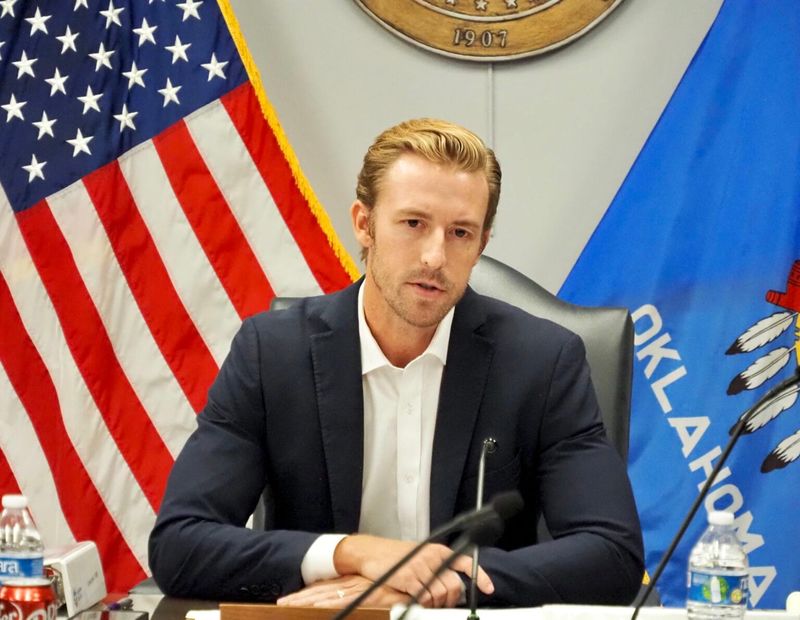
According to witness statements obtained by The Oklahoman, Oklahoma Corporation Commissioner Todd Hiett — the state official tasked with regulating billions of dollars in utility rate decisions — allegedly sat down next to a man at the bar, placed his hand on the man's shoulder, then slid it down to his thigh, and finally placed his open palm on the man's groin area while visibly intoxicated.
The man who was allegedly groped works for a company regulated by the Oklahoma Corporation Commission. Hiett was there in his official capacity as chairman of the three-member regulatory body that oversees Oklahoma's utility companies, oil and gas industry, and other business entities.
Two witnesses from the Kansas Corporation Commission documented the incident in official statements. One wrote: "I was horrified. I recognized how horrible and awkward this situation was for [the alleged victim]. I thought, OK, you have just witnessed a sexual assault and we need to get [the man] out of here."
What happened in that Minneapolis hotel bar might have remained a private scandal — another politician brought down by alcohol and poor judgment. But in Oklahoma, the incident became the crack that opened a much larger question: How could a commissioner accused of sexual assault, public drunkenness, and potential conflicts of interest continue to cast deciding votes on billions of dollars in utility rate increases affecting every household in the state?
The answer to that question reveals a regulatory system where the protections meant to ensure impartiality appear, at best, inadequate — and at worst, deliberately circumvented.
This is the story of how one man's alleged misconduct in a Minneapolis hotel bar became entangled with nearly five billion dollars in ratepayer debt, questionable audits, and a legal battle that continues to this day.
THE GROPING INCIDENT: "I Have No Memory"
Todd Hiett is not a minor figure in Oklahoma politics. Before joining the Corporation Commission in 2015, he served in the Oklahoma House of Representatives from 1994 to 2006, becoming only the second Republican Speaker of the House in state history. He led the Republican takeover of the state legislature in 2004 after 80 years of Democratic control. He's a cattle rancher from Kellyville, married with three children, and by all accounts was seen as a capable, if conventional, Republican politician.
The Mid-America Regulatory Conference in Minneapolis in June 2024 was a routine professional event — the kind of conference that state utility regulators attend to network, share best practices, and discuss industry trends. Hiett attended in his capacity as Corporation Commission chairman.
What allegedly happened at the hotel bar was anything but routine.
According to witness statements, Hiett appeared visibly intoxicated. He sat down next to the man at the bar and began touching him. First the shoulder, then the thigh, then the groin area. The man was reportedly "visibly horrified" and removed Hiett's hand from his lap.
One witness described the moment: "We all began to laugh, but it was uncomfortable laughter at the absurdity of what had just happened. Hiett was basically sitting there looking ahead or down with a sort of glazed look on his face. I then saw his hand go down to [the man's] upper thigh and begin touching his thigh. Again, very quickly he moved from [the man's] thigh to [the man's] lap and placed his open palm on [the man's] groin area."
When reporters reached Hiett for comment after the incident became public in late July 2024, his response was carefully crafted but remarkable for what it admitted: "Over the last few years, I have fallen into the trap of using alcohol to combat stress... It's hard for me to believe that I would do something of that nature. There's no way in my nature that I would ever do anything like that with any intention other than just horseplay and trying to make a joke or tease someone."
Hiett said he had no memory of the incident. He announced he was seeking treatment for alcohol abuse. But he made one thing clear: he would not resign.
"As a Commission, we are facing a heavy workload including numerous rate cases with a tremendous potential impact to ratepayers," Hiett said. "It would be a detriment for me to step aside from my responsibility to balance the interests of ratepayers to those of the utilities."
This defiant stance — I was too drunk to remember sexually assaulting someone, but I'm sober enough to regulate billions of dollars — set the stage for what would follow.
THE CALLS FOR RESIGNATION: "Horrifying Behavior"
The response from fellow officials was swift but ultimately ineffective.
Corporation Commissioner Bob Anthony, a long-serving member known for his contrarian stances and detailed critiques of Commission decisions, filed a formal statement on July 30, 2024, calling for Hiett's immediate resignation.
"The behavior that has been described is beyond 'inappropriate' or 'offensive' and is no 'joke,'" Anthony wrote. "It is horrifying, disgusting and probably criminal. Alcohol is no excuse for it."
Anthony emphasized what made the incident particularly egregious: it allegedly involved "an attorney or representative of an Oklahoma utility that makes appearances before the Corporation Commission on which Hiett sits as a judge."
"Neither getting sober nor sincerely apologizing can resolve it," Anthony declared. "I call on Commissioner Hiett to resign his office immediately."
House Democratic Leader Cyndi Munson went further, calling for a special legislative session to impeach Hiett. "These reported incidents are an example of someone abusing their power and status in order to intimidate and take advantage of people," Munson said. "There is no place for such inappropriate and appalling behavior, especially sexual assault."
State Representative Justin Humphrey, a conservative Republican, also called for Hiett's resignation: "Representing Oklahoma at an out-of-state event, Commissioner Hiett was so intoxicated that he cannot remember sexually assaulting an individual attending the same conference. That is unacceptable."
But here's what's remarkable: despite calls from both Democrats and Republicans, despite his own admission that he was too intoxicated to remember the incident, despite witness statements describing what they believed was a sexual assault — Todd Hiett remained in office.
He relinquished his chairmanship of the Commission but continued to vote on rate cases worth billions of dollars.
And that's when state legislators realized the Minnesota incident might not be an isolated problem. It might be the tip of a much larger iceberg.
THE FIVE-BILLION-DOLLAR QUESTION: Winter Storm Uri and the Bonds
To understand why Hiett's refusal to resign became more than a scandal of personal misconduct, you need to understand what happened in Oklahoma in February 2021 — and the regulatory decisions that followed.
Winter Storm Uri was a once-in-a-generation weather event. For two weeks in February 2021, Oklahoma and much of the American Southwest experienced subfreezing temperatures that crippled the energy grid. Natural gas prices — normally around three dollars per thousand cubic feet — spiked to over $1,200 per thousand cubic feet.
Oklahoma's major utilities (Oklahoma Gas & Electric, Oklahoma Natural Gas, Public Service Company of Oklahoma, and Summit Utilities) collectively incurred approximately $2.8 billion in extraordinary fuel costs in just two weeks. That's more than double what they typically spent in an entire year.
For perspective: the typical Oklahoma Natural Gas residential customer would have owed over $10,000 for gas used during the storm if those costs had been passed through immediately.
The state legislature's solution was securitization — a financial mechanism where the utilities would issue bonds backed by ratepayer revenues, spreading the cost over 15 to 28 years instead of hitting customers with catastrophic bills all at once. The Oklahoma Corporation Commission approved these bonds.
By the time interest, carrying costs, and other expenses were factored in, the total cost to Oklahoma ratepayers approached $5 billion. ONG customers would pay an extra $5.72 to $7.82 per month for 25 years. OG&E customers would pay over $2 per month for 28 years. PSO customers faced similar long-term charges.
These bonds were approved by the Oklahoma Corporation Commission. Todd Hiett voted to approve them. And according to state legislators who have now filed multiple legal challenges, there were serious problems with how those approvals happened.
THE AUDIT THAT WASN'T: Following the Money
State law is clear: when billions of dollars in public utility costs are being securitized into ratepayer-backed bonds, there must be an independent audit performed by licensed CPAs following nationally recognized accounting standards.
The Oklahoma Accountancy Act requires it. It's not optional.
But according to David Greenwell, former chairman of the Oklahoma Accountancy Board, that didn't happen.
In a report filed with the Corporation Commission in July 2024, Greenwell stated that the OCC's audit activities with respect to the winter storm costs and bonds "do not appear to comply with state law."
What did the Commission use instead? In some cases, a one-page document that Commissioner Bob Anthony described as a "fake audit."
Think about that: $5 billion in ratepayer debt, approved based on one-page audits that a former Accountancy Board chairman says don't comply with state law.
Commissioner Anthony — never one to mince words — called it "the largest fleecing of the Oklahoma ratepayer in the history of the state."
The legislators challenging these bonds in court paint an even more troubling picture. In their briefs to the Oklahoma Supreme Court, Representatives Tom Gann, Kevin West, and Rick West argue that:
1. The original Winter Storm Uri costs were never properly audited before being securitized into bonds
2. The bonds themselves have never been properly audited despite state law requiring it
3. Oklahoma Gas & Electric "unduly (and possibly unlawfully) influenced" the hiring of the OCC's financial advisor
4. The lender selected to underwrite the bonds bid 25 percent higher than a competitor, costing ratepayers hundreds of millions of dollars more
5. "Fraudulent language was surreptitiously inserted" into the OCC's bond financing orders, making the bonds more expensive
These are not minor accounting discrepancies. These are allegations of systematic failures in regulatory oversight affecting billions of dollars and millions of Oklahoma residents who will be paying these charges for decades.
And Todd Hiett voted to approve all of it.
THE CONFLICT PROBLEM: Why Hiett Should Have Recused
Here's where the Minneapolis hotel bar incident becomes more than just a personal scandal.
The man Hiett allegedly groped reportedly works for a company regulated by the Corporation Commission — possibly even one of the utilities involved in these multi-billion-dollar rate cases.
Oklahoma Ethics Rule 4.7 is explicit: public officials must disqualify themselves from matters "in which the official's impartiality might reasonably be questioned."
Think about the position this creates. If you're an attorney or representative for Oklahoma Gas & Electric, and you have direct knowledge that Commissioner Todd Hiett sexually assaulted (or was accused of sexually assaulting) your colleague while intoxicated at a professional conference — and then Hiett is sitting in judgment on your company's billion-dollar rate case — can his impartiality reasonably be questioned?
Representatives Gann, Kevin West, and Rick West argued emphatically yes.
"Corporation Commissioner Todd Hiett's admission of public drunkenness, alleged sexual assault, alleged harassment and his alleged drunk driving should be enough for any decent individual to disqualify himself from cases at the OCC involving the victims or witnesses to his alleged crimes," the legislators stated in their legal filings.
But Hiett didn't recuse himself. He continued voting on these cases. And the utilities whose employees allegedly witnessed or were victims of his misconduct continued to receive favorable rulings worth billions of dollars.
The legislators took their case to the Oklahoma Supreme Court, filing nine separate appeals challenging approximately $9 billion in utility rate orders and bonds. Their argument was straightforward: these decisions are tainted by Hiett's refusal to recuse himself despite obvious conflicts of interest.
THE ETHICS COMMISSION DISMISSAL: The Rule of Necessity
On May 1, 2025, the Oklahoma Ethics Commission voted to dismiss the complaints against Todd Hiett.
Their reasoning? The "rule of necessity."
The rule of necessity is a legal doctrine that says when every possible decision-maker in a tribunal has a disqualifying interest, they can still act because otherwise the matter could never be decided. It's typically applied to judges, not to administrative commissioners who can easily be replaced.
The Ethics Commission determined that Hiett could continue voting on utility cases because the Corporation Commission only has three members, and they need at least two to form a quorum and make decisions. Forcing Hiett to recuse would effectively shut down the Commission's ability to act on these cases.
But as Representatives Gann, West, and West pointed out in their subsequent appeals, this logic is deeply flawed.
"The Rule of Necessity only applies to biased or conflicted judges," they argued. "Hiett is not a judge who cannot be replaced. The Governor can appoint a replacement. The rule does not give administrative commissioners a free pass to participate in matters where their impartiality is compromised."
Moreover, they noted, the Ethics Commission essentially admitted Hiett had a conflict — they just said he could ignore it anyway.
"When Hiett told the Ethics Commission that the Rule of Necessity allows him to continue to participate in OCC cases even if he is biased, that was itself an admission of bias," the legislators argued.
The message sent by the Ethics Commission's decision was clear: even if you're accused of sexual assault, even if witnesses from another state's regulatory commission documented your behavior, even if the alleged victim works for a company you're regulating in a billion-dollar case — in Oklahoma, you can keep your job and keep voting on those cases.
THE ATTORNEY GENERAL DEFENDS HIETT: "Baseless Accusations"
In January 2026, Oklahoma Attorney General Gentner Drummond filed a response to the legislative challenges defending Todd Hiett and the Corporation Commission.
The AG's brief was scathing in its dismissal of the legislators' concerns. It called their arguments "baseless and inflammatory accusations" and said the challenges to the rate hikes should be thrown out of court.
"Alleged misconduct by a commissioner, without allegations that the misconduct resulted in unfair tariffs and rates, does not arise to a due process violation," the Attorney General argued. "Appellants' bare assertions of potential misconduct fail to show that Commissioner Hiett's involvement in the case violated due process."
The filing went further, suggesting that even if Hiett did have conflicts of interest, it wouldn't matter unless the legislators could prove the rates themselves were unfair as a result.
This is a remarkable standard. It says that a regulator can have clear conflicts of interest — can even admit to being too drunk to remember allegedly sexually assaulting someone involved in the industry he regulates — and as long as you can't prove his compromised position directly changed the rate outcome, there's no problem.
It's worth noting that Attorney General Drummond is simultaneously investigating alleged "market manipulation" during Winter Storm Uri — the very event that led to these $5 billion in costs. He has stated that "it is clear to me that several companies reaped billions of dollars at the expense of Oklahoma families and businesses."
So the AG believes companies may have manipulated energy markets to fleece Oklahoma ratepayers during the storm, but he's defending the Commission that approved the resulting bonds based on allegedly inadequate audits, and he's defending the commissioner accused of sexual assault who voted on those approvals.
THE SUPREME COURT WEIGHS IN: Procedure Over Substance
On April 21, 2026, the Oklahoma Supreme Court issued its first decision in these cases, ruling on the PSO challenge involving $250 million in rate increases and $700 million in bonds.
The Court found that individual utility customers do have standing to challenge rate decisions under the Oklahoma Constitution — an important victory for the legislators.
But the Court denied the appeal on a technicality. The justices said the legislators hadn't properly raised these issues with the Corporation Commission first, so the Supreme Court couldn't rule on them now.
Representative Tom Gann pointed out the catch-22: he was prevented from intervening in the PSO rate case at the Corporation Commission by a rule imposing a 90-day deadline to intervene. By the time the Minnesota incident became public and Hiett's conflicts became clear, that deadline had passed.
"The court has used a procedural point — making a critical factual error in doing so — to avoid answering two very important questions," Gann said. "Whether the law requires audits to be performed by licensed CPAs and whether corporation commissioners are required by state ethics rules to be impartial decision-makers."
As of May 2026, eight more appeals remain pending, challenging billions more in utility rate orders.
THE HUMAN COST: Who Pays for All This?
Lost in the legal arguments and political maneuvering are the actual Oklahoma families paying these bills.
Consider a typical Oklahoma household. They're now paying:
- An extra $5-8 per month to Oklahoma Natural Gas for 25 years (total: $1,500-$2,400)
- An extra $2+ per month to Oklahoma Gas & Electric for 28 years (total: $672+)
- Additional charges if they're PSO or Summit customers
For a family using multiple utilities, that's potentially $3,000-$4,000 in charges spread over three decades — money they're paying regardless of whether the original storm costs were properly audited, regardless of whether the bonds were structured efficiently, regardless of whether their regulator had conflicts of interest.
These are not wealthy households. Oklahoma ranks among the poorest states in the nation. Median household income is around $52,000. For families already struggling with inflation, housing costs, and medical bills, an extra $10-15 per month in utility charges is real money.
And they'll be paying it until 2050 — long after Todd Hiett has left office (his term ends in January 2027), long after most people have forgotten about a drunken incident in a Minneapolis hotel bar.
THE BROADER PATTERN: Not Just One Night in Minnesota
As the scandal unfolded, more allegations emerged suggesting the Minneapolis incident wasn't isolated.
Reports surfaced of a second incident on June 21, 2024 — less than two weeks after Minnesota — involving allegations of sexual harassment and drunk driving, again allegedly witnessed by utility company employees.
The pattern that emerged was of a commissioner who had been using alcohol to cope with stress, whose judgment was compromised, and who was interacting with industry representatives in ways that raised serious questions about his ability to regulate them impartially.
Yet through it all, Hiett continued to vote on rate cases. The Commission continued to approve utility requests. And Oklahoma families continued to see their bills increase.
OKLAHOMA'S HISTORY: When Corruption Comes to Light
Oklahoma has a complicated history with public corruption, which makes the Hiett case particularly resonant.
In the 1960s, the "Nuyaka Creek Scandal" saw three Oklahoma Supreme Court justices removed from office for taking kickbacks in exchange for favorable decisions. Time magazine called it one of the worst scandals in American history and referred to justice in Oklahoma as "the best money can buy."
In the 1980s, the "OKSCAM" investigation by the FBI resulted in convictions or guilty pleas from at least 230 people across 60 of Oklahoma's 77 counties, including 110 county commissioners actively serving when charged. They had been taking kickbacks and inflating the cost of road-building supplies, siphoning off about $200 million per year from county funds.
In 1975, former Governor David Hall was convicted of misusing his powers of office and became the first Oklahoma governor to be convicted and imprisoned while in office.
The common thread in Oklahoma's corruption scandals has been that change usually came from federal intervention, not from state action. The FBI rooted out the county commissioners. The IRS investigated the Supreme Court justices. When state institutions fail to police themselves, outside intervention becomes necessary.
The Hiett case raises the question: Has Oklahoma learned from its history, or is it repeating it?
WHERE WE STAND: Questions Without Clear Answers
As of May 2026, here's where things stand:
WHAT WE KNOW:
- Todd Hiett was accused by multiple witnesses of groping a man while intoxicated at a regulatory conference in June 2024
- The alleged victim works for a company regulated by the Corporation Commission
- Hiett admitted to alcohol abuse and said he has no memory of the incident but is seeking treatment
- Hiett refused to resign and continued voting on utility rate cases
- The Oklahoma Ethics Commission dismissed complaints against him, citing the "rule of necessity"
- State legislators have filed nine appeals challenging approximately $9 billion in utility rate orders and bonds
- These appeals allege improper audits, conflicts of interest, and possible fraud in the bond securitization process
- The Oklahoma Supreme Court denied the first appeal on procedural grounds while affirming that citizens have standing to challenge rate decisions
- Eight more appeals remain pending
- Oklahoma ratepayers will pay approximately $5 billion over 15-28 years for Winter Storm Uri costs
- Hiett's term ends in January 2027, and he is term-limited from running again
WHAT WE DON'T KNOW:
- Whether the alleged groping incident in Minneapolis constituted criminal conduct (no charges have been filed)
- Whether there were other incidents beyond the two reported in June 2024
- Whether Hiett's conflicts of interest actually affected the outcome of any rate decisions
- Whether the Winter Storm Uri costs were properly audited before securitization
- Whether utilities improperly influenced the selection of financial advisors and bond underwriters
- Whether Oklahoma ratepayers are paying more than necessary due to audit failures or other irregularities
- Whether any criminal investigation is ongoing
- How the remaining eight Supreme Court appeals will be decided
- Whether any reforms will be implemented to prevent similar situations in the future
THE SYSTEMIC PROBLEM: Beyond One Man's Misconduct
The Hiett scandal exposes fundamental weaknesses in Oklahoma's utility regulation system:
1. INADEQUATE RECUSAL STANDARDS: The fact that the Ethics Commission decided Hiett could continue voting on cases involving potential victims or witnesses to his alleged misconduct reveals that Oklahoma's conflict-of-interest rules have a massive loophole.
2. THE RULE OF NECESSITY LOOPHOLE: Applying a judicial doctrine meant for unreplaceable judges to administrative commissioners who can easily be replaced creates an incentive for commissioners to never recuse themselves, knowing they can invoke "necessity" to justify continuing.
3. NO REAL ACCOUNTABILITY: Despite bipartisan calls for resignation, despite witness statements, despite admission of alcohol abuse so severe he couldn't remember the alleged incident — Hiett faced no meaningful consequences. He relinquished a ceremonial title (chairman) but retained all his voting power and salary.
4. AUDIT FAILURES: If the legislators' allegations are correct, billions of dollars in ratepayer costs were approved based on audits that didn't comply with state law. This suggests the Commission's oversight function is inadequate or compromised.
5. REGULATORY CAPTURE: When utility company representatives can allegedly be victimized or witness misconduct by their regulator, and that regulator then continues to vote on their company's rate cases, the regulatory relationship becomes inherently coercive. Even if the utilities don't want favorable treatment, the appearance of conflict is corrosive to public trust.
6. TOOTHLESS ETHICS ENFORCEMENT: The Oklahoma Ethics Commission had the power to find a violation but chose to dismiss the complaints. This sends a message that ethical violations by high-ranking officials will not be seriously policed by state watchdogs.
THE FUTURE: What Happens Next?
Todd Hiett will leave office in January 2027 when his term expires. Five candidates have filed to replace him in the 2026 election.
The eight remaining Supreme Court appeals will presumably be decided over the coming months. If the Court continues to deny them on procedural grounds, billions in utility charges will stand, regardless of whether they were properly approved.
Oklahoma ratepayers will continue paying their Winter Storm Uri surcharges every month for the next two decades, whether or not the underlying costs were properly audited or the approvals were tainted by conflicts.
And unless meaningful reforms are implemented, the next Oklahoma Corporation Commissioner could face similar allegations, invoke the same "rule of necessity," and continue voting on billion-dollar decisions — because the system allows it.
THE QUESTIONS OKLAHOMA MUST ANSWER
The Hiett scandal ultimately asks Oklahoma citizens to confront several uncomfortable questions:
1. DO WE HAVE ADEQUATE SAFEGUARDS?
If a commissioner can be accused of sexual assault by multiple witnesses, admit to being too drunk to remember the incident, and continue voting on billion-dollar cases involving potential victims or witnesses — are our ethics rules meaningful or merely decorative?
2. WHO IS WATCHING THE WATCHMEN?
The Corporation Commission regulates utilities. The Ethics Commission is supposed to regulate the Corporation Commission. But when the Ethics Commission dismisses clear conflicts of interest, who holds them accountable?
3. WHAT IS THE REAL COST OF WINTER STORM URI?
Oklahoma families will pay $5 billion over the next three decades. Were those costs legitimate? Were they properly audited? Could they have been lower with proper oversight? These questions remain unanswered.
4. IS CHANGE POSSIBLE FROM WITHIN?
Oklahoma's history shows that corruption is usually exposed and prosecuted by federal authorities, not state institutions. Can the state reform itself, or does change always require outside intervention?
5. WHAT DO WE OWE VICTIMS?
If the allegations are true, a man was sexually assaulted by a state official at a professional conference, and his assailant faced no criminal charges and continued to regulate his employer. What message does that send about how Oklahoma values the dignity and safety of workers in regulated industries?
The Bill Comes Due
On a cold February night in 2021, when natural gas prices spiked to historic levels and Oklahoma utilities incurred billions in extraordinary costs, the state faced a genuine crisis. People needed heat. The grid needed to stay operational. Emergency measures were justified.
But crises don't excuse abandoning proper oversight. They don't justify skipping audits. They don't permit conflicts of interest. And they especially don't allow regulators accused of sexual assault to continue voting on cases involving their alleged victims.
Yet that's what happened in Oklahoma.
Three years after Winter Storm Uri, in a hotel bar in Minneapolis, Todd Hiett's alleged drunken misconduct created an opening to ask questions that should have been asked all along: Were the Uri costs properly audited? Were the bonds structured in ratepayers' best interests? Are Oklahoma's utility regulators independent and impartial?
The answers that have emerged are deeply troubling. One-page "audits" of billion-dollar costs. Financial advisors allegedly improperly influenced by the utilities they were supposed to independently evaluate. Bond underwriters selected despite higher bids. Commissioners voting on cases where their impartiality can reasonably be questioned. Ethics watchdogs dismissing clear conflicts because of a legal loophole.
And through it all, Oklahoma families opening their utility bills each month, seeing those extra charges, and paying them — because they have no choice.
The bill for Winter Storm Uri will come due every month until 2050. The question is whether Oklahoma's utility regulation system will be reformed before the last payment is made, or whether the next crisis will simply repeat the same pattern.
Todd Hiett will leave office in January 2027. But the bonds he voted to approve will remain for another 23 years. The families paying those charges deserve to know: Were those votes cast by an impartial regulator acting in the public interest?
Or were they cast by a compromised official whose conflicts of interest were ignored because the system that was supposed to prevent such conflicts decided it was more convenient to look the other way?
The Minneapolis hotel bar incident didn't cause the problems in Oklahoma's utility regulation. It just made them impossible to ignore.
NOTE: This article is based on publicly available court filings, media reports, witness statements, and official government documents. Todd Hiett has not been criminally charged with any offense related to the June 2024 incidents. The allegations described in witness statements have not been adjudicated in a court of law. Hiett has stated he does not remember the incident and has sought treatment for alcohol abuse. The utilities involved have not been found to have engaged in any wrongdoing. The legal challenges to the utility rate orders and bonds remain pending before the Oklahoma Supreme Court as of May 2026.