
How years of financial mismanagement, alleged corruption, and political warfare left the state's most vulnerable citizens caught in the crossfire
On a Friday afternoon in early May 2025, the Oklahoma Department of Mental Health and Substance Abuse Services announced it was short $23 million and may not make payroll for May 7, sending shockwaves through the state Capitol. Hours later, the agency walked back the announcement, assuring that payroll would be met as scheduled. But the damage was done.
What followed was one of the most spectacular collapses of a state agency in Oklahoma history — a saga involving accusations of corruption, mysterious financial accounts, intentionally withheld information, non-disclosure agreements, canceled contracts, armed guards locking down administrative floors, and ultimately, the unprecedented legislative removal of an agency commissioner.
At the center of it all: tens of millions of dollars in missing money meant to serve some of Oklahoma's most vulnerable citizens struggling with mental illness and addiction. And more than a year later, no one can fully explain where it went.
The Discovery
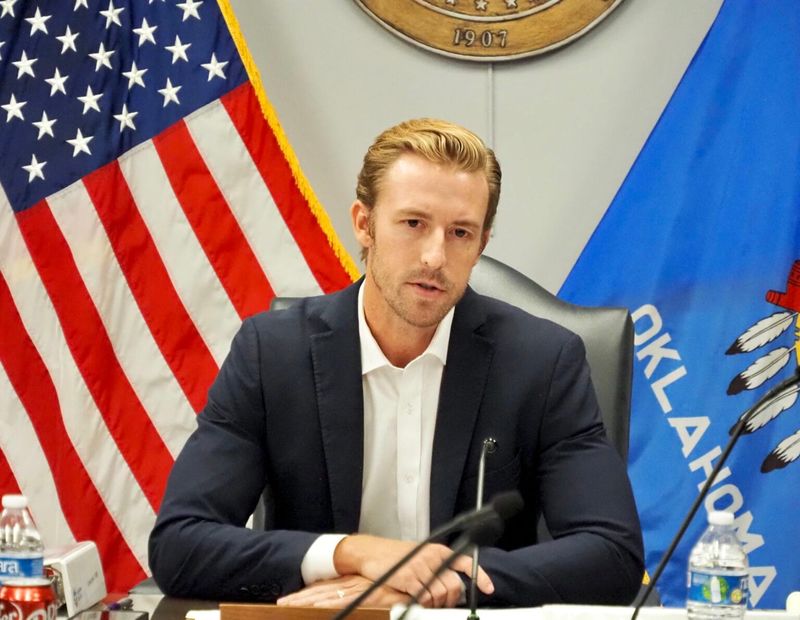
In late February 2025, Commissioner Allie Friesen alerted legislative leaders and Governor Kevin Stitt that she had identified a history of bad budgetary practices resulting in a budget shortfall of at least $27.4 million. Friesen, who had been appointed by Stitt in March 2024 with the charge of rooting out systemic dysfunction and improving transparency, claimed the problems stemmed from prior leadership.
But as lawmakers began digging, the numbers kept changing in ways that defied explanation.
The budget shortfall's estimate swung wildly over two months — from $63 million to $6.2 million before ultimately being pegged at about $27.4 million. By mid-May, various investigations came to consensus that ODMHSAS needed approximately $30 million in additional funds for fiscal year 2025, with figures ranging from $27.4 million to $29.9 million.
How could a major state agency not know its own budget within tens of millions of dollars?
"Abuse, Negligence and Likely Corruption"
On May 5, 2025, testifying for the second time before a House investigative committee, Commissioner Friesen went on the attack, accusing former department officials of "abuse, negligence and likely corruption" that led to the payroll problems.
Her testimony was explosive.
"We've continued to uncover information that was intentionally withheld by internal finance staff. This is as recent as last week. This individual that had actively withheld information has since resigned," Friesen said. "Individuals who operated within a closed culture created and protected information that was crucial for core leadership to have access to, and certainly as a Legislature, as the primary investor in the agency, this information should have been readily accessible and transparent."
The revelations kept coming. Lawmakers discovered mysterious financial accounts with no clear purpose and de facto revolving funds. Questions emerged about sole-source contracts, accounting tricks where contracts would be listed at one amount but only partially used, with the rest of the money treated as fungible resources.
The agency had been using non-disclosure agreements, raising questions about what exactly was being hidden. When asked during a committee recess if he could think of any legitimate reason for ODMHSAS to withhold its non-disclosure agreements from investigators, one lawmaker quipped, "I'm still trying to figure out why they have non-disclosure agreements."
Years of Financial Sleight of Hand
Multiple investigations eventually revealed a pattern of financial manipulation stretching back more than a decade.
A June 2025 report by the Legislative Office of Fiscal Transparency revealed a myriad of systemic financial issues, starting before and continuing through Friesen's year-long tenure, including "unrealistic" budgeting, poor expense tracking and increased expenditures on services auditors found were unaligned with the agency's mission.
The department employed several questionable practices:
Robbing Peter to Pay Paul: For years, the agency paid prior-year Medicaid reimbursements with next-year appropriations, essentially using future money to cover past debts — a financial shell game that was bound to collapse eventually.
Budget Manipulation: The department budgeted $110 million for all Medicaid reimbursements for fiscal year 2025, despite an anticipated total of more than $170 million. The department also "overencumbered" certain budget line items or intentionally inflated expected costs to create artificial flexibility.
Mysterious "Pended Payments": The agency swept unencumbered portions of contractor agreements together to make "pended payments" to certified community behavioral health centers that serve Medicaid and uninsured patients.
Paying for Unfunded Programs: The agency extended "value-based payments" to substance use disorder providers despite the conclusion of federal funding for the program. In March 2025, the agency announced cuts to these providers in evening emails, only to reverse course after realizing the value-based payment model was "holding up their core functions."
The Tulsa County Contract Controversy
Adding fuel to the fire was a brewing scandal over contracts in Tulsa County that raised allegations of favoritism and sweetheart deals.
Prior to Friesen's arrival, ODMHSAS had redrawn catchment areas in Tulsa County to the benefit of two certified community behavioral health centers — CREOKS and Grand Mental Health — a controversial decision that triggered an appeal from Family and Children's Services and spurred criticisms that the agency under prior Commissioner Carrie Slatton-Hodges had played favorites.
In April 2025, the Office of Management and Enterprise Services notified three certified community behavioral health centers that their contracts with ODMHSAS to serve Tulsa County were being terminated effective May 10. The sudden cancellations created chaos and confusion about continuity of care for vulnerable patients.
State and federal law enforcement had been examining state mental health contracts and arrangements for months, according to several people with direct knowledge of the inquiries.
"Sweetheart Deals and Criminal Elements"
The allegations of favoritism and corruption reached the highest levels of state government.
Governor Stitt, who had appointed Friesen to clean up the agency, blasted the legislature for removing her, stating: "From the start, this was nothing more than a politically motivated witch hunt. I tasked Allie Friesen with bringing accountability and transparency to the agency. She disturbed the status quo and questioned long-held practices at the agency. An agency rife with sweetheart deals and criminal elements was disrupted, and now, elected officials are quickly working to set the apple cart right for those who seek to get rich off of Oklahoma taxpayers."
Stitt's statement took an extraordinary turn when he directly suggested that Senator Paul Rosino's wife was in part responsible for the financial issues that plagued the Mental Health Department, asking "What conflicts of interest are they trying to hide? Is Sen. Rosino trying to help his wife avoid responsibility for her role in the finance department there?"
The accusation shocked even hardened political observers and led some legislators to question if the governor was any more fit to lead than Friesen.
A Toxic Work Environment
As investigators dug deeper, they uncovered disturbing allegations about the agency's internal culture.
State Auditor Cindy Byrd released a preliminary audit that criticized ODMHSAS leadership for employing armed guards, locking down the administrative floor, and even threatening employees in meetings; failing to inform employees of internal events that the employees then learn about through the media; and constantly changing the supervisory structure, leading to employees being unaware who their supervisor is and having to research this information online.
Byrd reported that some employees felt discouraged from cooperating in the investigation, including through the use of non-disclosure agreements.
The Unprecedented Removal
In the late hours of what was functionally the final day of regular session, the Oklahoma Legislature voted in supermajorities to remove Allie Friesen as commissioner of ODMHSAS. The Senate vote was 43-1; the House vote was 81-5.
The removal required a two-thirds vote from both the House and Senate, and Friesen's abbreviated 15-month stint took on a pervasive narrative that her lack of prior government experience left her simply not qualified for such a position.
But questions lingered. House Democratic Leader Cyndi Munson noted: "In 2019, I opposed efforts to centralize power in the hands of the Governor to appoint agency heads. Today, we are living through the consequences of one person holding too much power and refusing to act."
Representative Jared Deck stated: "The problems facing the Department span through and beyond the tenure of this Commissioner. The mismanagement of the Donahue Proposal, the lack of communication with employees and agencies on Norman's Griffin campus, and the blatant lack of accountability in spending leaves this Legislature no choice but to move on. That said, we need more than a change in leadership, we need a shift toward policy that prioritizes care to our consumers and the competent administration of that care."
The Fallout Continues
Governor Stitt appointed Rear Admiral Gregory Slavonic as interim mental health commissioner, a career military man who admittedly knew nothing about running a mental health agency. "This is really kind of an unknown territory for me," he said. "But I was asked by the governor to come on board and try to steer the ship in the right direction, keep it afloat and then provide correction for the agency."
Lawmakers appropriated about $383 million to ODMHSAS for fiscal year 2026, maintaining funding at comparable levels to the current fiscal year as the department revisits its financial needs. They also opted to put guardrails on the department's finances, requiring the Office of Management and Enterprise Services to oversee ODMHSAS's contracts and payments and review the department's budget monthly.
But the crisis is far from over. In September 2025, Slavonic announced that more than 300 ODMHSAS contracts — representing $40 million in state funding — were up for non-renewal, potentially directly affecting thousands of Oklahomans who depend on mental health and addiction services.
The Unanswered Questions
More than a year after the crisis began, fundamental questions remain unanswered:
- Where exactly did the $30 million go?
- Were the "sweetheart deals and criminal elements" Stitt referenced ever fully investigated?
- What did law enforcement investigations uncover?
- How many years did the financial manipulation actually go on?
- Who profited from the questionable contracts?
Representative Trey Caldwell captured the central mystery: "I think that's one thing that this legislative investigative committee — I hope — really digs into: Was there any level of criminality, or was it just incompetence, or what?"
More than a decade of faulty budgeting practices and mismanagement contributed to the agency's financial crisis, yet despite multiple investigations — by the House, the state auditor, the Legislative Office of Fiscal Transparency, and a special investigator appointed by the governor — lawmakers never received a straightforward answer from executive staff about how the budget gap came to be.
A System Failure
The ODMHSAS scandal represents more than just accounting errors or bureaucratic incompetence. It reveals a fundamental breakdown in oversight, accountability, and transparency in state government.
Senate President Pro Tempore Lonnie Paxton said: "The LOFT report confirms the Legislature made the right decision in removing the former director responsible for the mismanagement at the Department of Mental Health. These were not isolated incidents. They reflect a broader failure to effectively manage an agency that serves some of Oklahoma's most vulnerable citizens."
But was Friesen the real problem? Or was she, as Stitt suggested, someone who "disturbed the status quo" and threatened entrenched interests that had been enriching themselves for years?
The truth likely lies somewhere in between — an inexperienced commissioner thrust into a corrupt system she couldn't navigate, facing opposition from both those who benefited from the old ways and those frustrated by her inability to fix it quickly.
Meanwhile, Oklahomans struggling with mental illness and addiction — the people this agency was created to serve — remain caught in the crossfire of political warfare, budget crises, and unanswered allegations of corruption.
The $30 million black hole in Oklahoma's mental health system isn't just a financial scandal. It's a betrayal of the state's most vulnerable citizens, and the full truth may never see the light of day.
This is a developing story. Multiple investigations remain ongoing.