
Matt Muskrat's call to clean up local government raises questions about his own history
A candidate with 2008 felony charges positions himself as the answer to corruption
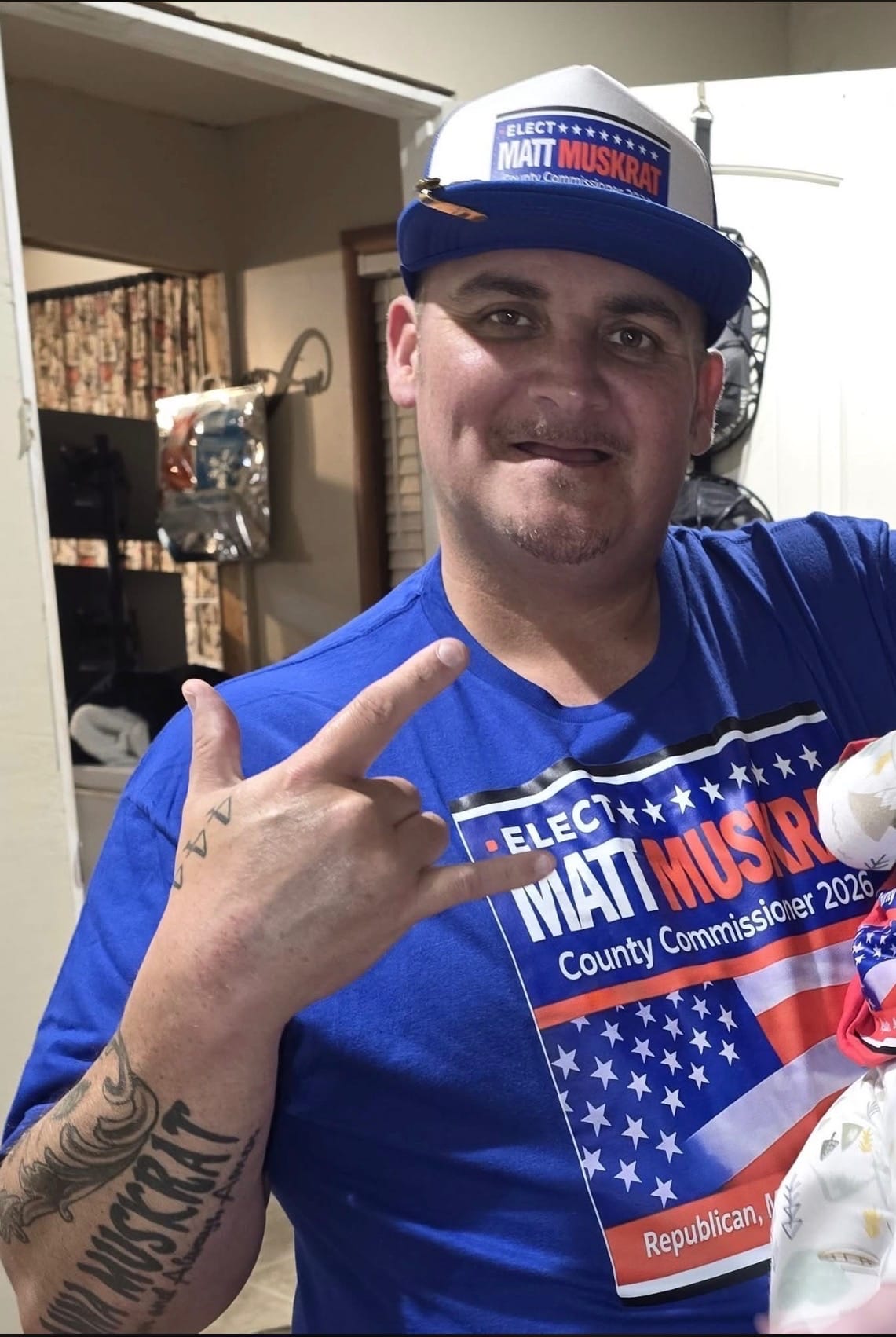
MUSKOGEE COUNTY, OK — Matt N Anna Muskrat has a message for Muskogee County voters: "DRAIN THE SWAMP!!!!!"
The candidate for County Commissioner District 1 posted those words on his Facebook page on May 14, 2026, positioning himself as an outsider ready to take on establishment politics and the connected insiders he believes have failed the community.
"One thing about them tables... They always seem to turn. No matter what name you go by. What position you hold. How many connections you got on your phone," Muskrat wrote in the same post, suggesting that political power brokers will face accountability.
It's a populist message that resonates in an era of frustration with government—the promise of an untainted outsider who will sweep away corruption and restore integrity to public office.
But there's a problem with Muskrat's outsider narrative: public court records showing he was charged with multiple felonies in 2008, raising fundamental questions about whether someone with this background has the judgment and character required to hold a position of public trust.
The Criminal Charges
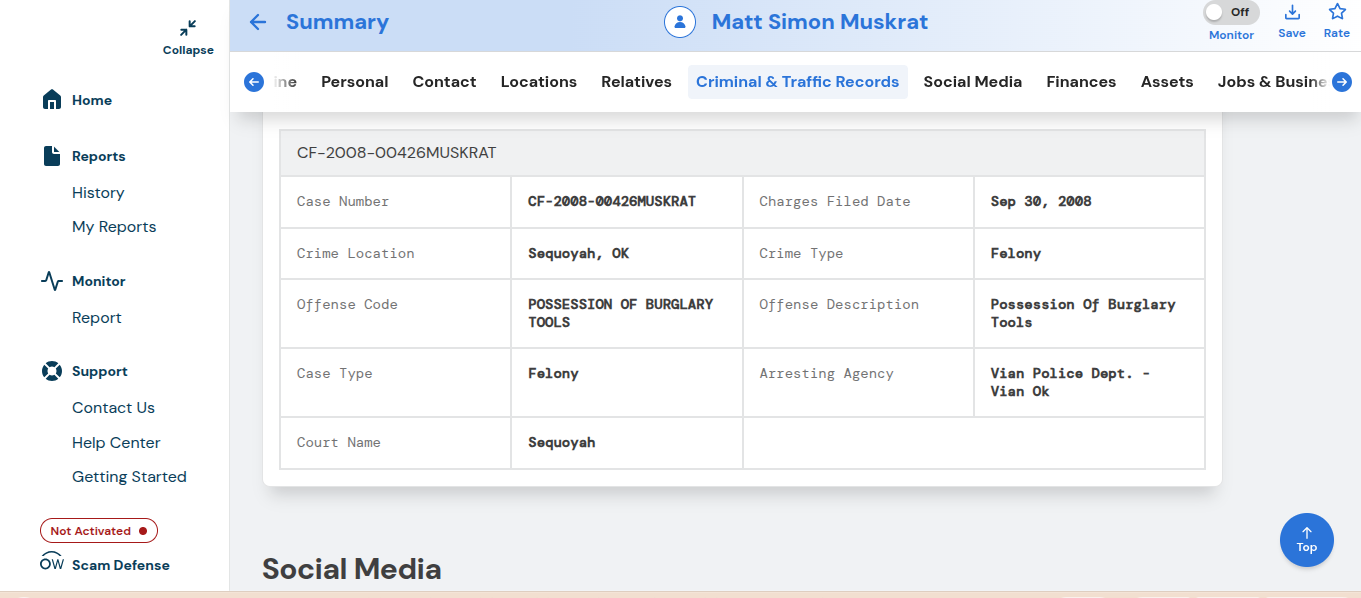
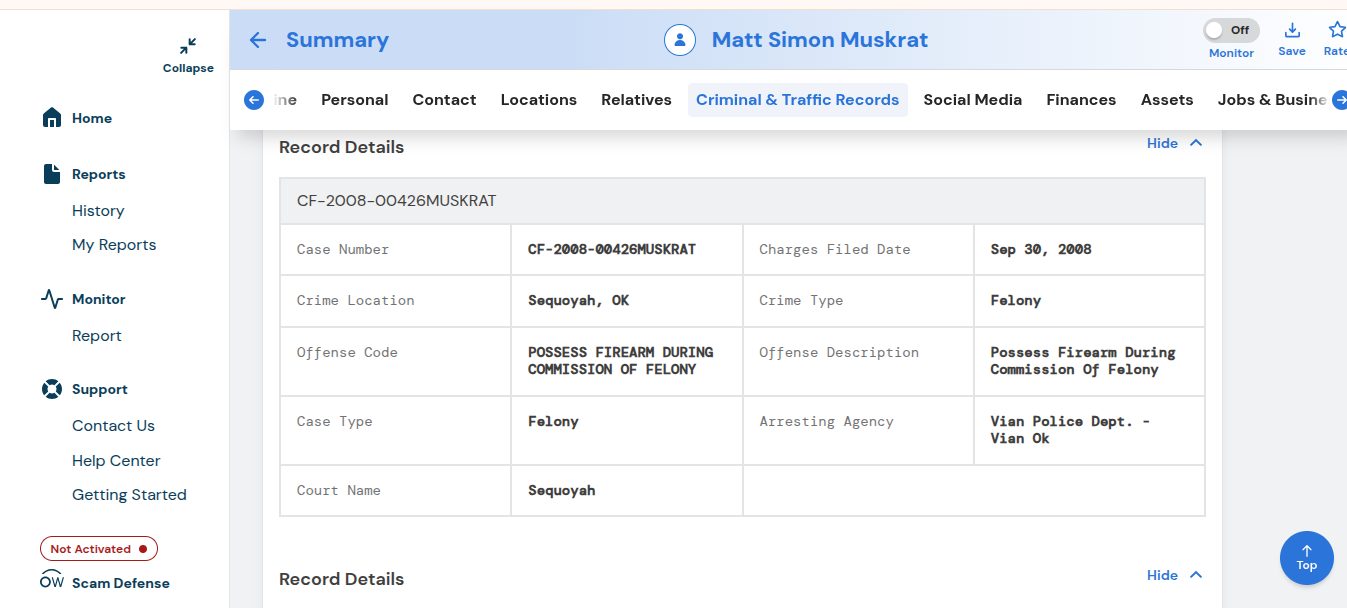
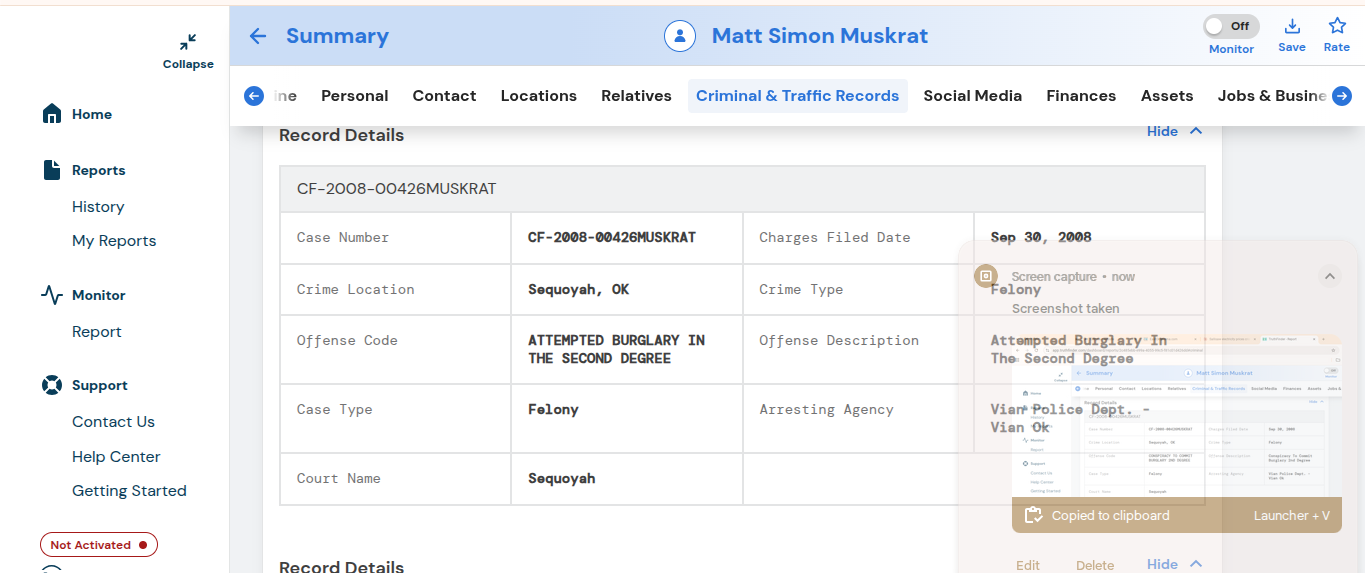
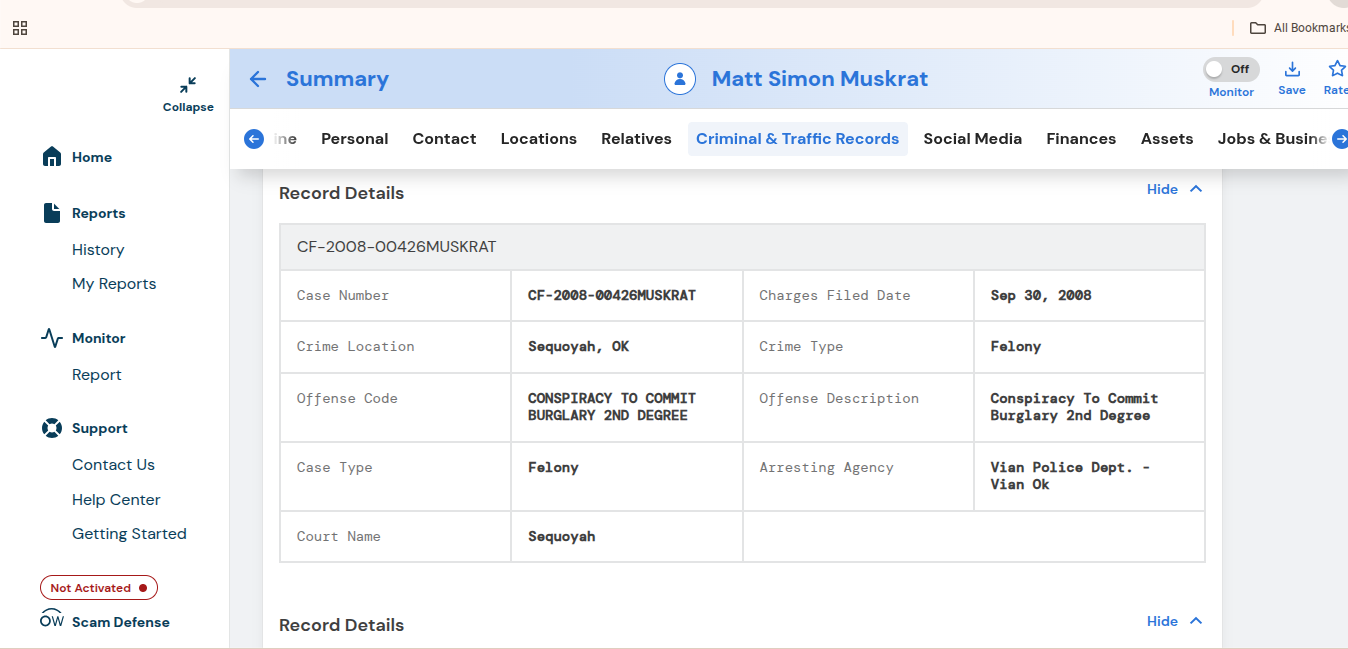
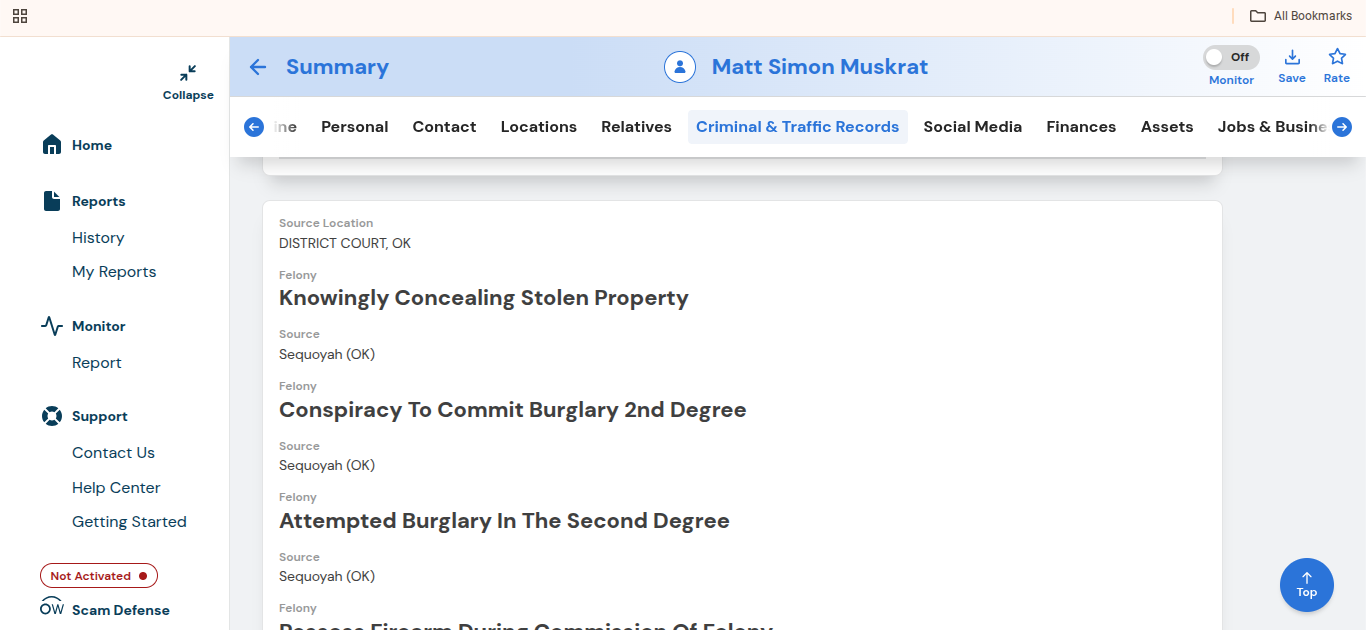
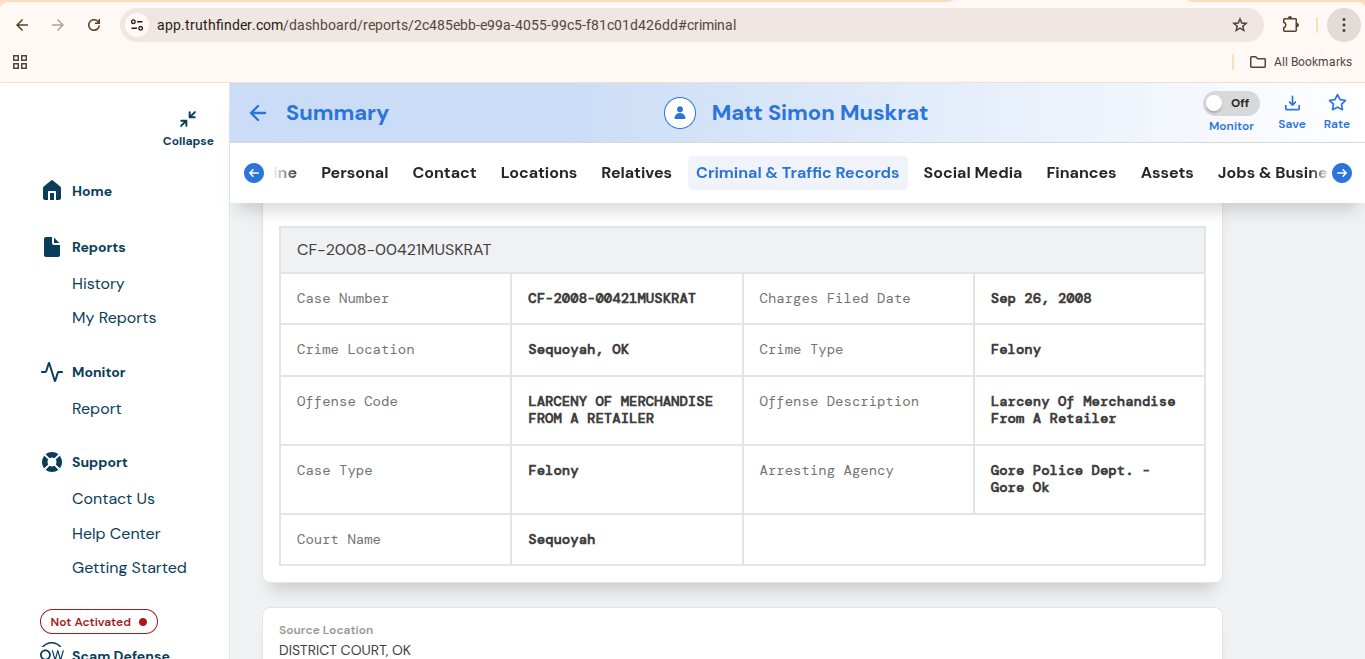
According to documents from Sequoyah County District Court, Muskrat was charged with serious crimes in September 2008—charges that, taken together, suggest far more than a simple mistake or youthful indiscretion.
Case CF-2008-00426MUSKRAT, filed September 30, 2008:
- Attempted Burglary In The Second Degree (Felony)
- Conspiracy To Commit Burglary 2nd Degree (Felony)
- Possession Of Burglary Tools (Felony)
- Knowingly Concealing Stolen Property (Felony)
- Possess Firearm During Commission Of Felony (Felony)
- Transporting Open Bottle Or Container Of Liquor (Felony)
Case CF-2008-00421MUSKRAT, filed September 26, 2008:
- Larceny Of Merchandise From A Retailer (Felony)
The charges originated from incidents in Sequoyah, Oklahoma, with arrests made by the Vian Police Department and Gore Police Department. All charges were filed in Sequoyah County District Court.
Critical disclaimer: These records show charges filed by prosecutors, not convictions. The final outcome of these cases—whether Muskrat was convicted, acquitted, or whether charges were dismissed—is not shown in the available court record screenshots. Under American law, all persons are presumed innocent until proven guilty.
What The Charges Suggest
Even without knowing the outcome, the nature of these allegations deserves voter scrutiny.
Conspiracy to commit burglary suggests planning and coordination—multiple people allegedly working together to commit a crime. This is not a crime of impulse; it indicates deliberation and intent.
Attempted burglary combined with possession of burglary tools indicates prosecutors believed someone came prepared with specific implements designed to break into a location illegally.
Knowingly concealing stolen property suggests awareness that goods were obtained illegally and active participation in hiding them from their rightful owners.
Possessing a firearm during commission of a felony is among the most serious charges. Under Oklahoma law, this elevates the severity of any underlying offense. It speaks to the potential for violence, the threat of serious harm, and a situation that could have resulted in injury or death.
The larceny charge, filed four days earlier in a separate case, adds another dimension—an allegation of theft from a retailer.
Viewed together, these charges paint a picture of what law enforcement and prosecutors at the time believed was organized criminal activity involving planning, tools, stolen goods, and weapons.
Again: charges are not convictions. Evidence can be insufficient. Prosecutors sometimes overreach. Cases get dismissed for legitimate reasons. People are innocent until proven guilty.
But voters evaluate more than legal guilt. They assess judgment, character, trustworthiness, and fitness for office. And the fact that prosecutors believed they had sufficient evidence to file this array of serious felony charges is information voters have a right to consider.
The "Drain The Swamp" Irony
This is where Muskrat's campaign messaging collides with his documented past.
In his May 14 Facebook post, Muskrat explicitly calls on voters to help him "DRAIN THE SWAMP," using the rallying cry that has come to define anti-corruption political outsiders across the country.
The swamp-draining metaphor suggests that established power structures are corrupt, that insiders protect each other, and that only an uncorrupted newcomer can restore integrity to government.
But here's the uncomfortable question voters must confront: How does someone with a history of felony criminal charges—including burglary, theft, weapons, and conspiracy allegations—credibly claim the moral authority to drain anything?
The "swamp" voters want drained isn't just about financial impropriety or political cronyism. It's about ethical standards. It's about trustworthiness. It's about believing the people in power will act in the public interest rather than exploit their positions for personal gain.
When Muskrat writes about "them tables" turning and promises accountability for those with "connections," he's positioning himself as someone who will bring ethical standards to government.
But if the 2008 charges reflect actual criminal conduct (and we don't know if they do, because disposition records aren't available), then how credible is that positioning?
This isn't to say people can't change. Redemption is real. Someone who made terrible choices 18 years ago may well have become a different person. Growth and transformation are possible.
But redemption in the public sphere requires transparency. It requires a candidate to say: "Yes, I was charged with these crimes. Here's what actually happened. Here's what I was convicted of, if anything. Here's how I've changed. Here's why you can trust me now."
Without that conversation, voters are left with unanswered questions and the uncomfortable irony of someone with a criminal past positioning himself as the solution to government corruption.
Questions That Demand Answers
Before voters decide whether to elect Matt Muskrat to a position of public trust, they deserve clear answers to fundamental questions:
About the criminal cases:
- What was the final disposition of these charges?
- Was he convicted of any offenses? If so, which ones?
- If convicted, what were the sentences?
- What were the actual circumstances that led to these charges?
- Has he completed any court-ordered requirements?
About eligibility and transparency:
- Is he legally qualified to hold office under Oklahoma law?
- Did he accurately complete his Declaration of Candidacy?
- Why hasn't he publicly addressed these charges?
- What else might voters not know about his background?
About judgment and character:
- If the charges reflect actual conduct, what has changed in 18 years?
- How does he reconcile his criminal history with his reform message?
- Why should voters trust him with public resources and authority?
- What accountability measures will he accept?
These aren't partisan attacks. They're legitimate questions any voter should ask before handing power to someone seeking public office while campaigning on a platform of integrity and accountability.
The County Commissioner's Power
This isn't a ceremonial position. County commissioners exercise significant authority over public resources and decision-making.
Muskogee County Commissioners:
- Control substantial budgets funded by taxpayer dollars
- Award contracts to private vendors
- Make personnel hiring and firing decisions
- Exercise discretion over public property and assets
- Set policies affecting county operations
- Represent the county in legal and business matters
Every one of these responsibilities requires sound ethical judgment, fiscal responsibility, and trustworthiness.
When someone with a history of charges involving burglary, theft, weapons, and conspiracy asks voters to trust them with this authority, those voters must carefully weigh whether that person has demonstrated the character required for the position.
This calculation becomes more difficult when the candidate hasn't publicly addressed the charges or explained what happened.
What Oklahoma Law Says About Felons Holding Office
Many voters assume felony convictions automatically disqualify someone from public office in Oklahoma. The law is more nuanced.
Voting Rights: Under the Oklahoma Constitution, Article II, Section 1, individuals convicted of felonies lose their voting rights but can have them restored after completing their full sentence, including parole and payment of all fines and restitution.
Holding Office: For eligibility to hold public office, Oklahoma law imposes specific restrictions:
Title 51, Section 13 of Oklahoma Statutes prohibits individuals convicted of felonies involving "moral turpitude" from holding state or county offices unless their civil rights have been fully restored through pardon or sentence completion.
Moral turpitude is a legal term generally understood to include crimes that:
- Involve dishonesty, fraud, or deceit
- Involve theft, burglary, or property crimes
- Involve violence or dangerous weapons
- Violate community standards of morality and ethics
The charges Muskrat faced—burglary, conspiracy, theft, concealing stolen property, and possessing weapons during a felony—would typically be classified as crimes of moral turpitude if convictions resulted.
Candidacy Requirements: Candidates for county office in Oklahoma must file a Declaration of Candidacy that includes an affidavit swearing under penalty of perjury that they meet all constitutional and statutory qualifications for office, including that they:
- Are not convicted felons (OR have had their rights fully restored)
- Meet age and residency requirements
- Are registered voters in good standing
If Muskrat properly filed his candidacy paperwork, one of three scenarios must be true:
- He was never convicted of any charges, making him legally eligible to run
- He was convicted but has had his civil rights fully restored (through sentence completion, pardon, or other legal process), making him eligible
- He made false statements on his Declaration of Candidacy, which would itself be a crime
Voters deserve to know which scenario applies. This information is not private—it's a matter of public record that affects his qualification to serve.
The Principle At Stake
This case raises issues that extend far beyond one county commission race in Oklahoma.
Democracy depends on informed voters making decisions based on complete, accurate information. When candidates present carefully curated versions of themselves while public records tell a more complicated story, voters cannot make truly informed choices.
The "drain the swamp" rhetoric is particularly problematic in this context because it explicitly claims moral superiority. It says: "I'm better than the corrupt establishment. I'm the clean alternative. I'll bring integrity to government."
But if a candidate's background includes serious criminal charges that haven't been publicly explained, that claim demands extraordinary scrutiny.
Voters aren't obligated to give the benefit of the doubt to someone seeking power while promising purity—especially when that person hasn't been transparent about their past.
Redemption Requires Honesty
This article is not arguing that people with criminal histories can never hold public office or contribute to their communities. That would be both unfair and counterproductive.
American society benefits when we allow people to rebuild their lives after paying debts to society. Redemption is real. People change. Growth happens. Second chances matter.
But redemption in the context of public office requires something crucial: honest reckoning with the past.
It requires saying: "Yes, I was charged with these crimes. I was convicted of X, Y, and Z. Here's what happened. Here's what I learned. Here's how I've changed. Here's why I'm different now. Here's why you can trust me with public authority."
Without that honesty—without that willingness to face the past head-on and explain it—voters are left wondering:
- What else don't we know?
- What is he hiding?
- If he won't address this, what other uncomfortable truths will he avoid?
- Can someone who won't be transparent about their past be trusted with public transparency?
These questions become especially pointed when the candidate is actively using anti-corruption rhetoric while avoiding discussion of his own history.
The Bottom Line for Voters
Matt Muskrat has every legal right to run for Muskogee County Commissioner. Voters have every right—indeed, a responsibility—to know about his criminal history before deciding whether to elect him.
The criminal charges filed in 2008 are public record. They're not rumors, innuendo, political smears, or partisan attacks. They're documented facts that raise legitimate questions about judgment, character, and fitness for office.
The irony of someone with burglary, theft, weapons, and conspiracy charges positioning himself as the person who will "DRAIN THE SWAMP" and bring integrity to county government is stark and unavoidable.
This doesn't necessarily mean Muskrat hasn't changed. It doesn't prove he was guilty of everything charged. It doesn't automatically mean he shouldn't hold office.
But it absolutely means voters deserve answers before casting ballots.
It means transparency matters—especially from someone campaigning on accountability.
It means that someone asking for public trust while promising to hold others to high standards must be willing to be held to those same standards himself.
The questions are straightforward:
What happened in those 2008 cases?
What, if anything, were you convicted of?
What has changed in 18 years?
Why should voters trust you with public authority now?
Until those questions are answered clearly and publicly, voters should think very carefully about whether someone with this background—who hasn't addressed it transparently—possesses the judgment, character, and integrity required to serve in a position of public trust.
The swamp doesn't get drained by people who won't be honest about their own past.
It gets drained by people willing to tell the truth, even when that truth is uncomfortable or politically inconvenient.
Muskogee County voters deserve a commissioner who meets that standard.
On May 14, 2026, Matt Muskrat posted on Facebook: "DRAIN THE SWAMP!!!!!! Vote MUSKRAT!!!!"
Before voters take that advice, they deserve complete answers about who they're actually voting for.
How Voters Can Research This Themselves
Don't take anyone's word for it. Verify this information yourself through official channels.
1. Access Complete Court Records
Contact Sequoyah County District Court directly:
- Address: 120 E Creek Ave, Sallisaw, OK 74955
- Phone: (918) 775-4411
- What to request: Complete case files including dispositions for:
- Case CF-2008-00426MUSKRAT
- Case CF-2008-00421MUSKRAT
- Ask specifically for: Final disposition showing whether charges resulted in convictions, dismissals, plea agreements, or other outcomes
2. Search Online Court Records
Visit Oklahoma State Courts Network (OSCN):
- Website: www.oscn.net
- Use the case search function
- Search by name "Matt Simon Muskrat" or "Matthew Simon Muskrat"
- Search by case number if you have it
- Many Oklahoma court records are digitized and available for free public access
3. Review His Candidacy Documents
Contact Muskogee County Election Board:
- Phone: (918) 687-2298
- Address: 220 State St, Muskogee, OK 74401
- Request copies of Muskrat's Declaration of Candidacy
- Review what he certified about his eligibility
- Verify he completed all required affidavits
- Check for any disclaimers or explanations
4. Request Direct Answers from the Candidate
- Attend candidate forums and ask direct questions
- Visit his Facebook page: facebook.com/mattnanna.muskrat.5
- Comment on his posts requesting clarification
- Send messages through his social media pages
- Ask him to provide documentation of case outcomes
- Request a public statement explaining the circumstances
5. Contact EastOklahoma.com
- Share additional information you discover
- Report updates on this story
- Provide tips on related matters of public interest
- Help us continue investigating this race
6. Check With the Oklahoma State Bureau of Investigation (OSBI)
For background checks and criminal history:
- Website: osbi.ok.gov
- OSBI maintains criminal history records
- Some records are accessible to the public
- Contact OSBI for information on how to request records
7. Talk to Your Community
- Share this article with other voters
- Discuss the implications of these charges
- Encourage others to do their own research
- Make informed decisions collectively
- Attend local government meetings
- Engage with other candidates in the race
Editor's Note: This article is based on publicly available court records showing criminal charges filed against Matt Simon Muskrat in Sequoyah County District Court in 2008, and on statements posted to his public Facebook page. Complete disposition records showing the final outcomes of the criminal cases were not available at time of publication. EastOklahoma.com attempted to reach Muskrat for comment through his public Facebook page but received no response prior to publication. Voters are strongly encouraged to verify all information independently through official court records and to request answers directly from the candidate. The existence of criminal charges does not constitute proof of guilt, and all individuals are presumed innocent until proven guilty in a court of law. This article is intended to inform voters about matters of public record relevant to a candidate seeking public office.
Update Policy: EastOklahoma.com will update this article if and when Matt Muskrat provides a response or if additional court records become available showing case dispositions.
About This Investigation: Information for this article was obtained through review of court record screenshots, publicly available social media posts, and Oklahoma statutes governing candidate eligibility. Readers with additional information are encouraged to contact EastOklahoma.com.
Corrections: If you believe any information in this article is inaccurate, please contact us immediately with documentation. We are committed to accuracy and will promptly correct any errors of fact.