

PAWHUSKA, OKLAHOMA — In September 2024, local rancher Bud Beaston sent a registered letter detailing allegations of corruption in Osage County to Oklahoma Attorney General Gentner Drummond, Governor Kevin Stitt, the U.S. Department of Justice, and thirty media outlets across the state.
Only one reporter responded.
The allegations involve a sitting District Attorney accused of criminal activity by his own county sheriff, nearly half a million dollars in taxpayer funds allegedly mishandled in a building sale, interference with a high-profile serial killer investigation, and a web of alleged fraud stretching from planning and zoning committees to elected officials.
Yet outside of a handful of local publications, the story has been met with near-total silence.
This is the story of what happens when a county's top law enforcement officers turn against each other, when citizens investigate corruption themselves after officials ignore them, and when the very person tasked with prosecuting crimes becomes the subject of a criminal investigation.
The Sheriff vs. The DA: A County Divided
The conflict erupted into public view in October 2023 when Osage County Sheriff Eddie Virden filed a civil lawsuit against District Attorney Mike Fisher. The eight-count complaint reads like a crime drama: allegations of libel, slander, abuse of power, political oppression, fraud, and interference with an official investigation.
At the heart of one dispute is one of America's most notorious serial killers.
In early 2023, Sheriff Virden launched an investigation into whether Dennis Rader—the BTK (Bind, Torture, Kill) serial killer convicted of ten murders in Kansas—might be responsible for the 1976 disappearance of 16-year-old Cynthia Dawn Kinney from a Pawhuska laundromat.
Virden's investigation uncovered compelling evidence. During a prison interview, Rader described a fantasy about kidnapping a girl from a laundromat—watching until she was alone, then using a ruse to get her into his vehicle. Journal entries from 1976 showed Rader had written about watching women at a "near by Laundry Mat for a possible victim" and had titled one chapter of a would-be book "Bad Wash Day," describing an attempted kidnapping and leaving town "to let things cool down."
In August 2023, Virden's team excavated Rader's former property in Park City, Kansas, recovering items believed to be "trophies" from victims. He established a National BTK Task Force that included federal authorities and law enforcement from multiple states. CNN, national networks, and the Kansas Bureau of Investigation took the investigation seriously.
District Attorney Fisher saw it differently.
Fisher held a press conference calling Virden's investigation premature and stating there wasn't enough evidence to charge Rader. He requested that the Oklahoma State Bureau of Investigation open its own investigation—a move Virden interpreted as an attempt to sideline his work. According to the lawsuit, Fisher's public statements "disparaged and denigrated the information and leads developed" by Virden and "generally ridiculed the plaintiff's work."
The lawsuit claims Fisher's actions "have caused the BTK investigation to be delayed, hampered and irreparably compromised, allowing Mr. Rader to escape justice and opened the door for Mr. Rader to initiate his own publicity campaign against the very person trying to bring him to justice."
Notably, when Sheriff Virden announced the formation of his BTK Task Force in September 2023, District Attorney Fisher—the county's top prosecutor—was not included among the members.
The $496,000 Question: What Happened to the Kennedy Building Money?
The BTK investigation wasn't the only allegation in Virden's lawsuit. The sheriff also accused Fisher of involvement in the fraudulent sale of the historic Kennedy Building in downtown Pawhuska—and the alleged mishandling of nearly half a million dollars in taxpayer money.
The Kennedy Building saga reads like a textbook case of government dysfunction.
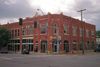
In August 2017, Osage County attempted to auction the four-story building, which dated back to 1927 and had been used by the Department of Human Services. Property investor Jay Mitchell placed the winning bid of $232,000 by telephone. Ladd Drummond—a member of the powerful Drummond ranching family featured in the TV show "Pioneer Woman"—was identified as the other leading bidder.
Then the sale fell apart.
A title company discovered that county commissioners had failed to formally declare the building "surplus property" before the auction—a legal requirement. In September 2017, the county board invalidated the sale. Mitchell sued in August 2018, alleging breach of contract and possible conspiracy.
The case dragged through the courts for years. Two judges recused themselves. Finally, in October 2022, the parties reached a settlement: the county would hold a new auction, receive $232,000 from the proceeds, and Mitchell would receive "all sums in excess of $232,000."
Here's where it gets interesting.
The building had been appraised at $910,000 in preparation for the 2023 auction. In August 2023, a new auction was held. Mitchell placed the only bid: $728,000—80 percent of the appraised value.
According to local news reports, District Attorney Mike Fisher handled "the basic administrative aspects of the auction" alongside auctioneers Dale and Maria Chupp.
The math raises eyebrows. Mitchell bid $728,000. Under the settlement agreement, the county received $232,000. That left $496,000 going to Mitchell—who had originally bid just $232,000 back in 2017.
Sheriff Virden's lawsuit alleges that an agreement was made between the buyer and the District Attorney's office to give Mitchell this $496,000 windfall—money that "was supposed to go back to the county fund."
Virden's attorney, Steve Money, told local media: "I would like for the sale of the Kennedy Building to be vacated and we asked for that in our petition. We would like for the citizens of Osage County not to get cheated out of $496,000."
Fisher declined to comment on the lawsuit beyond saying he was "disappointed in Mr. Virden's behavior and actions" and that Virden's "conduct does nothing to further the public's trust in its elected officials."
Political Warfare: Campaign Signs, Threatened Arrests, and GOP Chaos
The allegations against Fisher extend beyond investigations and building sales into the realm of political intimidation.
According to Sheriff Virden's lawsuit, Fisher attempted to file charges against a family because he believed they supported one of his political opponents. The suit also claims Fisher tried to perform a citizen's arrest on someone he believed was stealing his campaign signs.
Fisher's involvement in local Republican Party politics further fueled the controversy.
In July 2024, chaos erupted at an Osage County GOP Committee meeting called to remove Chairman Shawna Myers from her position. The meeting descended into disorder when Fisher—attending as a guest—interjected himself into the proceedings in support of Myers.
When committee members moved to go into closed session to discuss party matters, Fisher refused to leave despite multiple requests. According to witness accounts, he threatened GOP members, stating: "If any of the sergeant-at-arms touches anyone in this room, that is assault and battery, and I will prosecute that charge."
The context makes Fisher's presence even more controversial. Myers had organized a townhall forum where Republican candidates would face questions not from their opponents, but from Fisher himself. The candidates Myers invited were the same ones who had submitted evidence to courts of alleged corruption by Fisher that could result in felony charges.
Multiple GOP members had encouraged Myers to cancel the event, calling it "election interference." She refused.
In August 2024, Myers was voted out as chairman by the Osage County GOP Committee. The vote came after Fisher testified on her behalf, contradicting Myers' own text messages about who initiated the controversial townhall.
Citizens Investigate: 'Nobody's Listening to Us'
Beyond the sheriff-DA feud lies a broader pattern of alleged corruption that has driven ordinary citizens to conduct their own investigations.
Rancher Bud Beaston has spent nearly two years investigating what he describes as serious misconduct in Osage County, beginning with the Planning and Zoning committee.
According to a September 2024 analysis published in Tulsa Today, Beaston possesses "evidence of lies fraud and misconduct by Planning and Zoning and other county officials from January 2023 through March of 2024." The allegations include unethical practices by the Planning and Zoning committee, county commissioners ignoring citizen input, questionable land and building sales, irregular construction of public facilities, and elected officials intimidating citizens and ignoring votes.
In August 2023, Beaston sought help from Sheriff Virden. The sheriff told him he was already investigating District Attorney Mike Fisher.
According to Beaston, the Sheriff's Office provided him with an affidavit detailing "criminal activity of DA Fisher."
Frustrated by what he viewed as inaction, Beaston and other Osage County citizens built a website—OsageCountyCorruptionFacts.com—compiling years of research, videos, documents, and victim statements.
In September 2024, Beaston sent his registered letter to state and federal officials, as well as thirty media outlets. District Attorney Fisher responded, calling the allegations "baseless with no evidence to support it" and accusing Beaston of "heckling those same statements and allegations with absolutely no evidence."
Beaston countered: "I have the evidence and await lawful authority willing to hear the case."
The response from authorities? Near silence.
Phil Bacharach, Director of Communications for Attorney General Gentner Drummond's office, told reporters: "As a general policy we don't comment on, or confirm the existence of, a potentially active investigation."
As of the Tulsa Today report in September 2024, only one reporter had responded to the citizens' outreach.
"I am disappointed, but not surprised," Beaston said.
The Drummond Connection: A Complication for the AG
Adding another layer of complexity to the story is the involvement of one of Oklahoma's most prominent families.
Attorney General Gentner Drummond—the state's top law enforcement official to whom corruption complaints have been sent—is a member of the Drummond family, which is "known nationally for their success in Osage County," according to local reports.
The Drummond family, featured on the Food Network's "The Pioneer Woman" starring Ree Drummond, owns the Drummond Land & Cattle Co., one of the largest ranching operations in the United States, with significant holdings in Osage County.
Ladd Drummond was the runner-up bidder in the original 2017 Kennedy Building auction, losing to Mitchell's $232,000 bid.
When citizen investigator Bud Beaston sent his corruption allegations to the Attorney General's office, he noted this connection. "AG Drummond is only one of many members of the Drummond family known nationally for their success in Osage County," the Tulsa Today report stated. "How much attention will AG Drummond, as Oklahoma's top officer of the law, and his office, the largest law organization in the state, give to these issues? Will he call a Grand Jury? Will Federal Investigators take the case?"
The AG's office has maintained its policy of neither confirming nor denying active investigations.
A Pattern of Dysfunction: Reality TV, Intimidation, and Public Trust
The lawsuit and citizen complaints paint a picture of a county government riddled with conflict and dysfunction.
Sheriff Virden's complaint includes an allegation that Fisher attempted to sabotage a reality television show about the Sheriff's Office. Virden had been contacted by a media company about producing "The Force," a reality show highlighting his department's work.
According to the lawsuit, Fisher advised the Osage County Commission to reject the contract, "presumably because 'The Force' would highlight Sheriff Virden's employees and administration." Fisher allegedly did this while publicly endorsing Virden's primary election opponent, Bart Perrier.
Virden withdrew the contract request, claiming "outside forces had politicized the issue."
The allegations have taken a toll on public confidence. In court filings, Virden claimed Fisher's statements "intentionally disparaged the motivation, integrity and reputation of Sheriff Virden and the Osage County Sheriff's Office" at a time when public trust in law enforcement is crucial.
Fisher responded that Virden's lawsuit and public accusations were themselves damaging to public trust: "His conduct does nothing to further the public's trust in its elected officials."
The Silence: Why Won't Anyone Report This?
Perhaps the most disturbing aspect of this story is the near-total media silence surrounding it.
When citizens sent documentation to thirty Oklahoma media outlets, only one responded: independent journalist Dave Arnett, who covered Tulsa City Hall for years and won two national awards as a First Amendment publisher.
Arnett's report, published on TulsaToday.com and reprinted by CityNewsOKC.com in September 2024, appears to be one of the only comprehensive pieces examining the broader pattern of alleged corruption.
The Pawhuska Journal-Capital covered the Kennedy Building auction saga extensively between 2017 and 2023, documenting the procedural irregularities and legal battles. Local television stations including News 9, Fox 23, and KTUL reported on the sheriff's lawsuit against the DA in October 2023.
National outlets including CNN and Kansas stations covered the BTK investigation extensively—but focused on the serial killer angle, not the local corruption allegations or the conflict between the sheriff and DA.
No major Oklahoma news outlet has comprehensively examined the web of allegations: the Kennedy Building money, the DA under investigation by his own sheriff, the citizen complaints spanning years, the political intimidation claims, or the potential conflicts of interest involving prominent local families.
Why the silence?
Beaston suggested to reporters that "local officials are protected by those occupying higher office." Others might point to the complexity of the allegations, the powerful families involved, or simple news fatigue in a county that has seen its share of headlines between the Osage murders depicted in "Killers of the Flower Moon" and the Drummond family's celebrity status.
But citizen investigators see something more troubling: a systematic failure of accountability.
Oklahoma's History of Corruption—And Federal Intervention
The Osage County allegations fit into a broader historical pattern of corruption in Oklahoma—and of federal authorities having to step in when state officials won't act.
According to the Encyclopedia of Oklahoma History and Culture, the state has experienced several spectacular corruption scandals: three Oklahoma Supreme Court justices were removed from office in the 1960s following IRS investigations into kickbacks for favorable decisions; a powerful House Speaker was convicted and jailed for failing to report income received for political favors; former Governor David Hall was convicted in 1975 of misusing his powers; and in 1980, approximately 220 county commissioners and suppliers were convicted in a massive scandal that "reached all across the state in roughly sixty counties large and small, urban and rural."
The Encyclopedia notes: "Again and again it has been federal officials who attacked corruption and forced reform." It continues: "The state has known some spectacular cases of corruption reaching into the Supreme Court, the governorship, the House speakership, and the whole system of county commissioner government."
More recently, a federal RICO lawsuit filed in 2017 exposed what plaintiffs described as a statewide conspiracy involving more than fifty Oklahoma sheriffs and a debt collection company. The case, still being litigated, alleges that sheriffs participated in an extortion scheme to collect court debts through Aberdeen Enterprises, with the Sheriff's Association receiving a share of the proceeds—more than $2 million between 2017 and 2021.
The 10th Circuit Court of Appeals found that the "referral of debt collection to Aberdeen violates the Fourteenth Amendment prohibition against government law enforcement actors . . . having a direct and personal financial stake in the cases under their authority" and that the "policy and practice of subjecting individuals who owe court debt to onerous collection enforcement methods" violates constitutional protections.
Whether federal authorities will intervene in Osage County remains to be seen.
Where Things Stand Now
Sheriff Virden's October 2023 lawsuit against District Attorney Fisher remains in litigation. Virden is seeking a minimum of $10,000 in damages, all costs and attorney fees, and an order vacating the 2023 Kennedy Building auction and conveyance.
The BTK investigation continues, though the level of cooperation between the Sheriff's Office and the District Attorney's Office appears minimal at best. The National BTK Task Force formed by Sheriff Virden includes federal authorities, the Kansas Bureau of Investigation, and law enforcement from multiple jurisdictions—but not Osage County's own prosecutor.
The Kennedy Building now sits under new ownership after the controversial 2023 auction. The building, appraised at $910,000, sold for $728,000 with $232,000 going to the county and $496,000 to the original bidder who had sued over the voided 2017 sale.
Citizen investigators continue to maintain their website documenting alleged corruption and await response from authorities.
The Attorney General's office has not publicly confirmed or denied any investigation into the allegations.
District Attorney Mike Fisher continues to serve as the top prosecutor for Osage and Pawnee Counties. He has denied all allegations against him and declined further comment on pending litigation.
And thirty media outlets that received detailed documentation of the allegations have remained largely silent.
Questions That Need Answers
This investigation raises fundamental questions about accountability and justice in Oklahoma:
How can a county function when its sheriff and district attorney are engaged in public legal warfare against each other?
What happened to the $496,000 from the Kennedy Building sale, and was the transaction handled appropriately?
Why hasn't the Attorney General's office publicly responded to detailed allegations of corruption sent by citizens?
Does the Drummond family's prominence in Osage County create conflicts of interest that complicate state-level investigations?
What is the status of the Sheriff's criminal investigation into the District Attorney, and what evidence exists?
Why has the Oklahoma media establishment largely ignored a story involving a sitting DA accused of criminal conduct by his own sheriff?
Will federal authorities need to intervene, as they have repeatedly throughout Oklahoma's history?
And perhaps most importantly: If allegations this serious can be documented, sent to dozens of media outlets and government officials, and still receive almost no response—what does that say about the state of accountability in Oklahoma?
Bud Beaston and other Osage County citizens remain undeterred. As he told reporters: "Osage County residents will not be intimidated or driven off the effort to force; accountability, transparency, justice, adherence to law and Constitutional Liberty in Osage County."
The question is whether anyone in power will listen.
EDITOR'S NOTE: This investigation is based on public court records, published news reports, official statements, and documents available through the Osage County Sheriff's Office and Osage County District Court. District Attorney Mike Fisher was contacted for comment but declined to respond beyond his previous public statements. EastOklahoma.com will continue to follow this story and update as new information becomes available.
Readers with information relevant to this investigation can contact EastOklahoma.com through our confidential tip line.