How Tourism is Reshaping Sequoyah County’s Economic Blueprint

SALLISAW, Okla. — Situated along the Interstate 40 corridor where the Oklahoma prairie gives way to the Cookson Hills, Sequoyah County has long served as a vital eastern gateway to the state. But over the last decade, the county’s position has evolved from a transit stop into a major regional destination.
Driven by a combination of natural water resources, tribal hospitality investments, and a steady influx of drive-market travelers, tourism has quietly cemented itself as one of Sequoyah County’s most significant economic drivers—bringing critical tax dollars, small business viability, and long-term infrastructure considerations to towns like Sallisaw, Roland, and Vian.
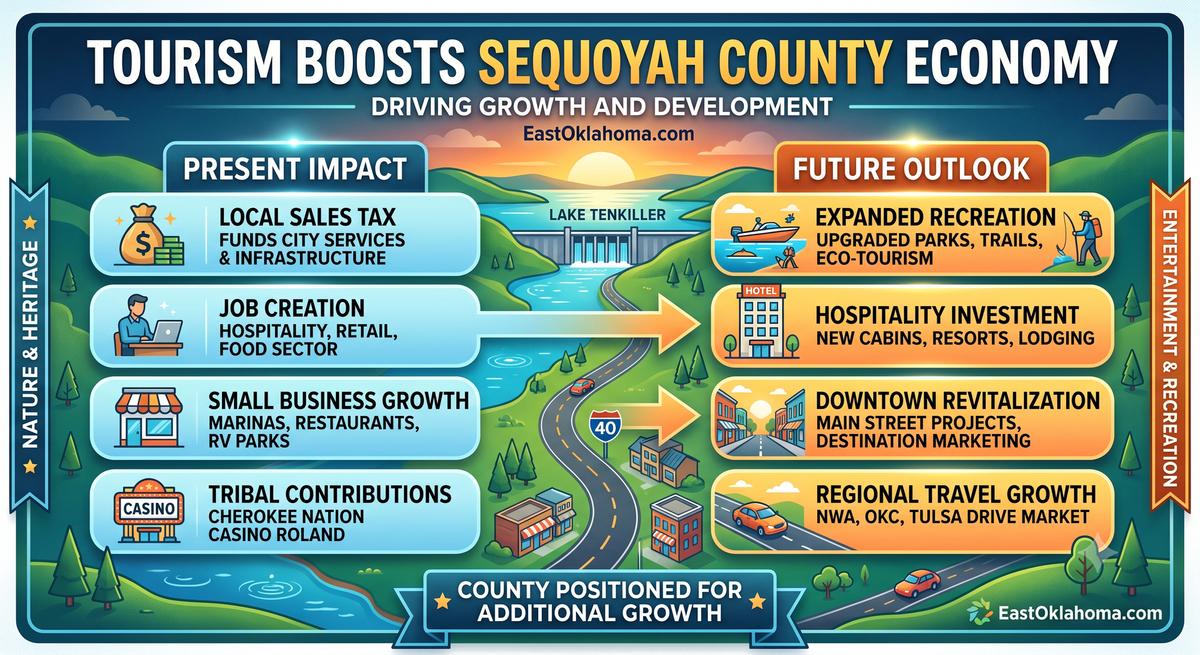
The Present Impact: Tax Dollars, Small Businesses, and Tribal Capital
According to economic data from the Oklahoma Tourism and Recreation Department, direct traveler spending in Sequoyah County regularly tops $150 million annually. That figure represents far more than just hotel stays—it translates directly into municipal revenues that fund basic county and city services.
Where the Dollars Land
- Municipal Sales and Lodging Taxes: A significant portion of municipal revenue in Sallisaw and Roland is generated by out-of-county visitors. Sales tax from food, fuel, and retail directly feeds local general funds, paying for municipal utilities, road maintenance, and emergency response services without placing the full burden on resident tax bases.
- Small Business Insulation: Along the U.S. 64 corridor and near Lake Tenkiller, local marinas, boat mechanics, bait shops, RV parks, and family-owned diners rely on seasonal peak-season volume to sustain operations year-round.
- Tribal Economic Anchor: The Cherokee Nation’s presence remains a dominant economic catalyst in the area. Cherokee Casino Roland draws thousands of interstate visitors monthly from neighboring Fort Smith, Arkansas, and beyond, providing hundreds of local hospitality jobs and anchor development along the state line.
The Four Pillars of Sequoyah County Tourism
Sequoyah County's tourism portfolio relies on a balanced mix of outdoor recreation, tribal gaming, and deep regional history:
| Sector | Core Assets | Economic Footprint |
| Water & Recreation | Lake Tenkiller, Tenkiller State Park, Brushy Lake, Robert S. Kerr Reservoir, Arkansas River | Drives high-volume spring-to-fall spending in boat rentals, fuel, camping, and short-term rentals. |
| Wildlife & Conservation | Sequoyah National Wildlife Refuge | Attracts eco-tourists, anglers, hunters, and birdwatchers during off-peak seasons. |
| Heritage & Culture | Sequoyah’s Cabin Historic Site, historical Trail of Tears routes | Draws heritage travelers, school trips, and regional history enthusiasts year-round. |
| Gaming & Hospitality | Cherokee Casino Roland, tribal travel centers, highway commercial corridors | High-volume, year-round employment, food service, and interstate drive-by capture. |
What to Expect Next: Growth, Challenges, and Strategic Shifts
As Eastern Oklahoma continues to draw attention from regional metro markets—including Tulsa, Northwest Arkansas, and Oklahoma City—Sequoyah County sits at a critical intersection of growth and planning.
1. Expansion of Outdoor Infrastructure and Eco-Tourism
Demand for outdoor recreation spiked across Oklahoma over the past few years, and visitor patterns suggest it isn't slowing down. Local municipalities and state agencies are focusing on:
- Glamping and Cabin Developments: A notable shift toward boutique, private lodging options and expanded RV amenities along Lake Tenkiller to capture multi-night stays.
- River and Refuge Access: Enhanced publicity and infrastructure for kayaking, fishing, and wildlife viewing along the Illinois and Arkansas Rivers and the Sequoyah National Wildlife Refuge.
2. Continued Tribal Investment Along the I-40 Corridor
As the Cherokee Nation continues expanding its enterprise and infrastructure footprint, the eastern edge of Sequoyah County—particularly Roland—remains prime territory for further commercial hospitality, retail, and transit-focused development to capture interstate traffic.
3. Downtown Revitalization and Destination Marketing
To keep visitors from simply passing through on I-40, Sallisaw and Vian are increasingly leaning into Main Street development, historic preservation, and community events. Converting day-trippers into overnight guests remains the single highest-margin opportunity for local merchants.
4. Balancing Growth with Local Infrastructure Needs
With increased visitor volume comes increased wear on county roads, water districts, and emergency service providers. The county’s challenge over the coming decade will be ensuring that tourism tax collections keep pace with the infrastructure demands imposed by peak seasonal populations around Lake Tenkiller and major transit routes.