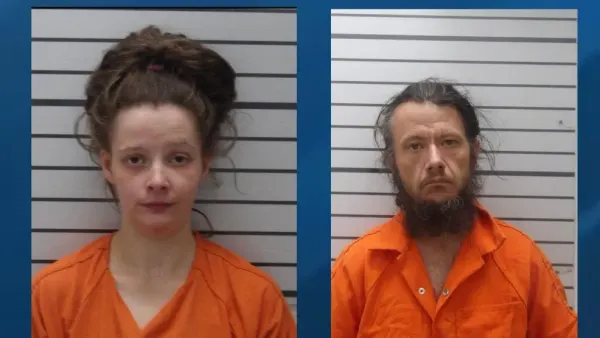
Investigation: A Corrupt ATF Agent & Cop Fabricated A Case Against Larita Barnes in Tulsa


The Woman Who Wouldn't Stay Silent: Larita Barnes' 19-Year Battle Against Federal Corruption
A federal appellate court just ruled she can sue the government. Here's the shocking story of how law enforcement framed an innocent woman — and why it took nearly two decades to get justice.
TULSA — On a spring day in May 2007, Larita Barnes' life changed forever. Not because of anything she did, but because of what two corrupt law enforcement officers decided to do to her.
A Tulsa police officer and a federal ATF agent falsely testified before a federal grand jury, claiming that a reliable informant had purchased 87 grams of methamphetamine from Barnes and her father. The drug buy never happened. The testimony was perjury. And Larita Barnes would spend years in federal prison for a crime that existed only in the minds of corrupt cops.
This week, the 10th U.S. Circuit Court of Appeals ruled that Barnes can continue to pursue her lawsuit against the federal government, calling the ATF agent involved "a disgrace to law enforcement." It's a stunning rebuke that comes nearly 19 years after Barnes was first arrested — and it exposes a corruption scandal so deep that it freed dozens of prisoners, ended multiple law enforcement careers, and revealed a system that allowed dirty cops to operate with impunity for years.
The Fabricated Bust
May 8, 2007. That's the date Jeff Henderson, an undercover officer with the Tulsa Police Department's Special Investigations Division, and Brandon McFadden, a special agent with the Bureau of Alcohol, Tobacco, Firearms and Explosives, claimed they conducted a controlled drug buy at the Barnes family home on East Newton Street in north Tulsa.
It never happened.
Ryan Logsdon, a major methamphetamine distributor who moved a million dollars worth of meth on Tulsa streets over 15 years, was working as an informant for Henderson and McFadden. But instead of simply using him to catch dealers, the officers had turned him into something far more sinister: a weapon to frame innocent people.
McFadden would later testify that he and Henderson coached Logsdon on what to say during the Barnes trial, and that he also lied during the trial. In his own plea agreement, McFadden admitted: "Both the Barnes were convicted on jury trial based on the false testimony of myself, Logsdon, and Henderson" when no drug buy had actually occurred.
But the fabrication didn't stop with coached testimony. To back up their story, Henderson and McFadden booked 87 grams of methamphetamine obtained from another source into the property room. The drugs were tested by the crime lab and confirmed as methamphetamine — creating a paper trail for a transaction that never took place.
Henderson told Logsdon that "Larry and Larita Barnes were major drug dealers in the Tulsa area, but that law enforcement officers had been unable to make a prosecutable case against the Barnes". So they manufactured one.
The Conviction
The legal machinery moved swiftly once the lies were in motion.
Larita Barnes was convicted of a drug felony on April 23, 2008, and sentenced on October 3, 2008. She received two concurrent ten-year federal prison sentences. Her father, Larry Barnes Sr., received two five-year sentences.
Both maintained their innocence. Both were ignored.
Barnes was in her early thirties when she entered federal prison, her life derailed by officers who saw her not as a human being but as a statistic — another conviction to pad their records, another case to justify their continued funding and positions.
Meanwhile, Henderson and McFadden continued their work on Tulsa's streets. And they weren't done framing people.
The Conspiracy Unravels
The first crack in the case came from an unexpected source: Ryan Logsdon himself approached FBI agents during a drug search at his home and said: "I know this isn't about drugs. You want to talk about dirty cops".
Logsdon told the FBI: "It's Jeff Henderson and Brandon McFadden", naming the two officers who had coached him to commit perjury.
What Logsdon revealed was stunning. After Henderson and McFadden busted him for drugs, he began working for them as an informant, but after a time, Henderson and McFadden would sell him drugs to sell to others. The officers who were supposed to be getting drugs off the streets were actually putting them back into circulation — and framing innocent people in the process.
During cross-examination in the corruption trial, Logsdon admitted he would do anything to stay out of prison and that he had lied to other federal juries after taking the same oath to tell the truth. He was a career criminal and admitted liar — yet his original testimony had been enough to send two people to prison for years.
The federal investigation expanded. What they found was breathtaking in its scope.
A Pattern of Corruption
The Barnes case wasn't an isolated incident. It was part of a systematic pattern of corruption within the Tulsa Police Department that resulted in at least 18 lawsuits and a federal grand jury probe that generated charges against six former or current police officers and a former federal agent, as well as allegations of criminal behavior against five other officers who were not charged.
The scandal included allegations of falsified search warrants, witness tampering, perjury, drug sales and conspiracy.
By 2010, five Tulsa police officers had been indicted in the corruption probe. The indictments unsealed accused the defendants of a variety of crimes, including conspiracy, and all except one were accused of drug crimes.
Eleven people were freed from federal prison or had felony charges or convictions dismissed as a result of the grand jury's investigation. Most were freed due to allegations that they were framed by police officers or because probable cause was not properly established.
Among those freed: Larita Barnes and her father, Larry Barnes Sr., who were released from federal prison on July 2, 2009 — after serving more than a year for crimes they didn't commit.
The Prosecutors
In April 2010, McFadden was indicted on federal charges related to falsifying drug busts, including in Barnes' case. He pleaded guilty to drug conspiracy in May 2010 and cooperated with prosecutors.
Three months later, Henderson was indicted on federal charges related to drug trafficking and money laundering; he was convicted of six counts of perjury and two counts of civil rights violations in August 2011, and sentenced to 42 months in federal prison.
Brandon McFadden was sentenced to 21 months and released in July 2013. Jeff Henderson completed his 42-month prison term in October 2013.
Their sentences were a fraction of the time their victims lost to prison. And for Barnes, the damage went far beyond incarceration.
The Lawsuit Marathon
Freedom didn't mean justice for Larita Barnes. That would require another battle — this one in civil court.
Barnes filed a lawsuit against Jeff Henderson and Brandon McFadden and the city, stating: "This created an atmosphere within the Tulsa Police Department of officers being able to routinely and frequently violate the statutory and constitutional rights of citizens, without fear of any discipline or firing".
Her attorney, Mark Lyons, said his client was seeking $2 million in punitive damages from Henderson and McFadden and at least $2 million in actual damages from the city.
In 2013, the City of Tulsa agreed to pay $300,000 to settle its part of the lawsuit. But Barnes' fight against the federal government — specifically over McFadden's actions as an ATF agent — would prove far more difficult.
The federal government argued that it couldn't be held liable for McFadden's actions because he was acting outside the scope of his employment when he framed Barnes. A federal district judge agreed and dismissed her case.
U.S. District Judge John Dowdell found that while McFadden conspired with Henderson to build a false criminal case against Barnes, the federal government could not be held liable for McFadden's acts because he was not acting within the scope of his employment.
Dowdell wrote: "The foregoing testimony and undisputed record in this case leads to only one conclusion: McFadden concealed his illegal activity from the ATF, and the overall conspiracy was plainly executed for the benefit of McFadden and his co-conspirators, not the United States".
Barnes appealed.
The Appellate Victory
This February, nearly 19 years after the fabricated drug bust, Barnes finally got the ruling she'd been fighting for.
The 10th U.S. Circuit Court of Appeals ruled Monday that Larita Barnes can continue to pursue her lawsuit against the federal government regarding her claims that a special agent from the U.S. Bureau of Alcohol, Tobacco, Firearms and Explosives violated her civil rights when he took part in her 2007 arrest and subsequent conviction.
The three-judge appellate panel didn't mince words. Calling former ATF special agent Brandon McFadden "a disgrace to law enforcement," the panel disagreed with claims by the U.S. government that the lawsuit should be dismissed.
The court found that McFadden was "acting within the customary scope of his duties" when he violated Barnes' rights, rejecting the government's attempt to distance itself from his criminal acts.
It was a stunning reversal — and a validation of Barnes' nearly two-decade fight for accountability.
The Broader Implications
The Barnes case exposes critical failures at multiple levels of law enforcement and the justice system.
The Informant Problem: Ryan Logsdon was a major drug distributor who admitted he moved a million dollars worth of methamphetamine on Tulsa streets over 15 years, yet he was used as a star witness in multiple prosecutions. Logsdon was later arrested again on drug complaints in 2018, accused of maintaining a house where drugs were sold and possession with intent to deliver methamphetamine — proving that the informant who helped send innocent people to prison remained a career criminal himself.
The Oversight Vacuum: How did officers fabricate evidence, commit perjury, and frame citizens without detection for years? Barnes' lawsuit alleged that the city failed to act on previous cases in which Henderson fabricated evidence or was disciplined as an officer. The corruption didn't emerge fully formed — it grew in an environment that tolerated misconduct.
The Human Cost: The Tulsa police corruption scandal resulted in at least 18 lawsuits and freed or dismissed cases for dozens of people. Each of those lawsuits represents a life disrupted, a family torn apart, years lost to incarceration for crimes never committed. The financial settlements — Tulsa paid out hundreds of thousands in damages — pale in comparison to the human suffering inflicted.
What Happens Next
Barnes' lawsuit can now proceed against the federal government. The appellate court's ruling doesn't guarantee she'll win — but it guarantees she'll finally have her day in court on the federal claims.
For Barnes, now 41, the fight has consumed most of her adult life. Arrested at 33, imprisoned at 34, released at 35 — and fighting for justice ever since.
Her attorney Mark Lyons said after the initial dismissal that he "respectfully disagreed" with the ruling and that cases exist where the government was found liable for officers' actions. The appellate court has now validated that position.
The case also serves as a stark reminder that corruption doesn't happen in isolation. Brandon McFadden joined other corrupt officers in fabricating evidence, stealing drugs and money from suspects, and selling drugs. He was part of a conspiracy that operated for years within law enforcement agencies that are supposed to protect the public.
The Unanswered Questions
How many other cases were tainted by Henderson, McFadden, and their co-conspirators? How many people are still in prison based on their fabricated testimony? How many plea deals were coerced based on threats of charges that could be manufactured at will?
During the corruption trial, testimony emerged that McFadden sent informant Ryan Logsdon to ask someone if she knew anyone "who would knock off or murder" a Tulsa County sheriff's deputy — suggesting the conspiracy may have included even darker crimes than those prosecuted.
And most troubling: What systemic changes have been made to prevent this from happening again?
A System on Trial
The Larita Barnes case is ultimately a story about power and its abuse. It's about what happens when the people entrusted to enforce the law decide they are above it. It's about a system that allowed corrupt officers to operate freely for years, destroying lives in their wake.
When the officers were finally sentenced in 2012, U.S. District Judge Bruce Black called their convictions "a stain that will live for a generation or more on the Tulsa Police Department".
But the real stain is on a justice system that allowed Larita Barnes to spend more than a year in federal prison for a crime that never happened — and then made her fight for 19 years to hold her persecutors accountable.
Her fight isn't over. The appellate court's decision means she can finally pursue her federal claims in court. Whether she'll see full justice remains to be seen.
But one thing is clear: Larita Barnes refused to stay silent. And in speaking out, she's exposed a corruption scandal that continues to reverberate through Tulsa and beyond nearly two decades later.
This is a developing story. EastOklahoma.com will continue to follow the Barnes case as it proceeds through federal court.
EDITOR'S NOTE: The full extent of the Tulsa police corruption scandal remains unclear. If you or someone you know was affected by cases involving Jeff Henderson, Brandon McFadden, or other officers named in the federal grand jury investigation, please contact our investigative team at tips@eastoklahoma.com.
TIMELINE: The Larita Barnes Case
May 8, 2007: Date of alleged drug buy that never occurred
August 10, 2007: Case filed against Larita and Larry Barnes
April 23, 2008: Larita Barnes convicted of two counts of selling methamphetamine
October 3, 2008: Barnes sentenced to two concurrent 10-year sentences
July 2, 2009: Barnes released from federal prison after informant recants testimony
April 9, 2010: Brandon McFadden indicted on drug and weapons charges
July 2010: Jeff Henderson indicted on federal charges
May 2010: McFadden pleads guilty to drug conspiracy
August 2011: Henderson convicted of six counts of perjury and two counts of civil rights violations
July 2013: McFadden released from 21-month sentence
October 2013: Henderson completes 42-month prison term
2013: City of Tulsa settles with Barnes for $300,000
2015: Federal district court dismisses Barnes' lawsuit against federal government
2017: 10th Circuit Court of Appeals initially upholds dismissal of some claims
February 2026: 10th Circuit reverses dismissal, allows Barnes to pursue federal lawsuit
BY THE NUMBERS: The Tulsa Police Corruption Scandal
- 11+ people freed from prison or had cases dismissed
- 18 lawsuits filed
- 6 officers and agents charged
- $810,000 paid by City of Tulsa in settlements (as of 2015)
- 42 months Jeff Henderson's prison sentence
- 21 months Brandon McFadden's prison sentence
- 19 years Larita Barnes has been fighting for justice
- 10 years sentence Barnes faced for crime she didn't commit