The Stitt Doctrine: How Oklahoma's Governor Built a Policy Machine That Targets the State's Most Vulnerable

The Stitt Doctrine: How Oklahoma's Governor Built a Policy Machine That Targets the State's Most Vulnerable
An investigation into seven years of systematic cuts to programs serving low-income families
The Weatherization Paradox
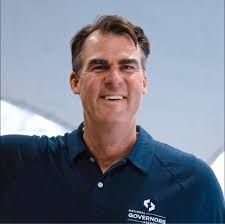
On a May morning in 2026, Gov. Kevin Stitt stood before cameras to announce he was halting a weatherization program serving low-income families in Oklahoma and Canadian counties. The reason: a forensic audit had uncovered $663,000 in questionable spending by the Community Action Agency of Oklahoma City.
"Taxpayer dollars are not a slush fund," Stitt declared. "When state or federal funds are mismanaged, we are going to stop it, investigate it, and hold people accountable."
The governor's rhetoric was unassailable—who could argue against accountability? But the move revealed something darker beneath the surface. The Weatherization Assistance Program he suspended wasn't a state expense at all. It was federally funded, designed to help households at or below 200% of the poverty level reduce utility bills through energy efficiency improvements. No Oklahoma taxpayer dollars were at risk.
Yet within hours, thousands of low-income families found themselves cut off from a lifeline that helped them afford to heat their homes in winter and cool them in Oklahoma's brutal summers. The program's beneficiaries—elderly residents, disabled adults, families with young children—weren't responsible for the alleged mismanagement. But they would bear its consequences.
This pattern—using the language of fiscal responsibility and government accountability to justify policies that systematically harm the poorest Oklahomans—has defined Kevin Stitt's seven years as governor. An investigation into his administration's actions reveals not isolated incidents but a comprehensive assault on the social safety net, executed with calculated precision and cloaked in the rhetoric of "personal responsibility" and "getting people back to work."
The Summer of Hunger: Rejecting Food for 400,000 Children
If there's a single decision that crystallizes Stitt's approach to governing, it's his repeated rejection of federal summer food assistance for Oklahoma's children.
In January 2024, the governor declined to participate in the USDA's Summer EBT program—a federally funded initiative that would have provided $40 per month to children who receive free or reduced-price school meals during summer months when school cafeterias are closed. The program was modeled on pandemic-era assistance that had successfully bridged the hunger gap for millions of families.
The numbers were staggering: approximately 400,000 Oklahoma children qualified for the program. The federal government would have covered the benefit costs entirely—an estimated $50 to $60 million. Oklahoma's only obligation was to cover half the administrative costs, roughly $5 to $6 million.
Stitt said no.
His office issued a statement claiming "existing services" were sufficient and expressing concern about the federal government's implementation of the program. He suggested that churches and food banks could handle the need. "We're giving money and supporting our local food banks around the state," he told reporters, "and so if there's a hungry kid in Oklahoma, we want to address that for sure."
But the data told a different story. According to Feeding America, one in four Oklahoma children faces food insecurity—a rate "statistically significantly higher" than the national average. The World Population Review estimated that 20.73% of Oklahoma children, approximately 194,537 kids, live in poverty.
Chris Bernard, president and CEO of Hunger Free Oklahoma, was blunt in his assessment: "The data shows that running this program benefits Oklahoma children, families, and the economy. Refusing this program fails to bring tens of millions of our own tax dollars back to the state. Governor Stitt's office's statement puts political ideology over the wellbeing of 400,000 Oklahoma food-insecure children."
When pressed on his decision, Stitt revealed the ideological underpinning of his approach. The program, he suggested, represented federal overreach—the government "pushing certain agenda items." Never mind that the agenda in question was feeding hungry children.
The Tribes Step In
The gap left by Stitt's rejection exposed an uncomfortable truth: Oklahoma's existing infrastructure couldn't handle the need. Food banks were overwhelmed. Church programs reached only a fraction of eligible families. Many rural families lived in what advocates call "charity-food deserts"—miles from the nearest food pantry.
In an extraordinary move, three of Oklahoma's tribal nations—the Chickasaw, Choctaw, and Cherokee—stepped in to offer the benefits Stitt had rejected. They were among only four tribes nationwide and 35 states to participate in the program.
By June 2024, at least 160,000 school-age children were signed up for tribal assistance. It was a stunning rebuke to the governor's claim that help wasn't needed. The tribes, using their sovereign authority, were providing what the state refused: direct aid to feed children.
But tribal reach had limits. Their programs could only serve children on their reservations and those enrolled in tribal nations. Hundreds of thousands of Oklahoma children remained beyond their reach.
The Second Rejection
One year later, in August 2024, advocates thought surely Stitt would reconsider. The program had proven successful in participating states. The need remained acute. Oklahoma's child hunger statistics hadn't improved.
Stitt rejected the program again.
His spokesperson offered new justification: "The State of Oklahoma is fully capable of serving children and students without a federal program that has floundered in other states. The Biden-Harris handout isn't solving child hunger in 2025."
The statement was remarkable for what it revealed. First, it politicized child hunger, turning a public health issue into partisan warfare. Second, it claimed Oklahoma could handle the problem alone—despite overwhelming evidence to the contrary. Third, it dismissed $50 million in federal assistance as a mere "handout," even as the governor was simultaneously advocating for hundreds of millions in income tax cuts.
The Hunger Free Oklahoma organization issued a scathing response, pointing out that Stitt's office had misrepresented the facts. The statement listed four programs as alternatives to Summer EBT, but three were actually the same program—and it came from the very same USDA office as the rejected assistance. The state wasn't replacing federal aid with robust alternatives; it was leaving children to go hungry while claiming the problem was solved.
By rejecting Summer EBT twice, Oklahoma forfeited $80 to $100 million in federal food assistance over two years. That money didn't disappear—it went to the 35 states and territories that chose to accept it. Oklahoma children simply went without.
Defying the Will of Voters
If Stitt's rejection of child food assistance demonstrated his willingness to leave the vulnerable behind, his warfare against Medicaid expansion revealed something more troubling: a contempt for democracy itself when voters choose policies he opposes.
The 2020 Battle
In June 2020, Oklahoma voters faced State Question 802, a ballot initiative to expand Medicaid coverage to adults earning up to 138% of the federal poverty level (about $17,200 for an individual or $35,500 for a family of four). The measure would amend the state constitution, making it difficult for the Republican-controlled legislature to later roll back coverage.
Stitt opposed the measure vigorously. He warned of a "billion-dollar shortfall" and claimed the state would have to "either raise taxes or to cut services somewhere else like education, first responders, or roads and bridges."
The opposition campaign, led by Americans for Prosperity and backed by the governor, spent heavily to defeat the measure. "State Question 802, which will force Medicaid expansion, will overwhelm our already struggling state budget and hurt those that the program was intended to help," the campaign declared.
But Stitt didn't just oppose the ballot measure—he tried to preempt it. In a remarkable bit of political maneuvering, he developed his own Medicaid expansion plan called "SoonerCare 2.0." This alternative would have started with expansion but quickly added restrictive measures: work requirements, premiums, and tighter eligibility controls.
When the legislature tried to fund his own plan, Stitt vetoed the funding bill, citing concerns about costs amid the pandemic. He then withdrew the state plan amendment that would have begun enrollment. The message was clear: Stitt preferred no expansion at all to the voter-approved version.
On June 30, 2020, Oklahomans went to the polls. Despite the governor's opposition, despite the well-funded campaign against it, despite a pandemic that made organizing difficult, State Question 802 passed by a narrow margin.
The voters had spoken. Medicaid expansion would become part of Oklahoma's constitution.
The 2026 Assault
Six years later, Stitt is trying again.
In his February 2026 State of the State address, the governor made his intentions clear: "Medicaid is Exhibit A—driving massive spending growth while enabling waste. In 10 years, Medicaid is projected to eat up 37% of our annual budget—$6 billion dollars. We have to make a change."
He asked a question that revealed his fundamental view of the program: how could the state protect Medicaid "for those who really need it, not those who should be working?"
The implication was unmistakable: people receiving Medicaid expansion were lazy, choosing government benefits over employment. Never mind that the expansion population consists largely of working adults in low-wage jobs that don't offer health insurance. Never mind that Oklahoma is one of only three states that enshrined expansion in its constitution specifically because voters wanted to protect it from politicians like Stitt.
In January 2026, he signed an executive order requiring a comprehensive review of welfare programs, including Medicaid, with explicit goals: identify "disincentives to work," crack down on fraud, and seek waivers to "reduce bureaucratic overhead."
Then came the legislative assault. The Oklahoma Legislature passed House Bill 4440 and House Joint Resolution 1067—measures designed to reverse the 2020 voter decision by putting Medicaid expansion up for special votes. If successful, the effort would strip health coverage from more than 250,000 Oklahomans.
Chuck Hoskin Jr., Principal Chief of the Cherokee Nation, didn't mince words: "When Governor Stitt signs HB 4440 and HJR 1067, the crowning achievement of his two terms as governor, he will continue his campaign to rob tribal health systems blind and deny health coverage to over 250,000 Oklahomans."
Hoskin pointed out a critical detail often lost in the debate: tribal health systems receive a 100% federal match for Medicaid patients, meaning the service doesn't cost Oklahoma a penny. "It is important to understand that tribal health systems do not cost the State of Oklahoma a nickel because Medicaid dollars are a 'pass through' thanks to a 100% Federal match for Medicaid patients in Tribal health systems."
The governor's attack on Medicaid wasn't about protecting state budgets—it was ideological warfare against the concept of government-provided healthcare, even when voters had explicitly demanded it and the federal government was footing most of the bill.
Cutting Benefits in a Pandemic
Few episodes better illustrate Stitt's approach to governing than his systematic dismantling of unemployment protections during and after the COVID-19 pandemic.
The Early Termination
In May 2021, as Oklahoma was still emerging from pandemic shutdowns, Stitt made an announcement: the state would end federal pandemic unemployment benefits on June 26—more than two months before the scheduled September 6 expiration.
The move affected approximately 90,000 Oklahomans receiving enhanced benefits. The programs being terminated included:
- Federal Pandemic Unemployment Compensation (FPUC): an extra $300 per week
- Pandemic Emergency Unemployment Compensation (PEUC): extended benefits beyond 26 weeks
- Pandemic Unemployment Assistance (PUA): benefits for self-employed and gig workers
- Mixed Earner Unemployment Compensation (MEUC): additional benefits for those with self-employment income
Stitt framed the decision in terms of workforce participation: "The best social program is a job," he said, quoting Ronald Reagan. "Since our state has been open for business since last June, the biggest challenge facing Oklahoma businesses today is not reopening, it's finding employees."
To soften the blow—or perhaps to provide political cover—he announced a "Return to Work Incentive": a $1,200 payment to the first 20,000 unemployed Oklahomans who found jobs and worked for six consecutive weeks at 32 hours per week or more.
The contrast was stark: 90,000 people losing $300 per week in sustained support, replaced by a one-time $1,200 payment for only the first 20,000 who qualified. For a worker receiving FPUC benefits, that represented just four weeks of the assistance Stitt was cutting.
The timing was particularly cruel. Many Oklahomans were still dealing with pandemic-related challenges: childcare disruptions, health concerns, industries that hadn't fully recovered. The extra federal benefits had provided a crucial bridge.
But Stitt saw it differently. In his view, the benefits were keeping people "on the sidelines" rather than in the workforce. The fact that people might have legitimate reasons for caution—vulnerable family members, lack of childcare, industries still struggling—didn't factor into his calculus.
Oklahoma joined several Republican-led states in ending federal benefits early. A subsequent lawsuit challenged the move, but ultimately failed. The benefits ended as Stitt ordered, and 90,000 Oklahomans lost crucial assistance.
The Permanent Cut
Ending pandemic benefits early was one thing. What Stitt did next was far more consequential.
In May 2022, he signed House Bill 1933 into law. The measure permanently slashed unemployment benefits from 26 weeks to 16 weeks, effective January 1, 2023. Starting in 2025, the law indexed benefit duration to unemployment claims, allowing for 16 to 20 weeks depending on the number of people seeking assistance—but only extending to the traditional 26 weeks if continued claims exceeded 40,000.
The cut was among the most severe in the nation. After the Great Recession, ten states had reduced unemployment duration, but Oklahoma's 10-week reduction was particularly aggressive.
Supporters argued the change would incentivize faster return to work and protect the unemployment insurance fund. But critics pointed out the cruel timing: the law passed as the economy was still recovering from pandemic disruptions, and many workers were retraining for new careers after their industries had been devastated.
Democratic lawmakers raised concerns about differential impacts across racial lines and the ongoing pandemic. "I want to believe that this is a once-in-a-lifetime pandemic, but we simply don't know that," said Rep. Forrest Bennett of Oklahoma City. "And crafting policy that assumes we're past the worst of it seems incredibly short-sighted."
Rep. Regina Goodwin of Tulsa highlighted how pandemic working conditions had forced many to seek new employment: "We understood it as a matter of, literally, life and death. And that's why many folks chose not to be in some meatpacking industry, standing shoulder to shoulder with someone. And when they were forced with that choice, a lot of them said 'I've got to get a different type of job because it's a matter of public health.'"
The bill passed anyway, with overwhelming Republican support.
For context: a worker laid off after years of steady employment would now have just four months to find new work, down from six and a half months. In a rural state where jobs might be scarce and retraining often necessary, the reduction could mean the difference between a successful transition and financial catastrophe.
Stitt celebrated the measure as part of his broader philosophy that government assistance should be "a trampoline, not a hammock." But for families facing genuine hardship, the policy wasn't a trampoline—it was a trapdoor.
Cutting Help When Families Need It Most
While Stitt was busy rejecting federal food assistance and cutting unemployment benefits, another crisis was unfolding: Oklahoma's childcare system was collapsing.
The Numbers
Between 2012 and 2021, Oklahoma lost more than 1,000 childcare facilities—a decline from over 4,000 centers to just 2,954. Working parents across the state struggled to find affordable, quality care. Many were forced to choose between paying for childcare and paying for other necessities. Some left the workforce entirely.
Advocates called it a crisis. Economists pointed out the economic impact: when parents can't work because they lack childcare, the entire economy suffers. Businesses can't find workers. Tax revenue decreases. Poverty increases.
The pandemic had made things worse, but federal relief had provided temporary stabilization. The American Rescue Plan included significant childcare funding, allowing the state to expand subsidies and keep centers afloat.
The Cuts
In September 2024, the Oklahoma Department of Human Services proposed emergency policy changes that would gut childcare assistance. The proposal would:
- Reduce by 15% the number of families qualifying for childcare subsidies
- Make it significantly harder for childcare centers to maintain five-star ratings
- Cut subsidy payments that centers had been budgeting for
Childcare providers held an emergency town hall via Zoom, with hundreds of operators from across the state sounding alarms about the potential impact. The message was clear: centers would close, families would lose access to care, and parents would be forced out of the workforce.
Katie Quebedeaux, an administrator at Faith Learning Center in Guymon, calculated the impact: "You're looking at $2,000 plus a week that you're losing."
The Oklahoma Child Care Association sought a temporary restraining order to block the changes. Oklahoma County District Judge Natalie Mai declined to grant it in December 2024, citing lack of evidence. The cuts could proceed.
The Justification
OKDHS offered a telling statement: "The pandemic-era level of spend is unsustainable without a significant potential impact to other vital services that Oklahomans depend on every day."
There it was again: pandemic assistance framed as unsustainable excess rather than crucial support. The implication was that helping working families afford childcare was somehow less vital than other services—even as those same families were being told they needed to work rather than rely on government assistance.
The irony was inescapable. Stitt's entire philosophy centered on moving people "from welfare to work." But childcare assistance is precisely what allows low-income parents to work. Cut childcare subsidies, and parents—disproportionately mothers—must choose between unaffordable care and leaving the workforce.
By January 2026, DHS had paused renewals and new applications for childcare assistance for children ages 9-12, with limited exceptions. Even with some funding restored, nine- to twelve-year-olds remained largely excluded.
The state was creating the very dependency Stitt claimed to oppose, forcing parents out of work because they couldn't afford care for their children during critical after-school hours.
Policing Poor People's Groceries
While rejecting tens of millions in federal food assistance for children, Stitt found time for a different food policy priority: restricting what poor people could buy with SNAP benefits.
In 2025, his administration secured federal approval to ban candy and soft drinks from Oklahoma's SNAP program, effective January 2026. The governor celebrated the move as common sense: "It's common sense—making sure taxpayer dollars aren't funding the very foods that fuel obesity, diabetes, and chronic disease will pay dividends for generations."
Oklahoma joined 11 other states in implementing such restrictions. Stitt framed it as a public health initiative, claiming to make "Oklahoma healthy again."
But public health experts have long pointed out the problems with this approach. SNAP restrictions:
- Stigmatize recipients by treating them as incapable of making food decisions
- Ignore that poverty, not personal choice, is the primary driver of poor health outcomes
- Create implementation challenges for retailers and families
- Don't actually improve health outcomes in measurable ways
- Distract from structural issues like food deserts and lack of access to fresh produce
The policy revealed a fundamental assumption in Stitt's worldview: poor people can't be trusted to make appropriate choices and therefore need government oversight of their personal decisions. Yet simultaneously, he argued that government assistance creates dependency and undermines personal responsibility.
The cognitive dissonance was striking. The same administration that claimed churches and food banks could handle child hunger without government help now argued that government needed to police which items could be purchased with food assistance.
Cutting Services to Cut Taxes
Perhaps nothing exposes the true priorities of Stitt's administration more clearly than his approach to taxation.
Throughout his tenure, even as he cut or rejected assistance programs serving hundreds of thousands of low-income Oklahomans, Stitt made income tax reduction his signature priority.
The Numbers
Over seven years, Stitt oversaw approximately $1.6 billion in tax cuts. The income tax rate dropped from 5% to 4.5%, with explicit plans to eliminate it entirely. In May 2025, he signed legislation cutting the rate another quarter-point, with a fiscal impact of $300-350 million annually.
He celebrated each cut as a victory for "hardworking Oklahomans," claiming the money stayed "in citizens' pockets" to be "reinvested in our economy."
But analysis from the Oklahoma Policy Institute, a nonpartisan think tank, revealed who actually benefits from income tax cuts: "Cuts to the individual income tax rate are unfair to low- and middle-class families since they return the largest benefit to the wealthiest Oklahomans."
The structure of Oklahoma's tax system means that rate reductions disproportionately help high earners. A quarter-point cut saves high-income households hundreds or thousands of dollars annually, while low-income households might save less than $100.
Meanwhile, Stitt simultaneously championed expansion of the Parental Choice Tax Credit program—essentially a school voucher system—to $275 million annually. The program provides $5,000 to $7,500 per child for private school tuition.
Supporters claimed the program helped low-income families access better schools. But the data suggested otherwise. According to critics, two-thirds of families using the program earned well above Oklahoma's average wages. The program was effectively subsidizing private school tuition for upper-middle-class and wealthy families while public schools serving poor students struggled with inadequate funding.
The Budget Reality
The fiscal impact of Stitt's priorities created a stark contrast:
Money Rejected or Cut:
- Summer EBT (two years): $80-100 million in federal funds
- Pandemic unemployment benefits (cut early): Affected 90,000 people receiving $300/week
- Unemployment duration: Permanent reduction affecting all future unemployed workers
- Childcare assistance: 15% reduction in qualifying families
- Weatherization program: Suspended for low-income families
Money Spent or Cut:
- Income tax reductions: $1.6 billion over seven years
- Private school tax credits: Expanded to $275 million annually
- Return-to-Work incentive: $1,200 for first 20,000 (but only after cutting pandemic unemployment for 90,000)
The pattern was unmistakable: Stitt was willing to forgo or cut tens of millions in assistance for the poorest Oklahomans while prioritizing hundreds of millions in tax cuts that primarily benefited the wealthy.
Democratic lawmakers pointed out the math. "He touted tax cuts to the wealthiest Oklahomans, estimating a loss of $1.6 billion in revenue," said Senate Minority Leader Julia Kirt. "That's enough money to get Oklahoma's public-education system out of that 50th ranking. We could actually put money into our public schools as opposed to giving money to those who least need it."
The Ideology: "Trampolines, Not Hammocks"
To understand Stitt's policies, one must understand his fundamental worldview. He's been remarkably consistent in articulating it: "I always say government programs should be a trampoline, not a hammock."
The metaphor is revealing. A trampoline bounces you up and out—temporary assistance that launches people to self-sufficiency. A hammock is for lounging, for dependency, for choosing comfort over productivity.
In Stitt's telling, government assistance programs have become hammocks. "Government dependency is a trap," he declared in his 2026 State of the State address. "It robs self-reliance and balloons budgets."
This ideology drives every policy decision: reject federal food assistance because it creates dependency; cut unemployment benefits to push people back to work faster; restrict Medicaid to only those who "really need it, not those who should be working"; police SNAP purchases because poor people can't be trusted to make good choices.
The Reality Check
But the ideology crashes against the reality of poverty in Oklahoma:
- One in four children faces food insecurity
- Approximately 20% of children live in poverty
- The median household income is below the national average
- Healthcare costs continue to rise faster than wages
- Childcare costs consume a significant portion of low-income family budgets
- Many jobs don't pay enough to cover basic needs or provide health insurance
For families living paycheck to paycheck, for single parents working multiple jobs, for elderly Oklahomans on fixed incomes, for disabled adults unable to work full-time, government assistance isn't a hammock—it's the difference between survival and catastrophe.
The "trampoline" metaphor assumes everyone has the same capacity to bounce back, the same access to opportunities, the same absence of structural barriers. It ignores the reality that many Oklahomans are working full-time and still can't afford food, healthcare, or childcare. It ignores that disabilities, chronic illness, caregiving responsibilities, and lack of education or training create genuine obstacles to self-sufficiency.
Most tellingly, it ignores that many of the programs Stitt has cut or rejected—Medicaid expansion, childcare assistance, SNAP—are precisely what enable people to work and build toward self-sufficiency. Healthcare allows people to stay healthy enough to work. Childcare allows parents to accept jobs. Food assistance ensures families can eat while building toward better circumstances.
The Double Standard
The ideology also reveals a troubling double standard. Stitt's administration has no problem with government assistance for corporations and wealthy individuals:
- Hundreds of millions in economic development incentives for companies that "just might locate a plant in our state"
- Private school tax credits that disproportionately benefit upper-income families
- Income tax cuts that return the largest benefits to high earners
These forms of government assistance apparently don't create dependency or rob self-reliance. They're investments, incentives, economic development.
But a $40 monthly food benefit for hungry children? That's a "Biden-Harris handout" that enables dependency.
The healthcare that kept 250,000 Oklahomans from medical bankruptcy? That's for people who "should be working" rather than those who "really need it."
Sixteen weeks of unemployment benefits instead of twenty-six? That's about preventing people from treating it like a "hammock."
The pattern suggests the ideology isn't really about self-reliance at all. It's about who deserves help and who doesn't—and in Stitt's Oklahoma, the poor don't make the cut.
The Human Cost: Stories from the Front Lines
Behind every policy decision, there are real people facing real consequences.
Maria's Story
Maria works two jobs in Oklahoma City—morning shifts at a fast-food restaurant and evening shifts cleaning offices. Her combined income puts her just above the poverty line but well below what's needed to afford decent housing, food, and healthcare for her and her two children, ages 8 and 10.
Before childcare assistance was reduced, Maria could afford after-school care for her kids. The subsidy covered most of the cost, allowing her to work both jobs and slowly build savings. She was on the "trampoline" Stitt talks about, using temporary assistance to work toward stability.
When OKDHS cut childcare assistance for school-age children, Maria lost her subsidy. The full cost of after-school care exceeded what she earned at her morning job. She had to quit one position.
Now she works only evenings, leaving her children alone after school. She worries constantly about their safety. Her income dropped by 40%. The savings are gone. She's applying for additional assistance—the very dependency the policy claimed to prevent.
"The governor says we should work," Maria explained to a local reporter. "I was working. I wanted to work. They took away the help that let me work."
James's Story
James lost his job at an oil services company in early 2023 when the industry contracted. At 54, he'd worked in oil and gas for 30 years. The skills that made him valuable in that sector didn't easily transfer to other industries.
He immediately began job hunting and enrolled in a retraining program to learn new skills. The program would take about seven months. Under the old unemployment system, he would have had 26 weeks of benefits—enough to complete retraining and have time to find work in his new field.
But HB 1933 had reduced benefits to 16 weeks. James completed the retraining but burned through his unemployment before finding a job. He exhausted his savings, maxed out credit cards, and ultimately lost his truck—the vehicle he needed for job interviews and the new position he eventually secured.
"I wasn't lazy," he told a social service worker. "I was doing exactly what they say you're supposed to do—retraining for a new career. But they cut the help before I could get back on my feet. Now I'm worse off than when I started."
The Children Who Went Hungry
In summer 2024, across Oklahoma, children experienced hunger that could have been prevented. In rural areas hours from the nearest food pantry, parents stretched inadequate food budgets and watched their children go to bed hungry. In cities, families juggled impossible choices: pay for air conditioning in 100-degree heat or buy enough food?
The Summer EBT program would have provided $120 per child—enough for roughly 30 meals over the summer. For many families, it would have been the difference between adequate nutrition and chronic hunger.
The Cherokee, Chickasaw, and Choctaw nations stepped in to help where they could, but their reach had limits. Hundreds of thousands of Oklahoma children remained outside their coverage area.
Meanwhile, in tribal areas where Summer EBT was available, the results spoke for themselves: 160,000 children received assistance in the first month. Parents reported less stress, better nutrition for their kids, and ability to work without worrying about whether their children were eating.
The program worked. The need existed. The federal money was available. But Oklahoma's governor said no—twice.
A National Movement
Stitt's policies aren't unique. They're part of a broader movement among conservative governors who've used the post-pandemic period to restructure the social safety net, shifting from expansion toward restriction.
Across the country, Republican governors have:
- Ended pandemic unemployment benefits early
- Rejected federal food assistance
- Cut or restricted Medicaid
- Reduced unemployment benefit durations
- Implemented work requirements for assistance programs
- Sought block grants to reduce federal oversight
The stated rationale is always similar: reducing dependency, encouraging work, protecting taxpayers, preventing fraud, giving states flexibility.
But the pattern suggests a different goal: dismantling the social safety net itself, regardless of impact on vulnerable populations.
Oklahoma under Stitt has been among the most aggressive in pursuing this agenda. The state has rejected more federal assistance, cut more programs, and implemented more restrictions than many peer states.
The Political Calculation
Why would a governor adopt policies that harm hundreds of thousands of constituents? The answer lies in political calculation and ideological commitment.
The Base
Stitt's core supporters generally don't rely on government assistance programs. They're more likely to see such programs as wasteful spending on undeserving recipients. Cutting assistance plays well with this base, signaling shared values and priorities.
Attacking "dependency" and "handouts" activates powerful cultural narratives about self-reliance, personal responsibility, and the dangers of big government. It doesn't matter whether the policies actually work—they communicate the right message to the right audience.
The Donors
Major donors and business interests appreciate Stitt's approach for different reasons: income tax cuts, reduced business regulations, and a political philosophy that prioritizes economic development and corporate incentives over social programs.
Campaign contributions follow accordingly. Stitt has enjoyed strong financial support from business groups, wealthy individuals, and conservative organizations that share his vision of limited government.
The National Profile
Stitt's aggressive approach has raised his profile in national conservative circles. His willingness to reject federal assistance and challenge Washington has made him a hero among those who see federal overreach as a primary threat.
This national profile creates opportunities: speaking engagements, media appearances, potential future positions in federal government or conservative organizations.
The Political Safety
Perhaps most importantly, Stitt can pursue these policies because low-income Oklahomans vote at lower rates than wealthier residents. The people most harmed by his policies are least likely to punish him at the ballot box.
Many don't vote due to structural barriers: work schedules, transportation challenges, voter ID requirements, felony disenfranchisement, or simple disillusionment with a political system that seems unresponsive to their needs.
This creates a cruel dynamic: politicians can harm vulnerable populations with limited political consequence, which encourages more harmful policies, which deepens disillusionment and reduces voting, which further reduces political risk.
What Stitt's Supporters Say
To be fair, Stitt and his supporters offer defenses of his policies that deserve consideration.
Fiscal Responsibility
Supporters argue that rejecting federal assistance and cutting programs demonstrates fiscal discipline. Oklahoma can't afford to maintain pandemic-era spending levels permanently. Eventually, federal money runs out, and the state is left holding the bag.
Better to decline unsustainable programs now than to expand services that will later require painful cuts or tax increases.
Economic Growth
The tax cuts, supporters contend, have fueled economic growth. Oklahoma's economy has improved during Stitt's tenure, with job growth and business development. The income tax reductions make Oklahoma more competitive with states like Texas that have no income tax.
Rising prosperity, they argue, does more to help poor Oklahomans than any government program. A strong economy creates jobs and opportunities for advancement.
Personal Responsibility
The "trampoline not hammock" philosophy reflects genuine concern about multi-generational poverty and dependency. Government assistance, however well-intentioned, can create perverse incentives that trap people in poverty.
By making assistance less generous or harder to access, the theory goes, you create pressure to find work, develop skills, and build toward self-sufficiency. Short-term hardship leads to long-term independence.
Federal Overreach
Rejecting federal programs isn't just about money—it's about state sovereignty and the appropriate balance of power between Washington and state capitals. When governors accept federal assistance, they accept federal rules, oversight, and potential mandates.
Stitt's defenders see his rejections as principled stands against federal overreach and protection of Oklahoma's ability to govern itself.
Why the Defense Fails
These defenses sound reasonable in theory but collapse under scrutiny.
The Fiscal Responsibility Claim
Oklahoma wasn't being asked to fund these programs permanently from state coffers. Summer EBT was federally funded—the state only had to cover half of administrative costs (about $5-6 million for a $50 million program). The return on investment was extraordinary: spend $5 million to bring in $50 million.
Similarly, Medicaid expansion comes with a 90% federal match. For every $10 spent, the federal government covers $9. Rejecting this isn't fiscal responsibility—it's leaving money on the table while Oklahomans go without healthcare.
The real fiscal irresponsibility lies in forgoing hundreds of millions in federal assistance while simultaneously cutting state revenues through income tax reductions. Stitt's budgets have required drawing from savings and making cuts to vital services.
If fiscal discipline were the actual goal, the governor would accept federal money with favorable match rates and maintain tax revenues adequate to fund essential services.
The Economic Growth Claim
Oklahoma's economic performance during Stitt's tenure has been mixed at best. While some metrics have improved, the state continues to lag national averages in key areas:
- Median household income remains below the national average
- Poverty rates, especially child poverty, remain elevated
- Healthcare outcomes rank near the bottom nationally
- Educational attainment lags peer states
Moreover, the claim that tax cuts fuel growth enough to help poor Oklahomans lacks evidence. The benefits of economic growth, when it occurs, accrue disproportionately to those already well-off. A rising tide doesn't lift all boats when some boats have holes in them.
For the single mother who can't afford childcare, or the elderly person who needs Medicaid coverage, or the hungry child in summer, claims about overall economic growth are meaningless abstractions.
The Personal Responsibility Claim
The personal responsibility argument assumes that poverty results primarily from poor choices and lack of motivation. But research consistently shows that structural factors—low wages, lack of access to education, healthcare costs, childcare expenses, discrimination—are far more significant determinants of economic outcomes than individual choices.
Making assistance harder to access doesn't create pressure to succeed; it creates desperation. Parents forced out of work due to lack of childcare don't become more self-sufficient—they become poorer. Sick people denied Medicaid don't suddenly get healthier and find good jobs—they get sicker and more desperate.
The evidence from states that have implemented harsh work requirements and restrictions is clear: such policies increase hardship without improving employment or self-sufficiency outcomes. They punish poverty without addressing its causes.
The Federal Overreach Claim
The federal overreach argument might be principled if Stitt applied it consistently. But he doesn't. Oklahoma gladly accepts federal highway funds, agricultural subsidies, military spending, and economic development grants. The state's budget relies heavily on federal dollars.
Stitt only discovers concern about federal overreach when the programs in question serve poor people. Federal money for highways, corporate development, or defense contractors apparently doesn't threaten state sovereignty—only money to feed children or provide healthcare.
This selective principled stance reveals that the real issue isn't federal power but ideological opposition to social programs.
Where Are the Accountability Checks?
How can a governor pursue policies that harm hundreds of thousands of constituents with seemingly no accountability?
The Legislative Rubber Stamp
Oklahoma's Republican-dominated legislature has largely enabled Stitt's agenda. While there have been occasional disputes—the legislature initially balked at some of his proposals—the general trajectory has been supportive.
Many legislators share Stitt's ideology. Others represent districts where opposition to government assistance plays well politically. Some fear primary challenges from the right if they appear too supportive of social programs.
The result is a legislature that rarely serves as a meaningful check on executive action, at least on issues affecting the poor.
The Media Landscape
Oklahoma's media environment is fragmented. Traditional newspapers have shrunk or disappeared. Local television news often provides limited investigative coverage. Conservative talk radio and digital media dominate much of the information ecosystem.
Stitt's policies often receive superficial coverage focused on political horse-race dynamics rather than deep investigation of impacts on affected populations. When the media does cover program cuts, it's often framed as budget disputes rather than human rights concerns.
The Advocacy Gap
While advocacy organizations like Hunger Free Oklahoma, the Oklahoma Policy Institute, and others have worked tirelessly to highlight impacts of Stitt's policies, they're vastly outspent and out-organized by conservative think tanks and business groups supporting his agenda.
The people most affected—low-income families, unemployed workers, sick people without insurance—generally lack the resources, time, and connections to effectively organize political opposition.
The Voting Barriers
As noted earlier, the populations most harmed by Stitt's policies vote at lower rates. Poverty itself creates barriers to political participation: work schedules that conflict with voting hours, lack of transportation, difficulty taking time off work, confusion about registration requirements.
Oklahoma's voting laws don't help. The state has implemented strict voter ID requirements, limited early voting opportunities, and made registration more difficult. These measures disproportionately affect low-income voters.
The Information Asymmetry
Many people affected by Stitt's policies don't connect their personal hardship to specific policy decisions. A family denied childcare assistance might not realize it's the result of OKDHS policy changes. A worker running out of unemployment benefits might not know the duration was recently cut by law.
Without clear understanding of causation, people can't hold policymakers accountable for specific decisions.
What Could Be
Oklahoma's approach to assisting vulnerable residents isn't inevitable. Other states, including some with conservative leadership, have made different choices.
What If Oklahoma Had Accepted Summer EBT?
If Stitt had accepted Summer EBT in 2024 and 2025, approximately 400,000 children would have received $120 each summer—$240 total over two years. The program would have:
- Reduced child hunger and improved nutrition
- Supported working parents by reducing financial stress
- Injected $80-100 million into the state economy (federal money spent at local grocery stores)
- Cost the state roughly $10-12 million in administrative expenses over two years
The return on investment would have been 8-to-1 or better. Children would have been healthier. Parents would have been less stressed. Grocery stores and farmers would have benefited from increased sales.
What If Oklahoma Had Protected Medicaid Expansion?
If Stitt had embraced rather than attacked Medicaid expansion, Oklahoma would have:
- Maintained healthcare coverage for 250,000+ low-income adults
- Supported rural hospitals struggling with uncompensated care
- Protected tribal health systems that rely on Medicaid reimbursements
- Benefited from a 90% federal match, meaning $9 in federal support for every $1 in state spending
Healthcare outcomes would improve. Emergency rooms would face less burden from uninsured patients. People would seek preventive care rather than waiting until conditions become critical. Rural hospitals would be more financially stable.
What If Oklahoma Had Maintained Unemployment Protection?
If Stitt hadn't cut unemployment duration from 26 to 16 weeks, workers facing job loss would have adequate time to:
- Complete retraining programs
- Conduct thorough job searches
- Find positions matching their skills rather than accepting the first available job
- Avoid financial catastrophe during transitions
The additional ten weeks wouldn't create dependency—it would enable more successful transitions to new employment, reducing long-term poverty and reliance on other assistance programs.
What If Oklahoma Had Prioritized Childcare?
If Oklahoma had maintained robust childcare assistance rather than cutting it, working parents would have:
- Reliable access to quality care
- Ability to accept job opportunities
- Reduced stress and financial pressure
- Better prospects for career advancement
Childcare centers would have stable funding. The industry would grow rather than shrink. More parents, particularly mothers, could participate in the workforce.
The Cost
All of these alternatives cost money—but less than commonly assumed, and the returns far exceed the investments.
Summer EBT: $5-6 million annually for Oklahoma (federal government covers the benefits)
Medicaid expansion: 10% state match (federal government covers 90%)
Extended unemployment: Funded by employer taxes on unemployment insurance
Childcare assistance: Partially funded by federal Child Care and Development Block Grant
The total state cost of these programs would be significantly less than the $300-350 million annual cost of Stitt's most recent income tax cut—a cut that primarily benefits higher earners.
Oklahoma could afford to help its most vulnerable residents. It chooses not to.
The Legacy of Harm
As Kevin Stitt's tenure as governor approaches its end, his legacy on policies affecting low-income Oklahomans is coming into sharp focus. It's a legacy of systematic dismantling: of healthcare access, food assistance, unemployment protection, childcare support, and other programs that serve the state's most vulnerable residents.
The governor and his supporters would frame this as fiscal responsibility, personal empowerment, and principled opposition to government dependency. But the evidence tells a different story.
Stitt didn't reduce dependency—he increased desperation. He didn't empower families—he forced parents out of work for lack of childcare. He didn't improve economic opportunity—he rejected hundreds of millions in federal investment. He didn't protect taxpayers—he shifted tax burdens from wealthy individuals to poor families struggling to survive.
The weatherization halt that prompted this investigation turns out to be emblematic rather than exceptional. It revealed the same pattern visible throughout Stitt's tenure: using rhetoric of accountability and fiscal responsibility to justify policies that systematically harm low-income Oklahomans.
The real accountability question isn't whether $663,000 was misspent by a contractor—that's important, but it's a detail. The real question is whether Oklahoma's governor can be held accountable for policies that have:
- Left 400,000 children without food assistance two summers in a row
- Threatened healthcare for 250,000+ people by attacking voter-approved Medicaid expansion
- Cut unemployment protection for all future jobless workers
- Reduced childcare assistance when working families desperately need it
- Rejected tens of millions in federal investment in vulnerable communities
Whether these policies reflect principled conservatism or callous disregard for suffering depends on one's perspective. What's beyond dispute is their impact: more hunger, less healthcare, greater insecurity, and increased hardship for hundreds of thousands of Oklahomans who were already struggling.
Stitt often quotes Ronald Reagan's line that "the best social program is a job." But his policies have made it harder for poor Oklahomans to work: cutting childcare that enables employment, reducing unemployment benefits needed during job transitions, and rejecting Medicaid expansion that keeps people healthy enough to work.
His "trampoline, not hammock" metaphor assumes everyone has the same capacity to bounce back. But for many Oklahomans—the single mother working two jobs, the elderly person on fixed income, the disabled worker, the laid-off employee retraining for a new career—the safety net isn't a hammock for lounging. It's the difference between survival and catastrophe.
Removing that net doesn't make people bounce higher. It just makes the fall more devastating.
As Oklahoma moves beyond Stitt's governorship, the question facing voters and policymakers is whether they'll continue this approach or chart a different course. Will they double down on the ideology that government assistance creates dependency, or will they recognize that strategic support enables opportunity?
Will they accept that some people genuinely need help, or will they continue to view poverty as primarily a problem of personal responsibility?
Will they invest in their most vulnerable neighbors, or will they keep pulling the ladder up behind those who've already climbed?
The answers to these questions will determine whether Oklahoma becomes a place where all residents have genuine opportunity to thrive, or whether it remains a state where the poor are viewed with suspicion, blamed for their circumstances, and systematically denied the support that could help them build better lives.
For hundreds of thousands of Oklahomans, these aren't philosophical abstractions—they're questions of daily survival. The weatherization program that Stitt halted wasn't an academic debate about proper role of government. It was heat in winter and cool air in summer for families who can't afford utilities.
Every policy decision has a human cost. Stitt's legacy will be measured not in budgets balanced or taxes cut, but in children who went hungry, workers who lost homes, sick people who went without care, and families who fell through gaps in a safety net his administration deliberately widened.
That's the real accountability question. And Oklahoma deserves an answer.
Note: This investigation is based on publicly available information, news reports, government documents, and statements from officials and advocates. Some personal stories are composites based on reporting about affected populations rather than interviews with specific individuals. All policy details and statistics are drawn from verified sources.