The Watchdog Under Attack: Stitt Moves to Audit the Attorney General Who Keeps Exposing His Administration's Corruption

The Watchdog Under Attack: Stitt Moves to Audit the Attorney General Who Keeps Exposing His Administration's Corruption
When the AG Started Investigating, Stitt Started Retaliating
OKLAHOMA CITY — On May 22, 2026, Governor Kevin Stitt requested a special audit of Attorney General Gentner Drummond's office, claiming the AG's 205% budget increase over three years deserves public scrutiny.
The real story? This is retaliation. Plain and simple.
In the past two years, Drummond's office has documented a stunning pattern of corruption, cronyism, and mismanagement by the Stitt administration. Grand juries found "rank political favoritism" in a prison release. Investigators uncovered "irresponsible, disappointing, and indefensible" misuse of $40 million in pandemic relief funds. The AG blocked a billion-dollar contract tainted by conflicts of interest involving Stitt's former chief of staff.
Now, with just months left in office, Stitt is going after the watchdog.
"It comes as no surprise that Gov. Stitt has called for an audit of my office," Drummond said in a statement. "He has a well-established pattern of targeting those who hold him accountable."
The evidence backs him up.
The Pandemic Relief Scandal: $40 Million Misspent
Let's start with the big one. In 2020, Stitt's office received $18 million in federal pandemic relief funds meant to help Oklahoma students affected by COVID-19 school closures.
Instead of working with experienced state agencies—as the Trump administration recommended—Stitt handed control to private individuals with no accountability and questionable qualifications.
The result? According to a multi-county grand jury, the funds were used to purchase 817 televisions, 385 watches or smartwatches, 179 doorbell cameras, 174 cell phones, 71 refrigerators, 27 Xbox systems, and three Christmas trees.
That's not pandemic relief. That's fraud on the taxpayers.
The grand jury found the handling of grant money to be "irresponsible, disappointing, and indefensible", though it discovered no criminal intent.
Here's where it gets interesting: When Drummond took office in January 2023, he dismissed Stitt's lawsuit against ClassWallet, the Florida vendor Stitt was blaming for the mess, calling it "almost wholly without merit" and a "smokescreen for negligent state actors".
Drummond then called for a grand jury investigation to find out who was really responsible. The investigation pointed directly at Stitt's office and then-Education Cabinet Secretary Ryan Walters.
According to the grand jury, Stitt "rejected guidance from the Trump Administration's U.S. Department of Education that a state agency or office experienced with federal grants should serve as the funds' fiscal agent," and instead "relied on unvetted, unqualified private individuals and individuals with virtually no accountability to the State to carry out these political objectives".
Translation: Stitt ignored federal guidelines and gave millions to his political allies who had no business managing public funds.
The grand jury concluded that the programs "did not meet the programmatic requirements for GEER Fund monies" but their frameworks "were clearly consistent with meeting a different objective: establishing a school voucher program"—a long-standing Stitt priority that had repeatedly failed to gain legislative approval.
Stitt couldn't get his voucher program through the legislature, so he tried to backdoor it with federal pandemic money. And when people started asking questions, he sued the vendor to deflect blame.
The Prison Release Scandal: 73 Days for an 8-Year Sentence
Two weeks before Stitt requested the audit of Drummond's office, another grand jury report dropped.
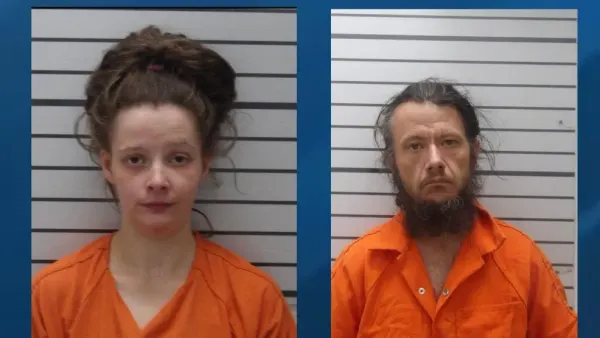
This one involved Sara Polston, a close friend of the governor who was sentenced to eight years in prison for a drunk driving crash that nearly killed a 20-year-old woman. Polston had been driving 66 mph in a 25 mph zone with a blood alcohol level nearly twice the legal limit.
She served 73 days.
The grand jury found evidence of what it called "rank political favoritism". According to the report, Stitt made multiple calls to the interim director of the Department of Corrections on Polston's behalf. After those calls, DOC officials specifically instructed staff to "ensure Polston was treated with respect and made to feel comfortable".
The jury concluded that "the DOC Director and his staff believed that facilitating Sara Polston's early transfer would please their boss, the Governor".
The Polstons aren't just casual acquaintances. Stitt and Rod Polston played football together at Norman High School and are members of the same college fraternity. The Polstons have contributed nearly $30,000 to Stitt's campaigns.
In recorded jail phone calls, the couple used code words—"The Guy," "Our Friend," "Our Buddy"—to refer to Stitt.
While the investigation found no criminal wrongdoing, it painted a clear picture: if you're the governor's friend and a campaign donor, the rules don't apply to you.
The Billion-Dollar Buddy Deal
The most recent Drummond intervention came just days before Stitt's audit request.
In early May 2026, the Attorney General blocked a contract that would have awarded management of a significant portion of Oklahoma's pension and endowment investments to 311 Capital Management LLC.
The problem? The firm was owned by Stephen Bond Payne, Stitt's former chief of staff.
According to Drummond's five-page letter to State Treasurer Todd Russ, the bidding process was "tainted by collusion and undisclosed conflicts of interest".
Drummond noted that during the procurement period, the same lobbyist simultaneously represented both 311 Capital's parent company and the State Treasurer's office running the bidding process. More significantly, Stitt himself—who serves as chair of the Invest in Oklahoma board—voted to approve the contract while holding an investment in an entity connected to Bond Payne and his firm.
"The award is invalid as a matter of law, the procurement that produced it was tainted by collusion and undisclosed conflicts of interest, and a contract executing the award would be void by operation of statute," Drummond wrote.
Following intense scrutiny, 311 Capital withdrew from the contract on May 15, 2026.
Seven days later, Stitt requested the audit of Drummond's office.
The Budget Defense: Where's the Money Really Going?
Stitt's audit request focuses heavily on the Attorney General's office budget, which grew from $43.2 million in FY2023 to $131.8 million in FY2026—the 205% increase cited in his letter.
But Drummond's response provides crucial context.
According to the AG's office, nearly 64 cents of every dollar that flows through the office is not an operating expense but rather pass-through funding that goes directly back to Oklahomans.
This includes:
- Restitution to independent pharmacies recovered through pharmacy benefit manager enforcement
- Opioid settlement funds distributed to communities devastated by the addiction crisis
- Grants to county sheriffs
- Other funds earmarked to return money to victims and communities
When these pass-through funds are accounted for, Stitt's claim of reckless spending falls apart. What he's characterizing as bureaucratic bloat is actually money being recovered for Oklahoma citizens.
The legislative appropriations referenced in Stitt's letter also require context. Much of the increase funded expanded enforcement capabilities, including the Medicaid Fraud Control Unit that has recently concluded investigations in 10 counties involving charges of Medicaid fraud, exploitation of elderly persons, and identity theft.
In other words, the budget grew because the office expanded its capacity to investigate and prosecute the very types of fraud and mismanagement that have plagued the Stitt administration.
The Medicaid Managed Care Fight
The immediate trigger for the public war between Stitt and Drummond appears to be Medicaid.
In late April 2026, Drummond requested an independent audit of the Oklahoma Health Care Authority, citing substantial cause to believe the agency was failing to properly oversee its contracted managed care organizations. The request came after mounting complaints from healthcare providers.
Stitt's transition to managed care—where the state pays private insurance companies to coordinate care rather than paying providers directly—was one of his administration's signature achievements. The program, called SoonerSelect, went live in April 2024.
When Drummond requested the audit, Stitt responded with fury, calling the request "politically motivated" and "aligned with the interests of major donors". He accused Drummond of trying to "unwind the progress Oklahoma has made."
Drummond fired back: "The people of Oklahoma have every right to know whether their tax dollars have paid for gender-transition drugs and surgeries, including for minors, yet the governor would rather protect the system than scrutinize it. Instead of providing answers, the governor is telling Oklahomans to stop asking questions".
The Pattern Is Clear
When you lay out the timeline, the pattern becomes unmistakable:
October 2024: Grand jury finds mismanagement of pandemic relief funds, pointing blame at Stitt's office.
May 8, 2026: Grand jury finds political favoritism in prison release of Stitt's friend.
May 7, 2026: Drummond blocks investment contract involving Stitt's former chief of staff.
May 22, 2026: Stitt requests audit of Drummond's office.
This isn't about fiscal responsibility. This is about silencing accountability.
Stitt has repeatedly demonstrated a pattern: When oversight mechanisms identify problems with his administration's programs or contracts, he attacks the messenger.
When federal and state auditors identified misuse of pandemic relief funds, Stitt sued the vendor. When Drummond investigated and found state officials responsible, Stitt's office accused him of playing politics.
When a grand jury found evidence of favoritism in a prison release, Stitt called the report "political gossip."
When Drummond blocked a contract riddled with conflicts of interest, the response was—within days—to request an audit of Drummond's office.
The Constitutional Question
There's another dimension to this that speaks to fundamental questions about how Oklahoma government works.
Does the governor have the authority to direct the work of other independently elected constitutional officers?
According to legal experts, the answer is no.
As Shawn Ashley of KGOU noted, "These are constitutional offices. And as Governor Stitt has acknowledged in the past, during some of the controversies related to former Superintendent of Public Instruction Ryan Walters, he does not have the authority to direct another statewide elected official on how to fulfill his duties or conduct themselves while in the office".
The governor can request an audit through the State Auditor—which is what Stitt has done—but he cannot order one. And critically, he cannot direct the Attorney General on which investigations to pursue or abandon.
Yet in his May 20 letter to Drummond, Stitt explicitly "directs" the Attorney General to cooperate with the Trump administration's Medicaid fraud audit and implicitly demands that he drop the Health Care Authority audit request.
That's not a suggestion. That's an order. And it's one Stitt has no constitutional authority to give.
Drummond's job is to investigate potential fraud and mismanagement wherever it exists—including in state agencies overseen by the governor. The Attorney General doesn't answer to the governor. He answers to the voters and the law.
What Happens Next
State Auditor Cindy Byrd has confirmed receipt of Stitt's audit request and indicated her office will meet with the governor's office to define the scope of any audit. She has not committed to conducting the audit as requested.
Byrd faces a delicate situation. She must avoid becoming a tool in a political vendetta between two constitutional officers locked in a bitter transition battle.
The audit request itself is unusual. While state agencies are routinely audited, special audits requested by elected officials targeting other elected officials are rare—particularly when those officials are political rivals and the requesting official is term-limited with months left in office.
Meanwhile, Drummond has made clear he welcomes scrutiny. "I welcome it," he said in response to Stitt's audit request.
His confidence likely stems from his belief that the budget increases can be justified by the office's expanded enforcement activities—activities that have consistently found problems in Stitt administration programs.
The Bigger Picture
This conflict raises fundamental questions about accountability in Oklahoma government.
When a governor's office repeatedly becomes the subject of investigations finding mismanagement, favoritism, and conflicts of interest, what is the appropriate response?
Should those investigations be welcomed as an opportunity to address problems and improve governance?
Or should they be resisted as political attacks?
When an Attorney General aggressively investigates potential wrongdoing by other elected officials and state agencies, is that fulfilling the office's core responsibility?
Or is it overreach?
The evidence from multiple grand jury investigations, audits by federal and state authorities, and Drummond's specific interventions suggests a clear answer.
The Stitt administration has repeatedly struggled with proper management of public funds, appropriate ethical boundaries, and adequate oversight mechanisms.
The pandemic relief funds were mismanaged in ways that a grand jury found "irresponsible, disappointing, and indefensible".
The prison release system was manipulated to benefit a governor's friend in a way the grand jury characterized as "rank political favoritism".
A major investment contract was tainted by undisclosed conflicts of interest involving the governor's former chief of staff.
These aren't trivial allegations. They're findings from grand juries, federal auditors, state auditors, and the Attorney General's independent legal analysis.
Drummond's office didn't create these problems. It investigated them, documented them, and in some cases stopped them.
The budget increases that Stitt now wants audited are, in significant part, the cost of that oversight function finally working.
Follow the Money
If you want to understand what's really happening here, follow the money.
Drummond's budget increase? Most of it is pass-through funding that goes back to Oklahomans—restitution, settlements, and grants. Money recovered from those who broke the law.
Stitt's budget decisions? Subject to multiple investigations finding mismanagement and misuse.
The pandemic funds? Spent on Xbox systems and Christmas trees instead of helping kids.
The investment contract? Steered to the governor's former chief of staff despite obvious conflicts.
The prison release? Granted to a major campaign donor and personal friend.
This isn't about whether the Attorney General's budget warrants scrutiny. Audit away. Transparency is good.
This is about whether this particular audit request, at this particular time, from this particular governor, is about protecting taxpayers or protecting a legacy.
The timing tells you everything you need to know.
Days after Drummond blocks a corrupt contract, Stitt requests an audit of Drummond.
Weeks after a grand jury finds favoritism in a prison release, Stitt requests an audit of Drummond.
Months after investigations uncover pandemic fund mismanagement, Stitt requests an audit of Drummond.
The pattern is retaliation, not accountability.
Why This Matters
Stitt will be gone in January 2027. Term limits mean he can't run again.
But the precedent he's trying to set matters.
If a governor can weaponize audit requests to retaliate against an Attorney General who investigates corruption, what does that mean for future accountability in Oklahoma?
If exposing cronyism and conflicts of interest makes you a target for political retribution, who will be brave enough to do it?
This is bigger than Stitt and Drummond. This is about whether Oklahoma's system of checks and balances actually works.
Right now, we have an Attorney General doing exactly what voters elected him to do: holding powerful interests accountable, including the governor.
And we have a governor trying to shut that down.
Oklahomans deserve to know whether their Attorney General is spending taxpayer funds responsibly. If Drummond's office is wasteful, that should be exposed.
But Oklahomans also deserve to know whether their governor's office has properly managed hundreds of millions of dollars in public funds, whether the state's prison system can be manipulated by personal connections, and whether major state contracts are awarded based on merit or relationships.
The evidence suggests the latter questions are far more pressing than the former.
When Stitt asks why Drummond's budget has increased by 205%, the answer is simple: because the office is finally doing the aggressive oversight and enforcement work that the position requires.
Work that had been neglected under previous leadership more aligned with the governor.
Work that protects Oklahoma taxpayers from exactly the kind of corruption, cronyism, and mismanagement that has defined the Stitt administration.
The question isn't whether the Attorney General's budget warrants scrutiny.
The question is whether a term-limited governor facing damaging investigations should be able to weaponize the audit process against the investigator.
The answer should be obvious.
Dustin Reed Terry is the founder and editor of EastOklahoma.comThe Watchdog Under Attack: Stitt Moves to Audit the Attorney General Who Keeps Exposing His Administration's Corruption
When the AG Started Investigating, Stitt Started Retaliating
OKLAHOMA CITY — On May 22, 2026, Governor Kevin Stitt requested a special audit of Attorney General Gentner Drummond's office, claiming the AG's 205% budget increase over three years deserves public scrutiny.
The real story? This is retaliation. Plain and simple.
In the past two years, Drummond's office has documented a stunning pattern of corruption, cronyism, and mismanagement by the Stitt administration. Grand juries found "rank political favoritism" in a prison release. Investigators uncovered "irresponsible, disappointing, and indefensible" misuse of $40 million in pandemic relief funds. The AG blocked a billion-dollar contract tainted by conflicts of interest involving Stitt's former chief of staff.
Now, with just months left in office, Stitt is going after the watchdog.
"It comes as no surprise that Gov. Stitt has called for an audit of my office," Drummond said in a statement. "He has a well-established pattern of targeting those who hold him accountable."
The evidence backs him up.
The Pandemic Relief Scandal: $40 Million Misspent
Let's start with the big one. In 2020, Stitt's office received $18 million in federal pandemic relief funds meant to help Oklahoma students affected by COVID-19 school closures.
Instead of working with experienced state agencies—as the Trump administration recommended—Stitt handed control to private individuals with no accountability and questionable qualifications.
The result? According to a multi-county grand jury, the funds were used to purchase 817 televisions, 385 watches or smartwatches, 179 doorbell cameras, 174 cell phones, 71 refrigerators, 27 Xbox systems, and three Christmas trees.
That's not pandemic relief. That's fraud on the taxpayers.
The grand jury found the handling of grant money to be "irresponsible, disappointing, and indefensible", though it discovered no criminal intent.
Here's where it gets interesting: When Drummond took office in January 2023, he dismissed Stitt's lawsuit against ClassWallet, the Florida vendor Stitt was blaming for the mess, calling it "almost wholly without merit" and a "smokescreen for negligent state actors".
Drummond then called for a grand jury investigation to find out who was really responsible. The investigation pointed directly at Stitt's office and then-Education Cabinet Secretary Ryan Walters.
According to the grand jury, Stitt "rejected guidance from the Trump Administration's U.S. Department of Education that a state agency or office experienced with federal grants should serve as the funds' fiscal agent," and instead "relied on unvetted, unqualified private individuals and individuals with virtually no accountability to the State to carry out these political objectives".
Translation: Stitt ignored federal guidelines and gave millions to his political allies who had no business managing public funds.
The grand jury concluded that the programs "did not meet the programmatic requirements for GEER Fund monies" but their frameworks "were clearly consistent with meeting a different objective: establishing a school voucher program"—a long-standing Stitt priority that had repeatedly failed to gain legislative approval.
Stitt couldn't get his voucher program through the legislature, so he tried to backdoor it with federal pandemic money. And when people started asking questions, he sued the vendor to deflect blame.
The Prison Release Scandal: 73 Days for an 8-Year Sentence
Two weeks before Stitt requested the audit of Drummond's office, another grand jury report dropped.
This one involved Sara Polston, a close friend of the governor who was sentenced to eight years in prison for a drunk driving crash that nearly killed a 20-year-old woman. Polston had been driving 66 mph in a 25 mph zone with a blood alcohol level nearly twice the legal limit.
She served 73 days.
The grand jury found evidence of what it called "rank political favoritism". According to the report, Stitt made multiple calls to the interim director of the Department of Corrections on Polston's behalf. After those calls, DOC officials specifically instructed staff to "ensure Polston was treated with respect and made to feel comfortable".
The jury concluded that "the DOC Director and his staff believed that facilitating Sara Polston's early transfer would please their boss, the Governor".
The Polstons aren't just casual acquaintances. Stitt and Rod Polston played football together at Norman High School and are members of the same college fraternity. The Polstons have contributed nearly $30,000 to Stitt's campaigns.
In recorded jail phone calls, the couple used code words—"The Guy," "Our Friend," "Our Buddy"—to refer to Stitt.
While the investigation found no criminal wrongdoing, it painted a clear picture: if you're the governor's friend and a campaign donor, the rules don't apply to you.
The Billion-Dollar Buddy Deal
The most recent Drummond intervention came just days before Stitt's audit request.
In early May 2026, the Attorney General blocked a contract that would have awarded management of a significant portion of Oklahoma's pension and endowment investments to 311 Capital Management LLC.
The problem? The firm was owned by Stephen Bond Payne, Stitt's former chief of staff.
According to Drummond's five-page letter to State Treasurer Todd Russ, the bidding process was "tainted by collusion and undisclosed conflicts of interest".
Drummond noted that during the procurement period, the same lobbyist simultaneously represented both 311 Capital's parent company and the State Treasurer's office running the bidding process. More significantly, Stitt himself—who serves as chair of the Invest in Oklahoma board—voted to approve the contract while holding an investment in an entity connected to Bond Payne and his firm.
"The award is invalid as a matter of law, the procurement that produced it was tainted by collusion and undisclosed conflicts of interest, and a contract executing the award would be void by operation of statute," Drummond wrote.
Following intense scrutiny, 311 Capital withdrew from the contract on May 15, 2026.
Seven days later, Stitt requested the audit of Drummond's office.
The Budget Defense: Where's the Money Really Going?
Stitt's audit request focuses heavily on the Attorney General's office budget, which grew from $43.2 million in FY2023 to $131.8 million in FY2026—the 205% increase cited in his letter.
But Drummond's response provides crucial context.
According to the AG's office, nearly 64 cents of every dollar that flows through the office is not an operating expense but rather pass-through funding that goes directly back to Oklahomans.
This includes:
- Restitution to independent pharmacies recovered through pharmacy benefit manager enforcement
- Opioid settlement funds distributed to communities devastated by the addiction crisis
- Grants to county sheriffs
- Other funds earmarked to return money to victims and communities
When these pass-through funds are accounted for, Stitt's claim of reckless spending falls apart. What he's characterizing as bureaucratic bloat is actually money being recovered for Oklahoma citizens.
The legislative appropriations referenced in Stitt's letter also require context. Much of the increase funded expanded enforcement capabilities, including the Medicaid Fraud Control Unit that has recently concluded investigations in 10 counties involving charges of Medicaid fraud, exploitation of elderly persons, and identity theft.
In other words, the budget grew because the office expanded its capacity to investigate and prosecute the very types of fraud and mismanagement that have plagued the Stitt administration.
The Medicaid Managed Care Fight
The immediate trigger for the public war between Stitt and Drummond appears to be Medicaid.
In late April 2026, Drummond requested an independent audit of the Oklahoma Health Care Authority, citing substantial cause to believe the agency was failing to properly oversee its contracted managed care organizations. The request came after mounting complaints from healthcare providers.
Stitt's transition to managed care—where the state pays private insurance companies to coordinate care rather than paying providers directly—was one of his administration's signature achievements. The program, called SoonerSelect, went live in April 2024.
When Drummond requested the audit, Stitt responded with fury, calling the request "politically motivated" and "aligned with the interests of major donors". He accused Drummond of trying to "unwind the progress Oklahoma has made."
Drummond fired back: "The people of Oklahoma have every right to know whether their tax dollars have paid for gender-transition drugs and surgeries, including for minors, yet the governor would rather protect the system than scrutinize it. Instead of providing answers, the governor is telling Oklahomans to stop asking questions".
The Pattern Is Clear
When you lay out the timeline, the pattern becomes unmistakable:
October 2024: Grand jury finds mismanagement of pandemic relief funds, pointing blame at Stitt's office.
May 8, 2026: Grand jury finds political favoritism in prison release of Stitt's friend.
May 7, 2026: Drummond blocks investment contract involving Stitt's former chief of staff.
May 22, 2026: Stitt requests audit of Drummond's office.
This isn't about fiscal responsibility. This is about silencing accountability.
Stitt has repeatedly demonstrated a pattern: When oversight mechanisms identify problems with his administration's programs or contracts, he attacks the messenger.
When federal and state auditors identified misuse of pandemic relief funds, Stitt sued the vendor. When Drummond investigated and found state officials responsible, Stitt's office accused him of playing politics.
When a grand jury found evidence of favoritism in a prison release, Stitt called the report "political gossip."
When Drummond blocked a contract riddled with conflicts of interest, the response was—within days—to request an audit of Drummond's office.
The Constitutional Question
There's another dimension to this that speaks to fundamental questions about how Oklahoma government works.
Does the governor have the authority to direct the work of other independently elected constitutional officers?
According to legal experts, the answer is no.
As Shawn Ashley of KGOU noted, "These are constitutional offices. And as Governor Stitt has acknowledged in the past, during some of the controversies related to former Superintendent of Public Instruction Ryan Walters, he does not have the authority to direct another statewide elected official on how to fulfill his duties or conduct themselves while in the office".
The governor can request an audit through the State Auditor—which is what Stitt has done—but he cannot order one. And critically, he cannot direct the Attorney General on which investigations to pursue or abandon.
Yet in his May 20 letter to Drummond, Stitt explicitly "directs" the Attorney General to cooperate with the Trump administration's Medicaid fraud audit and implicitly demands that he drop the Health Care Authority audit request.
That's not a suggestion. That's an order. And it's one Stitt has no constitutional authority to give.
Drummond's job is to investigate potential fraud and mismanagement wherever it exists—including in state agencies overseen by the governor. The Attorney General doesn't answer to the governor. He answers to the voters and the law.
What Happens Next
State Auditor Cindy Byrd has confirmed receipt of Stitt's audit request and indicated her office will meet with the governor's office to define the scope of any audit. She has not committed to conducting the audit as requested.
Byrd faces a delicate situation. She must avoid becoming a tool in a political vendetta between two constitutional officers locked in a bitter transition battle.
The audit request itself is unusual. While state agencies are routinely audited, special audits requested by elected officials targeting other elected officials are rare—particularly when those officials are political rivals and the requesting official is term-limited with months left in office.
Meanwhile, Drummond has made clear he welcomes scrutiny. "I welcome it," he said in response to Stitt's audit request.
His confidence likely stems from his belief that the budget increases can be justified by the office's expanded enforcement activities—activities that have consistently found problems in Stitt administration programs.
The Bigger Picture
This conflict raises fundamental questions about accountability in Oklahoma government.
When a governor's office repeatedly becomes the subject of investigations finding mismanagement, favoritism, and conflicts of interest, what is the appropriate response?
Should those investigations be welcomed as an opportunity to address problems and improve governance?
Or should they be resisted as political attacks?
When an Attorney General aggressively investigates potential wrongdoing by other elected officials and state agencies, is that fulfilling the office's core responsibility?
Or is it overreach?
The evidence from multiple grand jury investigations, audits by federal and state authorities, and Drummond's specific interventions suggests a clear answer.
The Stitt administration has repeatedly struggled with proper management of public funds, appropriate ethical boundaries, and adequate oversight mechanisms.
The pandemic relief funds were mismanaged in ways that a grand jury found "irresponsible, disappointing, and indefensible".
The prison release system was manipulated to benefit a governor's friend in a way the grand jury characterized as "rank political favoritism".
A major investment contract was tainted by undisclosed conflicts of interest involving the governor's former chief of staff.
These aren't trivial allegations. They're findings from grand juries, federal auditors, state auditors, and the Attorney General's independent legal analysis.
Drummond's office didn't create these problems. It investigated them, documented them, and in some cases stopped them.
The budget increases that Stitt now wants audited are, in significant part, the cost of that oversight function finally working.
Follow the Money
If you want to understand what's really happening here, follow the money.
Drummond's budget increase? Most of it is pass-through funding that goes back to Oklahomans—restitution, settlements, and grants. Money recovered from those who broke the law.
Stitt's budget decisions? Subject to multiple investigations finding mismanagement and misuse.
The pandemic funds? Spent on Xbox systems and Christmas trees instead of helping kids.
The investment contract? Steered to the governor's former chief of staff despite obvious conflicts.
The prison release? Granted to a major campaign donor and personal friend.
This isn't about whether the Attorney General's budget warrants scrutiny. Audit away. Transparency is good.
This is about whether this particular audit request, at this particular time, from this particular governor, is about protecting taxpayers or protecting a legacy.
The timing tells you everything you need to know.
Days after Drummond blocks a corrupt contract, Stitt requests an audit of Drummond.
Weeks after a grand jury finds favoritism in a prison release, Stitt requests an audit of Drummond.
Months after investigations uncover pandemic fund mismanagement, Stitt requests an audit of Drummond.
The pattern is retaliation, not accountability.
Why This Matters
Stitt will be gone in January 2027. Term limits mean he can't run again.
But the precedent he's trying to set matters.
If a governor can weaponize audit requests to retaliate against an Attorney General who investigates corruption, what does that mean for future accountability in Oklahoma?
If exposing cronyism and conflicts of interest makes you a target for political retribution, who will be brave enough to do it?
This is bigger than Stitt and Drummond. This is about whether Oklahoma's system of checks and balances actually works.
Right now, we have an Attorney General doing exactly what voters elected him to do: holding powerful interests accountable, including the governor.
And we have a governor trying to shut that down.
Oklahomans deserve to know whether their Attorney General is spending taxpayer funds responsibly. If Drummond's office is wasteful, that should be exposed.
But Oklahomans also deserve to know whether their governor's office has properly managed hundreds of millions of dollars in public funds, whether the state's prison system can be manipulated by personal connections, and whether major state contracts are awarded based on merit or relationships.
The evidence suggests the latter questions are far more pressing than the former.
When Stitt asks why Drummond's budget has increased by 205%, the answer is simple: because the office is finally doing the aggressive oversight and enforcement work that the position requires.
Work that had been neglected under previous leadership more aligned with the governor.
Work that protects Oklahoma taxpayers from exactly the kind of corruption, cronyism, and mismanagement that has defined the Stitt administration.
The question isn't whether the Attorney General's budget warrants scrutiny.
The question is whether a term-limited governor facing damaging investigations should be able to weaponize the audit process against the investigator.
The answer should be obvious.
Dustin Reed Terry is the founder and editor of EastOklahoma.com