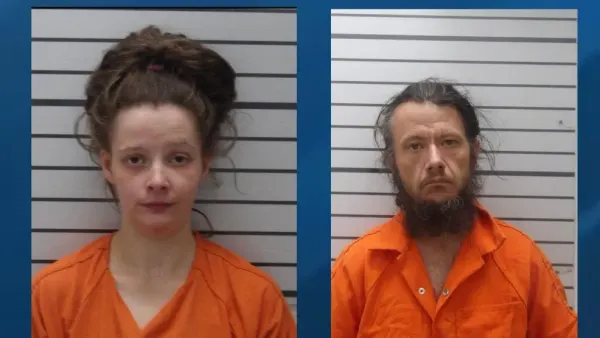
They're Back: How CoreCivic Is Using Mass Deportation to Resurrect Oklahoma's Failed Private Prison Experiment

The state spent years ending contracts with private prisons over violence and deaths. Now the same company is reopening those facilities—this time for immigration detention. It's a backdoor return that should alarm every Oklahoman.
WATONGA, Oklahoma — On a cold morning in early 2026, the first buses rolled through the gates of the Diamondback Correctional Facility, a hulking complex that had sat empty for sixteen years on the prairie north of Watonga. Inside were not Oklahoma inmates convicted of crimes, but immigration detainees swept up in the Trump administration's deportation dragnet—people held in legal limbo, most without criminal convictions, waiting to find out if they'll be deported.
The facility is operated by CoreCivic, the Tennessee-based private prison giant formerly known as Corrections Corporation of America. It's the same company Oklahoma spent the better part of a decade trying to get rid of.
Oklahoma completely reversed course on its path to privatization with the state's recent purchase of the Lawton Correctional Facility from GEO Group in 2025, marking the end of a decades-long experiment with incarceration for profit. Even DOC Director Steven Harpe conceded the state is done with private prisons.
Except they're not done. Not really.
While Oklahoma celebrated ending its last state prison contract with private operators, CoreCivic was already planning its comeback—not through state corrections contracts, but through a federal immigration detention deal worth $100 million over five years. A second facility may be on the way in Sayre, where CoreCivic owns the shuttered North Fork Correctional Facility.
It's a backdoor return that sidesteps everything Oklahoma learned about the catastrophic failures of private incarceration. And it raises a fundamental question: If these facilities were too dangerous, too violent, and too poorly run for Oklahoma inmates, why are they suddenly acceptable for immigrants?
The answer has nothing to do with public safety and everything to do with profit.
The Violent History Oklahoma Tried to Leave Behind
To understand why CoreCivic's return should alarm Oklahomans, you have to understand why the state ended the relationship in the first place.
The company's track record in Oklahoma reads like a catalog of institutional failure.
In one of the deadliest prison attacks in Oklahoma history, four inmates were stabbed to death in 2015 at a prison operated by CCA at the Cimarron Correctional Facility in Cushing. Those attacks followed a violent outburst a few months earlier in which some 200 to 300 of the prison's roughly 1,600 inmates were involved in a brawl that resulted in 11 prisoners being taken to the hospital.
The Cimarron facility became notorious. It was the site of Oklahoma's deadliest prison riot. Yet today, CoreCivic is using that same facility to hold immigration detainees—approximately 130 people detained were there as of the first week of August 2025.
At the Davis Correctional Facility in Holdenville, conditions were so bad that a correctional officer was fatally stabbed by an inmate in 2022. Three inmates were killed in separate incidents that same year at the facility, which was operating at about 70 percent of its contractually obligated staffing level according to a 2021 audit.
A correctional officer who worked at Davis said the facility had problems maintaining appropriate staffing levels, cell doors that didn't lock properly, and inmates who were particularly violent and noncompliant toward staff.
Reports include deaths that went undetected for days, multiple violent riots, and contract violations—including nearly $1 million CoreCivic owed the City of Sayre in unpaid fees, resulting in a lawsuit the company eventually settled.
This wasn't an isolated facility problem. This was a systemic corporate problem.
Just last month before the 2022 incidents, the private prison company agreed to settle a federal lawsuit over a Tennessee inmate's killing in which low staffing levels were blamed.
Oklahoma's response was to walk away. The Cimarron facility shut down for state inmates in 2020. The state reclaimed the Great Plains facility in 2023. When GEO Group asked for a $3 million increase to continue operating Lawton, Governor Kevin Stitt vetoed it. By 2025, Oklahoma was out of the private prison business entirely.
Or so it seemed.
"Our Business Is Perfectly Aligned"
While Oklahoma was ending its private prison contracts, CoreCivic CEO Damon Hininger was telling investors something very different on earnings calls.
In a second quarter earnings call in August 2025, Hininger said that because of the number of immigrant detainees snared in the Trump administration's immigration crackdown, the nation is witnessing the highest detention populations ever recorded by ICE, which has been CoreCivic's largest customer.
"Our business is perfectly aligned with the demands of this moment," he said. "We are in an unprecedented environment with rapid increases in federal detention populations nationwide and a continuing need for solutions we provide."
Read that again. "Our business is perfectly aligned."
Not "We're helping solve a crisis." Not "We're meeting a temporary need." The CEO of a private prison company looked at mass deportation—a policy that will separate thousands of families, many of whom have lived in America for decades—and saw perfect business alignment.
The number of ICE detainees in CoreCivic facilities increased by 28 percent to more than 13,000 from the end of 2024 through the end of the second quarter of 2025, Hininger said. The company reported total revenue of $538.2 million in Q2 2025, an increase of nearly 10 percent from the previous year.
CoreCivic is estimated to earn an additional $1.5 billion in revenue from the expanded detention capacity.
This is what private incarceration actually looks like. It's not about rehabilitation, public safety, or justice. It's about filling beds to meet revenue targets for shareholders.
And Oklahoma's empty prisons—the ones the state abandoned because they were too dangerous—are now the perfect vehicle for that profit.
The $100 Million Watonga Deal
A new U.S. Immigration and Customs Enforcement detention facility with capacity for more than 2,100 detainees is scheduled to open in Watonga in early 2026 under a $100 million, five-year agreement between CoreCivic and Oklahoma's Department of Corrections.
The Diamondback facility has been idle since 2010. CoreCivic said it expects to invest an additional $13 million over the next several quarters for renovations requested by ICE.
Patrick D. Swindle, CoreCivic's president and chief operating officer, said that "including the new contract awards at three of our other facilities previously announced during the third quarter of 2025, we have signed new contracts aggregating 6,353 beds across our four facilities, all of which were idle at the beginning of the year, with approximately $325 million of annual revenue once the facilities are fully activated".
Think about that. CoreCivic had four empty facilities sitting idle at the start of 2025. By the end of the year, they'd signed contracts to fill all of them with immigration detainees, generating $325 million in annual revenue. Mass deportation isn't a crisis for CoreCivic. It's a windfall.
The facility is listed as having 64 detainees in the first quarter of 2026, with a guaranteed minimum of 1,200 inmates, according to TRAC Immigration.
That guaranteed minimum is key. Even if ICE doesn't fill the beds, taxpayers pay for 1,200 detainees. CoreCivic gets paid whether the facility is full or not. It's a no-risk profit arrangement funded by federal tax dollars.
Meanwhile, immigration attorney Lorena Rivas said reaching clients detained at Diamondback has been difficult. "The facility's just not ready to process people," she said. "People need to have access to immigration attorneys, which, obviously, there's none in Watonga. So we all are trying to have these communications with our clients via telephone."
Watonga's population in 2020 was 2,690. The detention facility will hold nearly as many people as live in the entire town—and most of those detainees will have no meaningful access to legal representation because there are no immigration attorneys in the area.
Who's Actually Being Detained?
The rhetoric around immigration detention conjures images of dangerous criminals being taken off the streets.
The reality is starkly different.
Three in four people booked into ICE custody this year had no criminal conviction other than a traffic or immigration-related offense. Less than 1 in 10 of the people detained were convicted of a serious crime like assault, murder, or robbery.
Currently, 65 percent of people in Oklahoma's ICE detention facilities are considered non-criminal holds according to ICE Enforcement and Removal Operations Data as of June 23, 2025.
Let that sink in. Two-thirds of the people being detained in Oklahoma have no criminal record.
Studies show that an overwhelming majority of nondetained immigrants consistently show up for court without being locked up. Yet more and more people are being funneled into detention centers—often for nothing more than traffic or immigration offenses—where private companies profit from every day they're held.
At CoreCivic's Cushing facility, most detainees don't have criminal convictions. The average length of stay at the facility is 19 days. Most detainees are temporarily held in the prison before being transferred to larger detention centers for immigration court proceedings.
Two immigration attorneys said clients have reported instances of inadequate access to medication. One attorney said she has a client with diabetes who was unable to access insulin for several days upon his arrival in Cushing, told the facility was waiting for a medical specialist to consider her client's need for insulin.
This is what happens when profit, not care, drives the system.
The Economic Illusion: Jobs That Disappear
Supporters of the Watonga detention center, including State Rep. Mike Dobrinski, tout the economic benefits.
"I certainly think that it will increase the need for local housing, as bringing company CoreCivic will bring some of their leadership to Oklahoma from other facilities around the country," Dobrinski said. "They will try and employ as many local folks as they can, with over 400 full-time positions coming; that's a significant demand in the area and great job opportunities for folks."
It's a familiar pitch. Small towns in economic distress, promised jobs and revenue, accept private prisons as economic development.
The problem is the promise rarely materializes—and when it does, it doesn't last.
Research has shown that when a private detention center opens in a small town, it hinders economic growth and diverts resources away from local residents. Oklahoma's own history with these for-profit institutions shows that after a facility inevitably closes—often due to challenges with recruiting and retaining staff—the town is left to pick up the pieces, having lost a significant source of revenue and their largest local employer.
CoreCivic has a pattern of hiring people before securing contracts, then firing them when deals fall through. This happened in Watonga in 2014, when the company was known as Corrections Corporation of America.
The City of Cushing's general fund receives $1.02 per day for each person housed in CoreCivic's Cimarron Correctional Facility. It's not nothing, but it's hardly transformative economic development. And it comes with severe costs: the town becomes dependent on incarceration for revenue, local investment dries up, and when the facility inevitably closes, the economic devastation is total.
Meanwhile, CoreCivic extracts hundreds of millions in revenue and moves on to the next opportunity.
Governor Stitt's Partnership with Deportation
The reopening of Oklahoma's private detention facilities didn't happen in a vacuum. It was enabled by state policy.
In February 2025, Gov. Kevin Stitt signed Operation Guardian, an agreement between the U.S. Department of Homeland Security and Oklahoma. Under the agreement, law enforcement officials within the Oklahoma Department of Public Safety, the Oklahoma Bureau of Narcotics, and the Oklahoma State Bureau of Investigation will be able to arrest and interrogate suspected undocumented immigrants on the suspicion of citizenship status.
"Law enforcement can't do their jobs with one hand tied behind their back. By working directly with ICE, our law enforcement officers now have additional tools to keep dangerous criminals off our streets and protect Oklahomans," Stitt said.
Except, again, most of the people being detained aren't dangerous criminals. They're people without documentation, many of whom have lived in Oklahoma for years, working jobs, raising families, paying taxes.
Immigration arrests in Oklahoma during the first six months of the Trump administration have already eclipsed 2024 numbers. According to federal data obtained by the Deportation Data Project and analyzed by the Frontier, ICE arrested 1,577 individuals in Oklahoma from January 20 to June 26, 2025. ICE arrested 1,560 in all of 2024.
More arrests mean more detention. More detention means more revenue for CoreCivic. The incentives are perfectly aligned—but not for Oklahomans.
The Federal Money Fueling Private Detention
Where is all this money coming from?
Congress appropriated ICE $10 billion for fiscal year 2025 in March. Added to that, ICE now has $28.7 billion at its disposal this year. That $28.7 billion figure is nearly triple ICE's entire budget for FY24, according to the Brennan Center for Justice in New York.
Both facilities are part of the billions of dollars appropriated by Congress this year, with the goal of deporting 1 million immigrants annually over the next four years.
This is taxpayer money—your money—flowing to private corporations to detain people who, statistically, pose no public safety threat and would show up for their court dates without detention.
The same states that claim they can't afford to fund schools, mental health treatment, or addiction services are pouring billions into detention infrastructure operated by for-profit companies with documented records of abuse and neglect.
Why Oklahoma Needs to Stop Incarcerating People
Oklahoma has a mass incarceration problem that predates private prisons and extends far beyond immigration detention.
Oklahoma has an incarceration rate of 905 per 100,000 people (including prisons, jails, immigration detention, and juvenile justice facilities), meaning that it locks up a higher percentage of its people than any independent democratic country on earth.
With an incarceration rate of 222 per 100,000 residents, Oklahoma incarcerates women at a higher rate than nearly every other country on the planet.
Oklahoma's female incarceration rate is 4.5 times the national rate. For years, Oklahoma held the dubious distinction of having the highest female incarceration rate in the world.
Why? An analysis of data on female inmates showed that the state had a lower rate of violent offenders, but a higher rate of drug offenders than the national average. Black women were overrepresented in the prison population.
This is a state that incarcerates people—disproportionately poor people, people of color, women—not because they're more dangerous, but because the system is designed to funnel people into cages rather than provide them with the help they actually need.
Oklahoma has the second-highest rate of adults with serious mental illness, but ranks 44th in the U.S. for funding the treatment of mental illness.
Read that again. Oklahoma has one of the highest rates of mental illness and one of the lowest rates of funding treatment. The result? People with mental illness end up in jail instead of getting care.
In 2016, Oklahoma voters tried to fix this. They passed State Questions 780 and 781, reclassifying certain drug possession and property crimes from felonies to misdemeanors and directing savings from reduced incarceration into mental health and addiction treatment.
Section 1 of SQ 780 stated: "The people of the State of Oklahoma find the fact that Oklahoma has the second-highest incarceration rate in the country, and the highest incarceration rate for women, is inconsistent with Oklahoma values, and drains resources away from investments that can do more to promote public safety".
It worked—sort of. Oklahoma now ranks third in prison incarceration rates in the U.S. due primarily to passage of SQ 780 and HB 1269 in 2019 that made SQ 780 retroactive.
But the reforms didn't go nearly far enough. And critically, lawmakers dragged their feet on the voter directive for seven years before finally agreeing in 2023 to fund $12.5 million for the County Community Safety Investment Fund per SQ 781.
Voters demanded that money saved from reduced incarceration be invested in treatment and prevention. The legislature slow-walked it for seven years.
Meanwhile, CoreCivic gets a $100 million contract with a guaranteed minimum occupancy and collects checks whether they fill the beds or not.
The Evidence for Alternatives
Here's what decades of research tells us about incarceration:
The U.S. has less than five percent of the world's population, yet holds 25 percent of the people who are behind bars.
America's overreliance on mass incarceration has caused great harm to families and communities, disproportionately affecting people of color, poor people, and people with mental illnesses and disabilities. The U.S. spends $80 billion a year to keep people locked up, yet it's not clear this has made us any safer. Research shows that isolating people in prisons and jails fails to address the underlying reasons for their crimes and can increase the likelihood they will re-offend.
And here's what the research tells us about alternatives:
People who have participated in restorative justice programs are 41.5 percent less likely to be rearrested than those who have been prosecuted and sentenced in the traditional criminal legal system.
Low recidivism rates show restorative justice programs can be more effective than the traditional justice system. And advocates point to participants' satisfaction with the process as another measure of its success.
Community-based programs, diversion initiatives, and restorative justice practices are generally more cost-effective and yield better long-term outcomes than incarceration.
This isn't theoretical. Thirty-five states have adopted legislation encouraging the use of restorative justice for children and adults both before and after prison.
Oklahoma has its own successful model. The Muscogee Creek Nation's Reintegration Program is one way to ease the transition from prison to home. It's funded by the tribe and helps ex-offenders get jobs, housing and rebuild their lives while supporting Native American culture. The program manager said, "I feel like, on our state side, we don't hold the value in people like we do our tribal side, because that is part of our culture and who we are. We hold value in people, and we look at things through different lenses."
The program works because it treats people as people, not commodities. It addresses root causes—housing, employment, community connection—rather than just warehousing people in cages.
But programs like this require investment. They require political will. They require a fundamental shift in how we think about justice.
CoreCivic, on the other hand, requires only that we keep filling beds.
Incarceration as Violence
Mass incarceration isn't just ineffective. It's violence.
It's the violence of separating children from parents. Over half of women in state prisons have a child under the age of 18. Children of incarcerated parents are more likely to live in poverty and experience homelessness. They are also five times more likely to enter the criminal justice system, continuing a cycle of intergenerational incarceration.
It's the violence of denying people healthcare. When Oklahoma women are incarcerated, they are unable to work and do not have access to comprehensive healthcare. Their mental and physical health is worse while behind bars and even after being released.
It's the violence of conditions inside Oklahoma's prisons. Reports of infestations, unsanitary conditions, and a lack of basic necessities like clean water and sufficient food are not uncommon. Cases have been highlighted where inmates were allegedly confined in two-by-two-foot cells for extended periods without adequate access to food, water, or bathroom facilities.
It's the violence of a system where Oklahoma's correctional officers are among the lowest paid in the country, with the state ranking 8th lowest in median salary, and has a correctional officer-to-inmate ratio of 15:1—the worst in the nation.
And now it's the violence of detaining immigrants—people who came here seeking safety, opportunity, a better life—in facilities that Oklahoma deemed too dangerous for its own inmates.
Reports from immigration detention include festering human waste, limited access to showers and clean water, and a history of medical neglect and preventable deaths.
This is what we're funding with our tax dollars. This is what CoreCivic calls "perfect business alignment."
The Backdoor Is Wide Open
Make no mistake: CoreCivic's return to Oklahoma is a backdoor maneuver.
Oklahoma spent years ending private prison contracts because the model failed. The facilities were violent. People died. The promised savings never materialized. The state paid for outcomes it didn't want and couldn't control.
So CoreCivic pivoted. Same facilities. Same business model. Same profit motive. Different customers.
Instead of state inmates, it's immigration detainees. Instead of contracts with the Oklahoma Department of Corrections, it's contracts with ICE. Instead of state taxpayers footing the bill, it's federal taxpayers.
But it's the same company that couldn't keep people safe. The same understaffing. The same corner-cutting to maximize shareholder returns. The same fundamental disconnect between what incarceration should be (rehabilitation, accountability, public safety) and what it is under private operation (a revenue stream).
Oklahoma recognized the adverse effects of private prisons, and state leaders have ended prison contracts with these companies. However, the push for mass deportations and detention facility expansion threatens the progress we've made.
CoreCivic CEO Damon Hininger even referenced mass deportation policies as a "catalyst" for growth.
That's what this is. Not a solution to a crisis. Not a necessary evil. A catalyst for corporate growth.
What Oklahomans Can Do
The Oklahoma Policy Institute has been clear about what needs to happen: "Forcing small towns like Watonga and Sayre to play host to privately managed facilities, despite their record of dehumanizing conditions, in exchange for jobs and tax revenue, is exploitative and predatory".
Here's what you can do:
1. Contact your representatives. Tell them you oppose the use of former private prisons as immigration detention centers. If these facilities were too dangerous for state inmates, they're too dangerous for anyone.
2. Demand transparency. CoreCivic facilities operate with minimal oversight. Because these spaces are private property, the companies managing these facilities can prevent local authorities from entering to inquire about health and safety concerns. This is unacceptable. Demand that any facility holding people in Oklahoma—regardless of immigration status—be subject to regular, unannounced inspections by state authorities.
3. Support alternatives to detention. Studies show that an overwhelming majority of nondetained immigrants consistently show up for court without being locked up. Community-based case management programs cost a fraction of detention and have high compliance rates. Push your federal representatives to fund these instead of cages.
4. Fund what actually works. Demand that Oklahoma fully fund the County Community Safety Investment Fund that voters approved through SQ 781. Demand investment in mental health treatment, addiction services, housing assistance, and job training. These programs reduce crime and cost far less than incarceration.
5. Tell the truth about who's being detained. When politicians talk about "dangerous criminals," check the facts. Two-thirds of people in Oklahoma's ICE detention have no criminal record beyond immigration or traffic offenses. This isn't about public safety. It's about profit.
6. Recognize this as a human rights issue. The people in these facilities are human beings. Many have lived in Oklahoma for years. They have families here, jobs here, lives here. They deserve to be treated with dignity, not warehoused in facilities with a documented history of abuse and neglect.
The Larger Fight
Oklahoma's struggle with mass incarceration and private detention is part of a much larger American failure.
We are the most incarcerated nation on Earth. We spend more on caging people than on educating them. We treat addiction as a crime rather than a health issue. We criminalize poverty, mental illness, and immigration status. And then we hand the keys to for-profit companies that make money every time someone is locked up.
This system doesn't make us safer. It makes us poorer, more divided, and more violent.
Restorative justice provides an alternative that can help break the cycle of over-incarceration for many offenses. Restorative practices focus on repairing the harm that has been done, rather than simply punishing someone who has committed an offense by locking them up.
Imagine if Oklahoma invested the $100 million going to CoreCivic for detention into mental health treatment, addiction services, job training, and housing assistance instead. How many lives could be transformed? How many families could be kept together? How much suffering could be prevented?
That's the choice we face. Not whether to be "tough on crime" or "soft on crime," but whether to invest in healing or invest in cages. Whether to treat people as problems to be managed or as human beings deserving of dignity and a second chance.
CoreCivic made its choice. It chose profit.
Oklahoma voters made their choice in 2016 when they passed SQ 780 and 781. They chose reform, treatment, and a different path forward.
Now the question is whether Oklahoma's leaders will honor that choice—or allow CoreCivic to backdoor its way back into a business model the state already rejected.
The buses are already rolling into Watonga. The detainees are already being held. The money is already flowing.
But it's not too late to say: Not here. Not in our name. Not with our tax dollars.
Oklahoma tried private prisons. They failed catastrophically. The state ended them for good reason.
CoreCivic's return—under a different name, with different customers, but the same profit motive—should be rejected just as decisively.
The choice is ours. We can accept the backdoor, accept the lies about public safety and economic development, accept the violence of caging human beings for profit.
Or we can demand better. For immigrants, for inmates, for Oklahomans, for the country we claim to be.
The question is: Which Oklahoma do we want to be?
Editor's note: This investigation is based on public financial disclosures, ICE detention data, Oklahoma Department of Corrections records, news reports, and interviews with immigration attorneys, policy analysts, and formerly incarcerated individuals. Multiple requests for comment were sent to CoreCivic, Rep. Mike Dobrinski, and Governor Kevin Stitt's office. CoreCivic provided a statement pointing to a state inspection that found no health code violations in the kitchen at the Cushing prison and noting that many employees eat the same meals daily. Dobrinski and Stitt's office did not respond to requests for comment.
If you or someone you know is currently detained in an Oklahoma ICE facility and experiencing abuse, neglect, or denial of medical care, contact the American Civil Liberties Union of Oklahoma at (405) 524-8511 or the Oklahoma Policy Institute at info@okpolicy.org.