Washington D.C. Is Telling Eastern Oklahoma's DAs to Let Child Predators Go — They're Refusing

Who Has the Right to Put You in Prison?
Inside the Legal War Tearing Eastern Oklahoma Apart
There is a child pornographer sitting in a federal prison cell serving 50 years. There is also a drug trafficker whose case may be thrown out because the wrong court filed the charges. There are crime victims in McIntosh and Okmulgee counties who don't know whether the person who hurt them will ever face real consequences. And there are two elected district attorneys — men and women who ran for office promising to protect their communities — who are now being sued by the United States government for doing their jobs.
Welcome to eastern Oklahoma in 2025, where the most basic question of criminal justice — who has the legal authority to prosecute a crime? — remains so contested that it has triggered a constitutional standoff between state prosecutors, sovereign tribal nations, and the U.S. Department of Justice. The fallout is being felt in courtrooms from Okmulgee to Claremore, in jails where defendants sit awaiting trials that may never happen, and in communities where residents have no idea the legal ground beneath them has been shifting for years.
This is the story of a power struggle that most eastern Oklahomans have never heard of — and one that could determine whether some of the worst criminals in the region walk free.
The Earthquake That Started It All
To understand what is happening today, you have to go back to July 9, 2020, when the U.S. Supreme Court handed down one of the most consequential decisions in Oklahoma history.
The case was McGirt v. Oklahoma, and it began with the conviction of Jimcy McGirt, a member of the Seminole Nation, who had been prosecuted in Oklahoma state court for the sexual abuse of a child. McGirt's attorneys argued that the crime had occurred on the Muscogee (Creek) Nation's reservation — and that under federal law, the state had no right to prosecute him there.
In a 5-4 ruling, the Supreme Court agreed. Justice Neil Gorsuch, writing for the majority, held that the Muscogee (Creek) Nation's reservation had never been formally dissolved by Congress when Oklahoma achieved statehood in 1907. That meant roughly three million acres of eastern Oklahoma — including most of Tulsa — remained Indian Country for purposes of criminal jurisdiction.
The ruling was quickly extended to cover the reservations of the Cherokee, Choctaw, Chickasaw, and Seminole Nations, encompassing roughly 19 million acres — nearly half the land mass of Oklahoma. In an instant, the legal framework that had governed criminal prosecution in eastern Oklahoma for over a century was upended.
The implications were staggering. Under federal law, specifically the Major Crimes Act, crimes committed by Native Americans on their reservations fall under federal or tribal jurisdiction — not state. Hundreds of existing convictions were called into question. State prosecutors found themselves stripped of authority over cases they had been handling for decades. And the federal court system in eastern Oklahoma was suddenly overwhelmed with cases it had never expected to receive.
"The Eastern District of Oklahoma normally prosecutes around one hundred to one hundred-ten felony cases each year," acting U.S. Attorney Christopher Wilson said at the time, after a single grand jury session returned ninety indictments. "This is an unprecedented and historic number."
The Loophole — and the New Fight
The McGirt ruling did not settle everything. In 2022, the Supreme Court revisited related questions in Oklahoma v. Castro-Huerta, ruling 5-4 that the state and federal government share concurrent jurisdiction over crimes committed by non-Native Americans against Native Americans on tribal reservations. That gave Oklahoma prosecutors a foothold to stay involved in some cases.
But the central rule from McGirt remained intact: Oklahoma cannot prosecute Native American defendants for crimes committed on their own reservations. Period.
Not everyone accepted that.
District Attorney Matthew Ballard, who oversees Oklahoma's 12th Judicial District covering Craig, Mayes, and Rogers counties — all of which fall within the boundaries of the Cherokee Nation — began prosecuting tribal citizens for crimes committed on reservation land. So did Carol Iski, the district attorney for the 18th Judicial District covering McIntosh and Okmulgee counties, both of which sit within the Muscogee (Creek) Nation.
Both prosecutors argued they had legal authority to proceed. Ballard pointed to Castro-Huerta and a December 2024 Oklahoma Court of Criminal Appeals decision in Tulsa v. O'Brien, which they read as expanding state jurisdiction. Iski made similar arguments.
The tribes disagreed. The DOJ agreed with the tribes.
On December 23, 2024 — two days before Christmas, in the final weeks of the Biden administration — the U.S. Department of Justice filed two separate lawsuits in federal court: one against Ballard, one against Iski.
The federal government was suing its own state's elected prosecutors.
The Cases at the Center of the Storm
The DOJ's complaints did not deal in abstractions. They named specific defendants, specific crimes, and specific counties — and in doing so, exposed the impossible position that everyone involved has been forced into.
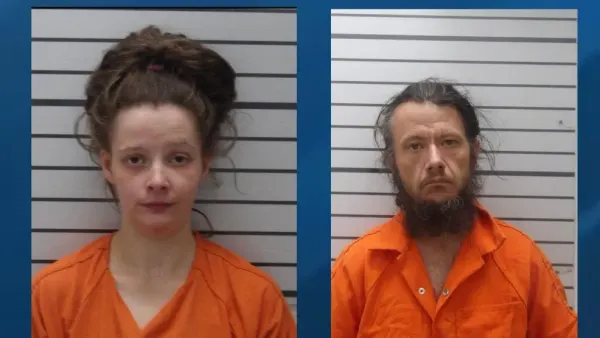
In Ballard's district, the DOJ cited three cases. The first involved Brayden Bull, a member of the Navajo Nation who was arrested on Rogers County charges of manufacturing and distributing child pornography. The crimes were horrific — federal prosecutors described the material as involving the rape of toddlers. Bull committed the offenses within the boundaries of the Cherokee Nation reservation.
After Bull's arrest, the Cherokee Nation charged him in tribal court in December 2021. But as the tribal prosecution stretched on for more than a year without resolution, Ballard stepped in. In June 2023, he filed state felony charges against Bull and sought an arrest warrant. The Rogers County judge denied the warrant, citing McGirt. Ballard appealed. Governor Kevin Stitt personally appointed a special counsel to force the prosecution forward.
Meanwhile, the federal government had also charged Bull. The result was that Bull faced prosecution in three separate courts simultaneously — federal, state, and tribal — for the same underlying crimes. In federal court, he was ultimately sentenced to 50 years in prison. But the question of whether Ballard had any right to prosecute him at all remained legally unresolved.
"Yeah, I mean these are the most egregious cases in my career," Ballard told reporters. "These are some of the worst cases I've seen. This is producing child pornography... These cases are the most egregious examples of crimes that you can imagine, and they wouldn't go prosecuted — and we can see that in these specific cases. Nobody had filed from the federal government until my office stepped forward and stood in the gap."
The DOJ named two other cases in Ballard's district: Tony Williams, a Chickasaw Nation citizen accused of aggravated fentanyl trafficking, and Eric Ashley, a Choctaw Nation citizen accused of child neglect and drug possession. Both crimes occurred on the Cherokee Nation reservation.
Against Iski, the DOJ cited at least four cases involving conduct on the Muscogee (Creek) reservation: Oklahoma v. Long, Oklahoma v. Medlock, Oklahoma v. Wiedel, and a fourth. Details on the specific charges in those cases have not been fully reported.
The DOJ's position was unequivocal. "The longstanding rule, recently reaffirmed by the U.S. Supreme Court in McGirt v. Oklahoma, is that the states and their political subdivisions lack criminal jurisdiction over Indians in Indian country unless Congress authorizes it," the government's complaint read. "In Oklahoma, therefore, the United States and Indian tribes share exclusive criminal jurisdiction over Indians in Indian country."
The federal government asked the courts to issue injunctions permanently barring Ballard and Iski from prosecuting tribal citizens for conduct on reservations — and to declare, as a matter of law, that Oklahoma has no such jurisdiction.
The Administration Change That Changed Nothing
When Donald Trump was inaugurated on January 20, 2025, observers across Oklahoma assumed the lawsuits would be quietly shelved. The new administration had made no secret of its skepticism toward Biden-era policies, and the suits had been filed just before the transition. Some Oklahoma officials openly dismissed them as lame-duck politics.
Tulsa County District Attorney Steve Kunzweiler said publicly he was unconcerned because the suits were filed "under the outgoing Biden administration." The expectation was clear: the Trump DOJ would walk these cases back.
It didn't.
On February 10, 2025, the new DOJ requested additional time before filing its next motion — for review, not dismissal. The review happened. The lawsuits stayed. As of March 2025, the Trump administration's Justice Department was actively supporting the tribes' motion to intervene in the cases, standing behind the legal position that Ballard and Iski had no authority to bring these prosecutions.
The tribes had moved fast. On January 22, 2025, three tribal governments — the Cherokee Nation, the Muscogee (Creek) Nation, and a third — filed joint motions to intervene in both federal cases, formally aligning themselves with the DOJ's position. Their attorney argued the issue transcended the change in administration. Federal Indian law, they said, does not shift with election results.
The attorney for Ballard and Iski, Trevor Pemberton, called the intervention an "attack on an elected Oklahoma district attorney and this state's judicial system." He asked the court to deny the nations' requests.
The court has not yet issued a final ruling.
Taxpayers on Both Sides of the Bill
What has received almost no attention in the coverage of this dispute is who is actually paying for it.
Ballard and Iski are elected DAs whose offices operate on county budgets. Defending against a federal lawsuit from the U.S. Department of Justice — with its virtually unlimited legal resources — is not something a county district attorney's office is equipped to do. In May 2025, Ballard appeared before the Oklahoma Legislature's Joint State-Tribal Relations Committee to ask for help.
"This was a fight that was brought to us," Ballard told lawmakers. "But it's one that we believe in, and it's one we know is not going away."
He was blunt about the financial stakes. Without outside funding, he said, the case was "a sure-fire loss." His office simply couldn't afford the legal team required to take on the federal government in prolonged federal litigation.
The Legislature responded by approving $100,000 in state funds specifically for the DAs to hire outside counsel. The money came from a broader $10 million fund already allocated in the Fiscal Year 2026 state budget for "state sovereignty and extraordinary litigation" — funds dedicated to Oklahoma's ongoing battles with the federal government and tribal nations.
Let that sink in: Oklahoma taxpayers are funding both sides of this fight. Their state taxes pay for Ballard and Iski to prosecute these cases. Their federal taxes pay the DOJ attorneys suing Ballard and Iski to stop. And their tribal tax dollars — from members of the Cherokee and Muscogee Nations — are funding the nations' intervention lawyers.
Somewhere in the middle of all that spending are crime victims, defendants, and communities that just want to know who is in charge.
Sen. Mary Boren of Norman pressed Ballard on the fundamental question during the May committee hearing. "Isn't that… the essence of sovereignty?" she asked. "That nations get to decide what prosecution parameters that they want?"
Ballard pushed back. "I am absolutely not advocating that the tribes don't have jurisdiction," he said. "I believe they absolutely do. I'm saying we also do."
The Human Cost Nobody Is Counting
Behind the legal arguments and the legislative hearings are real people whose lives hang in the legal gap.
Consider what happens to a defendant like Tony Williams, the Chickasaw man charged by Ballard's office with aggravated drug trafficking. If the federal court rules that Ballard had no jurisdiction to file the charges, those charges likely get dismissed. Does the federal government re-file? Does the Cherokee Nation prosecute? Or does Williams walk?
Consider the victims in the cases before Iski's court in McIntosh and Okmulgee counties. The people named in Oklahoma v. Long, Oklahoma v. Medlock, Oklahoma v. Wiedel — victims of alleged crimes on Muscogee Creek reservation land. If those prosecutions are thrown out as jurisdictionally invalid, what accountability exists?
And consider the inverse: what about defendants who are being prosecuted twice? Brayden Bull was charged in Cherokee Nation tribal court, in federal court, and in Ballard's state court simultaneously for the same crimes. He ultimately received 50 years from the federal system. But the state case was still pending. The tribal case was still pending. Three separate courts, three sets of proceedings, three bodies of law — all focused on the same man, the same crimes, the same victims.
Legal scholars have pointed out that the separate sovereign doctrine — which allows both federal and state governments to prosecute the same conduct — was never designed for a three-court system. The addition of tribal prosecution creates legal territory that American jurisprudence has barely begun to map.
Ballard himself acknowledged the problem, even as he defended his prosecutions. "The problem is that tribes are limited to a maximum of three-year sentence," he told lawmakers, explaining why he believed state prosecution was necessary even when tribal charges existed. A tribal conviction for producing child pornography carries a maximum of three years. A federal conviction carries decades. The gap is real, and Ballard argued it was a public safety gap — one his office was filling.
The Cherokee Nation saw it differently. "Attempts by some law enforcement officials to circumvent the law and improperly impose state jurisdiction over tribal citizens within tribal reservations impact the integrity of criminal cases and put Oklahoma's public safety at risk," Cherokee Nation Attorney General Chad Harsha said in a statement.
What Is Really at Stake
The DOJ lawsuits against Ballard and Iski are, on their surface, cases about jurisdiction. But they are really about something much larger: who governs eastern Oklahoma.
The McGirt decision fundamentally reordered the legal landscape of half a state. It gave tribal nations a degree of sovereignty that they had not formally exercised over criminal matters in more than a century. It created an obligation — on the federal government and on the tribes — to build court systems, hire prosecutors, train law enforcement, and absorb caseloads they had never anticipated.
By most accounts, the tribes have worked hard to meet that obligation. The Cherokee Nation has expanded its marshal service and its court system significantly since 2020. The Muscogee (Creek) Nation has done the same. Federal indictments in the Eastern District of Oklahoma have surged to levels never seen before. Coordination between tribal police, federal investigators, and state agencies has improved — imperfectly, but measurably.
But gaps remain. Cases have fallen through. Victims have waited longer for justice. Tribal courts operating under sentencing limitations have resolved serious crimes with punishments that state or federal courts would have answered more harshly. The backlog created by the sudden surge in federal jurisdiction has been real and documented.
Ballard and Iski stepped into those gaps. Whether they were right to do so — legally — is the question that federal courts are now being asked to answer.
Governor Kevin Stitt has been blunt in his support for the DAs. "Biden's DOJ would rather let criminals — including drug traffickers and child abusers — go free instead of letting Oklahoma district attorneys prosecute criminals," he posted on X when the suits were filed. "The McGirt decision continues to cause chaos in my state and our DAs are one of the last lines of defense."
Stitt has also been pushing for limits on tribal sovereignty more broadly in the 2026 legislative session, calling for Oklahoma's criminal and taxation laws to apply "to every Oklahoman without exception." Tribal leaders have called that framing misleading and historically dishonest.
"Everything he said in there was really to erode some of the most meaningful attributes that are left of tribal sovereignty, that we're trying to regain and exercise," Cherokee Nation Principal Chief Chuck Hoskin Jr. told reporters after the governor's State of the State address.
The Questions No One Is Asking
Five years after McGirt, and more than a year into the federal lawsuits against Ballard and Iski, some of the most important questions in this story remain unanswered in the press.
How many cases have been dismissed or are in legal limbo because of the jurisdictional dispute? The state of Oklahoma has tracked some of this data, but no comprehensive public accounting exists for the specific counties in Ballard's and Iski's districts.
What happened to the defendants in Iski's four cited cases — Long, Medlock, Wiedel, and the fourth? Their names appear in the federal complaint, but their stories have not been told. Are they in jail? Free on bond? Have their cases been transferred?
Which crimes in McIntosh and Okmulgee counties — where Iski serves — have gone unprosecuted because of jurisdictional uncertainty? And conversely, which prosecutions has she brought that may be thrown out?
What is the current status of the federal lawsuits? As of this writing, neither case has gone to trial. The Trump administration has retained the suits but has not pushed aggressively for rulings. The tribal nations are still fighting to intervene. The outcome remains genuinely uncertain.
Who is coordinating — if anyone — between Iski's office, the Muscogee Nation prosecution team, and federal prosecutors in Muskogee? Or are these three bodies still operating largely in parallel, filing charges on the same defendants, sometimes without telling each other?
A Community Without a Sheriff
There is an old concept in law enforcement: the sheriff of a county is the last line of defense for the people who live there. The sheriff doesn't get to say "that's not my jurisdiction." He goes out and protects people.
In eastern Oklahoma today, everyone is claiming to be the sheriff — and everyone is claiming it's someone else's fault when things fall apart.
Ballard frames himself as the last line of defense for communities being abandoned by an overtaxed federal system. The tribes frame themselves as the rightful sovereign authorities whose jurisdiction the state has spent five years trying to claw back. The DOJ frames the question as one of law — and the law, it says, is clear.
For the people who live in McIntosh, Okmulgee, Rogers, Mayes, and Craig counties — for the crime victims, the defendants, the families — the argument over who has the right to prosecute their neighbors is not an abstraction. It is the question of whether the law applies to them at all.
That question does not yet have an answer. The courts are still deciding.
This article was produced by the EastOklahoma.com investigative desk. If you have information about criminal cases affected by the McGirt jurisdictional dispute in eastern Oklahoma counties, contact us securely at dustinreedterry@gmail.com.
SOURCES AND FURTHER READING
- U.S. DOJ Complaint, United States v. Matthew Ballard, U.S. District Court for the Northern District of Oklahoma (Dec. 23, 2024)
- U.S. DOJ Complaint, United States v. Carol Iski, U.S. District Court for the Eastern District of Oklahoma (Dec. 23, 2024)
- McGirt v. Oklahoma, 591 U.S. 894 (2020)
- Oklahoma v. Castro-Huerta, 597 U.S. 629 (2022)
- NonDoc Media, "DOJ retains lawsuits against Oklahoma DAs despite switch to Trump administration" (March 18, 2025)
- KOSU, "Oklahoma lawmakers approve $100,000 for local District Attorneys to fight DOJ in state-tribal lawsuit" (May 27, 2025)
- NonDoc Media, "Precedential prosecution: How Brayden Bull ended up in federal, state and tribal courts" (January 4, 2024)
- Public Radio Tulsa, "Tribes look to join DOJ suits against top attorneys who 'push the envelope' in Indian Country" (January 26, 2025)
- KTUL, "Justice Department sues eastern Oklahoma DAs over tribal jurisdiction in Indian Country" (December 25, 2024)