
What Leaked at Google's Oklahoma Data Center — And Why They Don't Want You to Know

A chemical exposure at Google's Pryor facility, a blanket refusal to disclose what workers breathed, and the hidden hazards inside the data centers sweeping across Green Country
An investigative report by EastOklahoma.com
The Document They Didn't Expect You to See
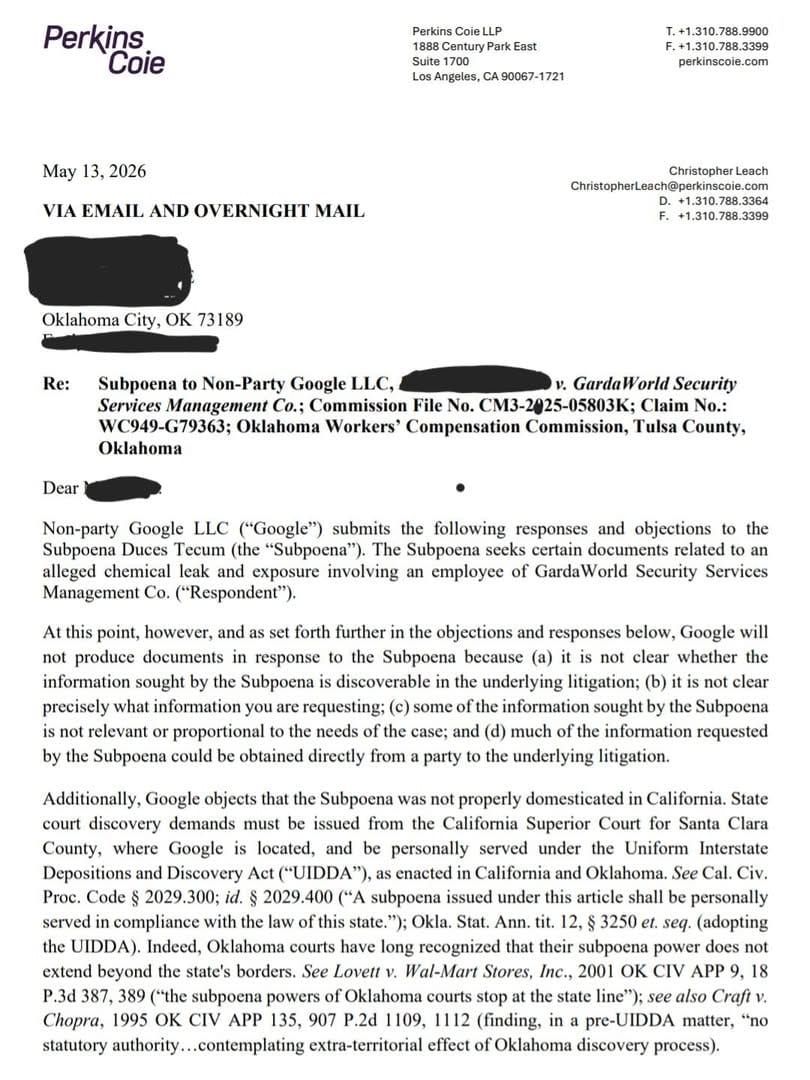
On May 13, 2026, attorneys at Perkins Coie LLP — one of the most powerful law firms in the United States, based in Century Park East in Los Angeles — sent a ten-page letter to an attorney in Oklahoma City.
The letter was Google's formal response to a subpoena.
Somewhere in the Oklahoma Workers' Compensation Commission system, a case had been filed. Commission File No. CM3-2025-05803K. A worker employed by GardaWorld Security Services Management Co. — one of the largest private security contractors in the world — had been exposed to a chemical leak at the Google Data Center located at 4581 Webb Street, Pryor, Oklahoma.
The date of the incident: July 16, 2025.
The worker filed for workers' compensation. Their attorney issued a subpoena to Google as a non-party, seeking eight categories of documents: the investigation reports, the video footage, the photographs, the witness statements, the internal safety findings, the air quality evaluations, the identification of the substance involved, and the Safety Data Sheets.
Google's answer to every single request:
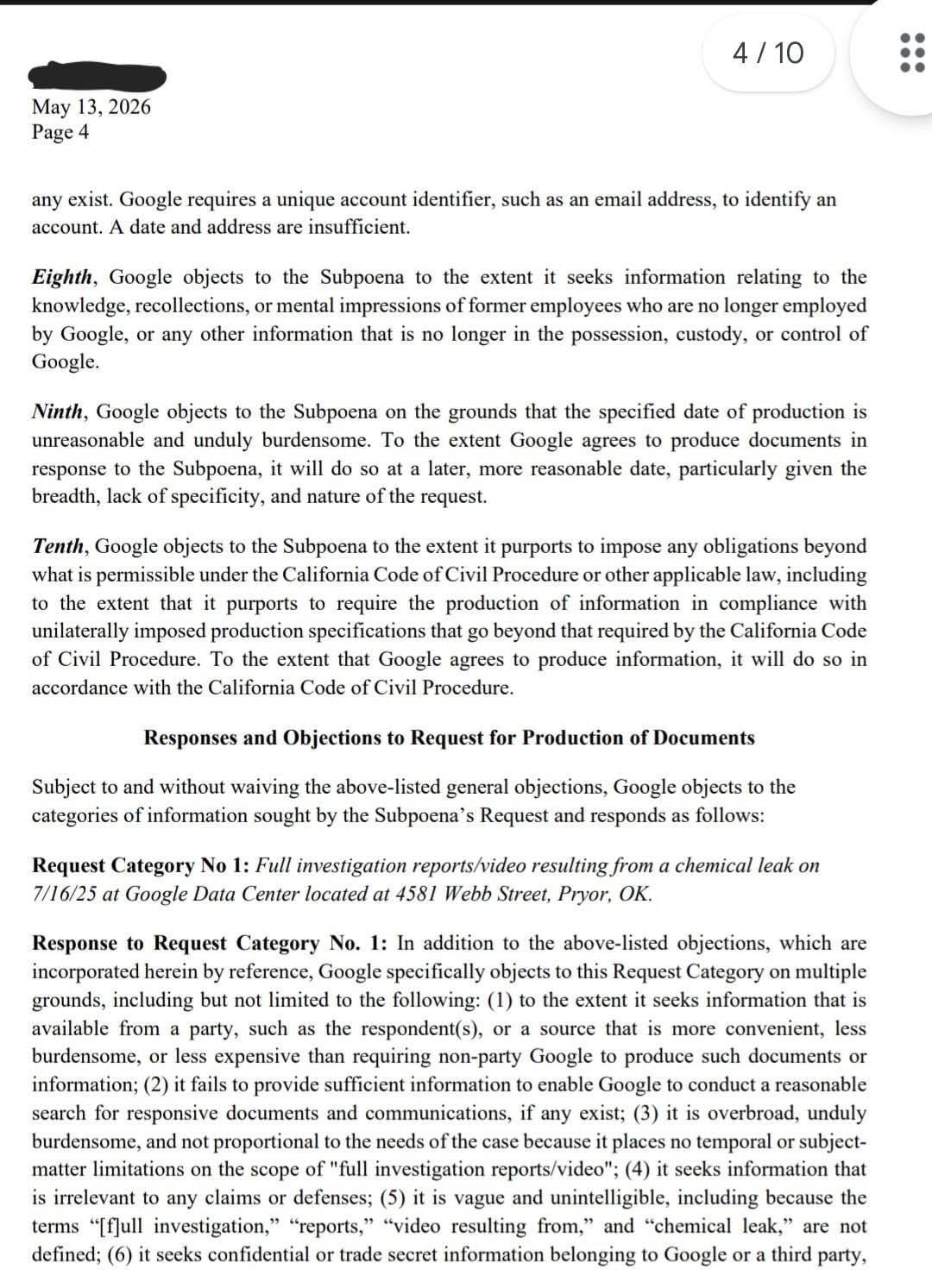
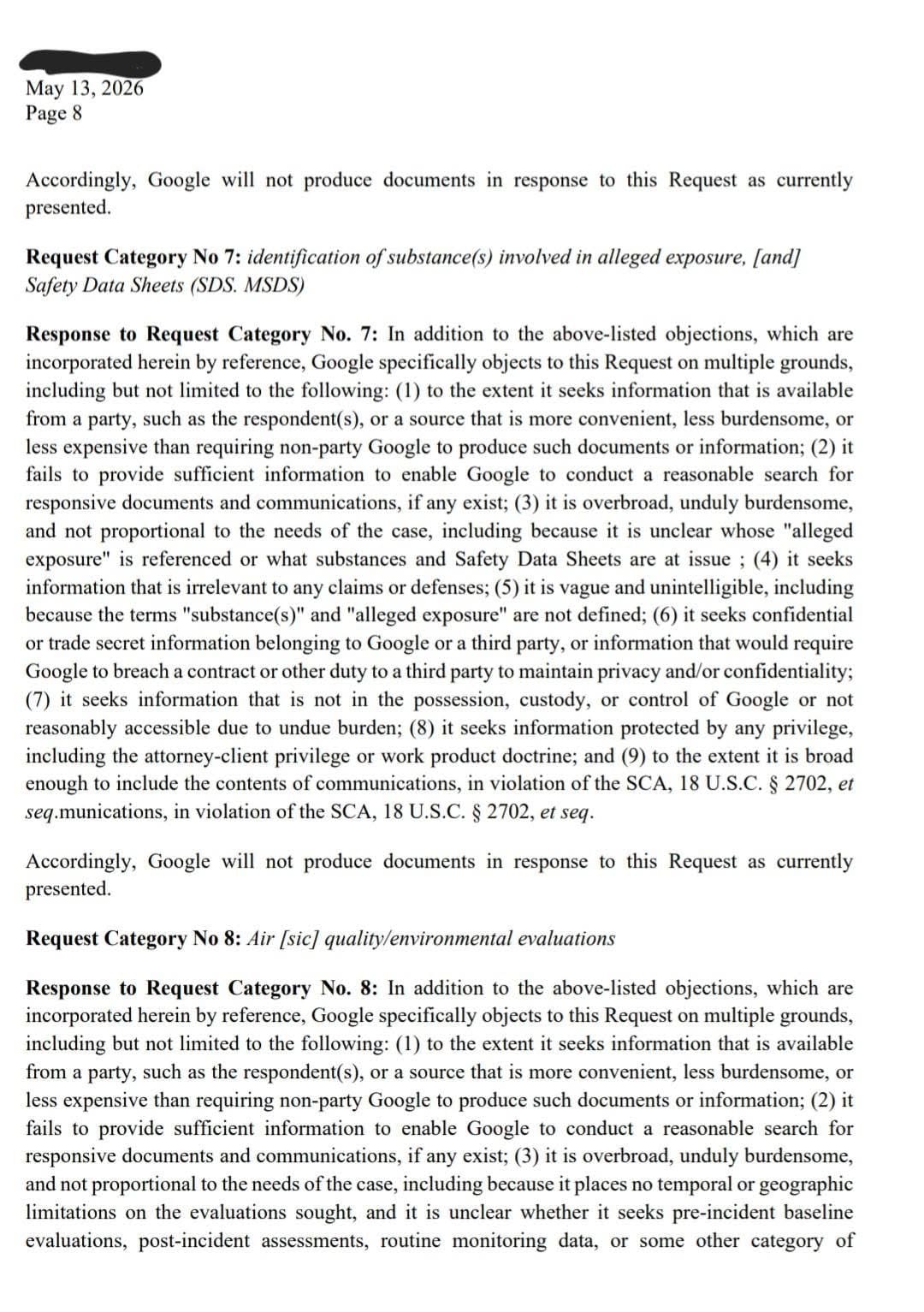
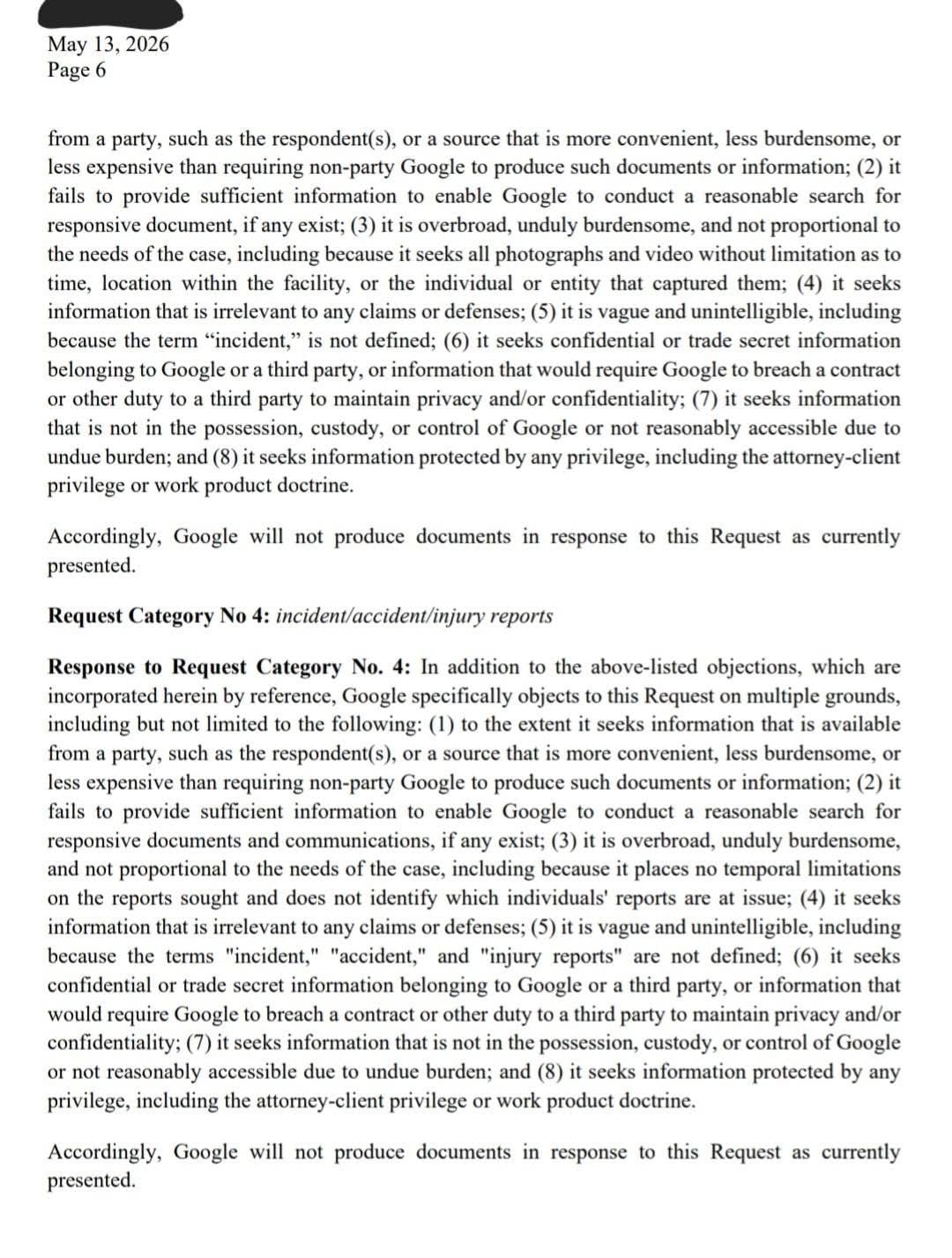
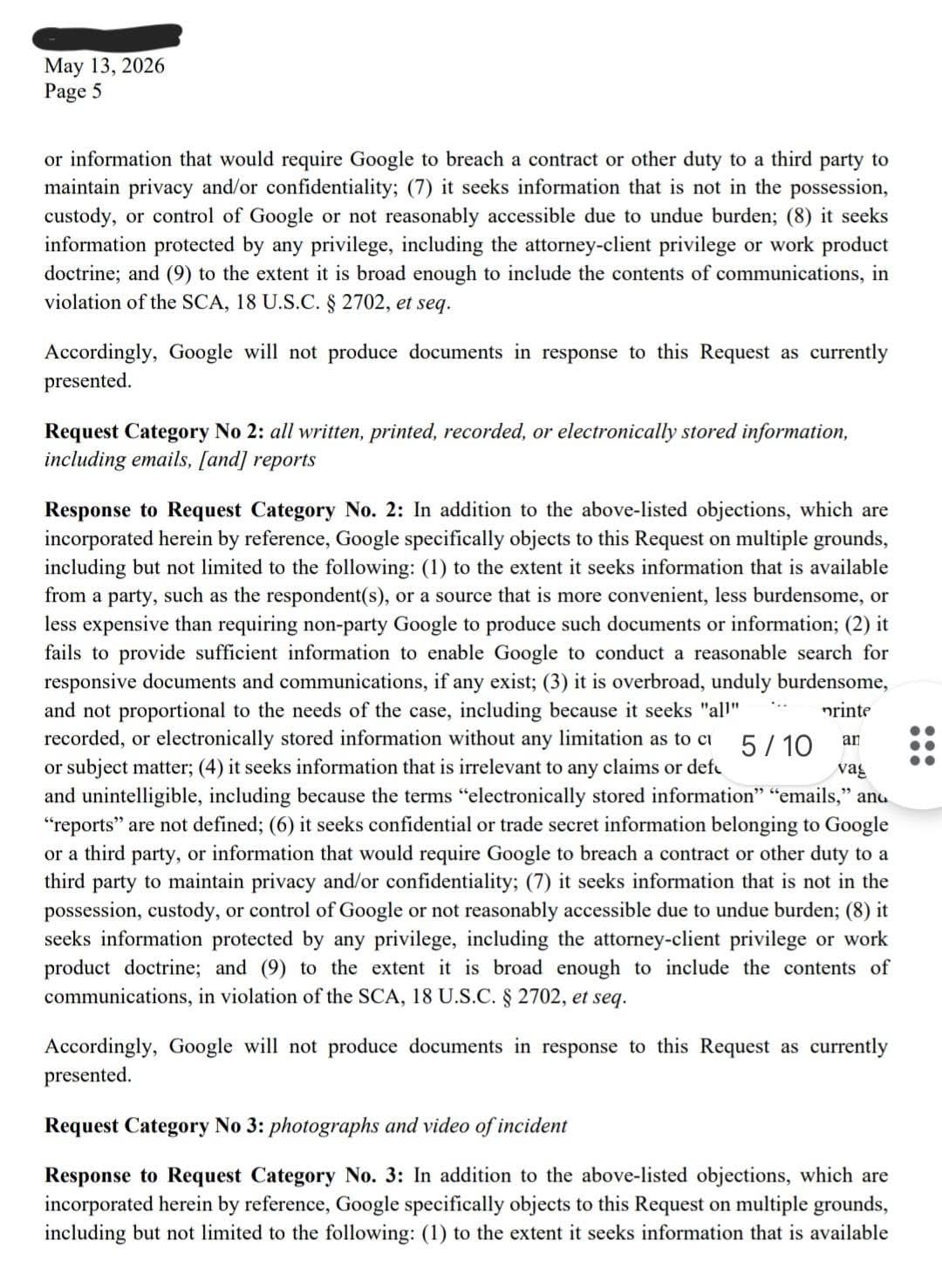
"Accordingly, Google will not produce documents in response to this Request as currently presented."
Eight requests. Eight refusals.
To deliver those refusals, Google retained Perkins Coie — the same firm that has represented Democratic presidential campaigns, major tech corporations, and some of the most powerful entities in American law.
A security guard got exposed to a chemical leak at a Google data center in rural Oklahoma. Google hired one of the most expensive law firms in America to make sure you never find out what they were exposed to.
That is where this story begins.
The Facility
The Google Data Center at 4581 Webb Street sits inside MidAmerica Industrial Park in Pryor, Oklahoma — the largest industrial park in the state, the third-largest in the United States, and the eighth-largest in the world. The park covers 9,000 acres and is located 47 miles east of Tulsa, in Mayes County.
Google announced it would build a data center there in 2007. The first facility opened in 2011. Since then, the campus has expanded continuously:
- 2012: Google announced a second building
- 2013: Google purchased a disused Gatorade factory and added it to the campus
- 2019: Google announced a $600 million expansion, bringing total Oklahoma investment to over $3 billion
- 2022: Google announced an additional $75 million investment
- August 2025 — one month after the chemical leak — Google announced a $9 billion investment in Oklahoma, expanding the Pryor campus and building new facilities in Stillwater and elsewhere
The Pryor facility is not a small server farm. It is one of Google's largest data centers in the world. It has been operating for fifteen years. It is the anchor of Google's Oklahoma presence — and the template for the wave of data center development now sweeping across Green Country.
And on July 16, 2025, something leaked there.
The Eight Things Google Won't Tell You
The subpoena sought documents across eight specific categories. Google's attorneys at Perkins Coie objected to all eight, citing overlapping grounds: the requests were overbroad, vague, and unduly burdensome; the information was protected by attorney-client privilege and the work product doctrine; the Federal Stored Communications Act barred disclosure; and the subpoena had not been properly domesticated in California, where Google is headquartered.
But the specific objections to each individual request reveal something more than legal boilerplate. They reveal the shape of what Google is protecting.
Request 1: Full investigation reports and video from the chemical leak on 7/16/25.
Google refused. Among its objections: the request seeks information that is "irrelevant to any claims or defenses" and is "vague and unintelligible, including because the terms 'full investigation,' 'reports,' 'video resulting from,' and 'chemical leak' are not defined."
A security guard was chemically exposed at a Google facility. Google's lawyers argued that the term "chemical leak" is too vague to respond to.
Request 2: All written, printed, recorded, or electronically stored information, including emails and reports.
Google refused. The request, Google argued, was "overbroad, vague, and unduly burdensome" because it sought all written information "without any limitation as to content, time, or subject matter."
Request 3: Photographs and video of the incident.
Google refused. The request was overbroad because it sought all photographs and video "without limitation as to time, location within the facility, or the individual or entity that captured them."
Request 4: Incident, accident, and injury reports.
Google refused. The request places "no temporal limitations on the reports sought and does not identify which individuals' reports are at issue."
Request 5: Witness statements.
Google refused. The request places "no limitation on the identity of the witnesses, the subject matter of the statements, or the time period during which the statements were taken."
Request 6: Internal investigation reports and safety investigation findings.
Google refused. The request places "no limitation on the scope, author, or time period of the reports or findings sought."
Request 7: Identification of substances involved in the alleged exposure, and Safety Data Sheets.
Google refused. Among its objections: "it is unclear whose 'alleged exposure' is referenced or what substances and Safety Data Sheets are at issue."
A worker was allegedly exposed to a substance at a Google facility. Google's lawyers argued it is unclear whose alleged exposure is referenced.
Request 8: Air quality and environmental evaluations.
Google refused. The request was overbroad because "it is unclear whether it seeks pre-incident baseline evaluations, post-incident assessments, routine monitoring data, or some other category."
Read together, these eight refusals constitute a comprehensive wall of silence around what happened at 4581 Webb Street on July 16, 2025. Google will not identify the substance. Google will not produce the video. Google will not provide witness statements. Google will not share the air quality data. Google will not disclose what its internal investigation found.
What Data Centers Actually Contain
Oklahoma communities being recruited to host data centers are told about jobs, tax revenue, and economic development. They are not told what chemicals these facilities store, handle, and — when something goes wrong — release.
The chemical hazard profile of a modern hyperscale data center is substantial and largely unknown to the communities surrounding them.
Refrigerants and cooling agents. Data centers generate enormous heat from their servers and require powerful cooling systems to prevent equipment failure. Because of their low boiling point and fire-resistant qualities, PFAS — per- and polyfluoroalkyl substances — are used as refrigerants and cooling agents within chillers and air conditioning systems, which are an important aspect of most data center designs. These are the so-called "forever chemicals" — synthetic compounds that do not break down in the environment and have been linked to serious health effects including cancer, reproductive harm, and immune system disruption.
The EPA determined in 2024 that there is no safe level of exposure to PFAS chemicals given how toxic they can be to humans and the environment. Some PFAS chemicals are classified as carcinogenic by the World Health Organization.
The EPA's Emissions Reduction and Reclamation Rule mandates leak prevention, repair, and in some cases the replacement of HFC-based cooling systems. Existing data centers that rely on HFCs may be required to install automatic leak detection equipment, meet detailed recordkeeping requirements, promptly repair leaks that exceed specified thresholds, and even retrofit or retire systems that cannot be repaired within certain timeframes.
The Google Pryor facility has been operating since 2011. Its cooling systems — whatever refrigerants and chemicals they use — have been in place and expanding for fifteen years.
Fire suppression chemicals. For areas housing critical IT infrastructure, gaseous clean agent systems have become the standard solution. These systems use specialized chemical-based and gaseous agents that extinguish fires without leaving residue or causing damage to electronic equipment. Common agents include HFC-227ea (FM-200), FK-5-1-12 (Novec 1230), and inert gas mixtures.
FM-200 is a hydrofluorocarbon. Novec 1230 is a fluorinated ketone. Both are effective fire suppressants. Both, when they leak or discharge accidentally, can displace oxygen in enclosed spaces and — at sufficient concentrations — cause asphyxiation, cardiac sensitization, or chemical burns.
Battery chemicals. Data centers rely on massive uninterruptible power supply systems backed by banks of batteries. Lead-acid and lithium battery chemicals, refrigerants, and some cleaning supplies are among data center hazards that require immediate treatment if on-site personnel come in contact with them.
The worker who filed the workers' compensation claim was a GardaWorld security guard — not a trained engineer or data center technician. Security guards patrol the perimeter and interior of these facilities. They are the first line of human presence when something goes wrong at 2 AM on a Tuesday.
They are often the last to be told what they were exposed to.
The Communities They Don't Tell
Here is what the cities and counties of Green Country are not being told when they receive a call about a potential data center:
They are not told what chemicals will be stored on site. They are not told what the facility's fire suppression system uses. They are not told what the cooling systems contain. They are not told what happens when those systems fail or leak. They are not told what their emergency responders should do when they get a call from a facility they've never been briefed on.
One point of great contention across Oklahoma communities is the fact that many city councils and counties sign non-disclosure agreements with data center developers long before the public learns anything at all, and before the backroom deals begin to take shape.
Those NDAs — signed before any public notice, before any community input, before any environmental assessment — prevent city officials from disclosing not just the developer's identity, but the nature of what is being built.
In Bixby, the city manager held a meeting labeled "Annexation/Re-Zone — Confidential" about a potential data center near Kimberly Clark. That meeting happened in September 2025. The community learned about it only when the emails were leaked in May 2026. No one has yet disclosed who the developer is. No one has disclosed what chemicals that facility would store.
In Sand Springs, the city manager kicked off 2026 with news he promised would bring jobs, money and prosperity — Google was interested in building its newest AI data center on 827 acres of farmland just outside town. Residents packed city council chambers and filed lawsuits. What they have not been told — what no one in the public process has addressed — is what chemicals a Google data center on 827 acres of Osage County farmland would contain, what would happen if those chemicals leaked, and what the groundwater impact would be.
In Catoosa, August Wakat raised environmental concerns years before any of this became a public debate. His formal protest petition alleged that the land beneath the MPD-6 development corridor was undermined by abandoned coal shafts, with groundwater showing dark-blue acidic runoff containing sulfur, lead, arsenic, and mercury. He asked for a Phase I/II Environmental Site Assessment before any zoning approval. He was dismissed.
Six weeks after he surrendered his claims, Meta broke ground.
Nobody has yet conducted a public environmental assessment of what happens when a billion-dollar AI data center is built on land with a coal mine legacy and heavy metal groundwater contamination.
The Pattern of Concealment
The Perkins Coie letter is not an isolated document. It is the legal expression of a pattern that runs through every data center story in Green Country:
When something goes wrong, the information is sealed.
When a community asks what is being built, they are told to wait for the public hearing — by which point the annexation is complete, the NDA is signed, and the zoning application is filed.
When a worker is chemically exposed, the investigation is internal, the video is proprietary, the witness statements are privileged, and the air quality data is confidential.
Most people realize they are polluting the environment when they drive around with a gasoline-powered car. They don't realize that when they use AI on their computers and phones, they are doing the same thing.
The communities of Green Country are being asked to host the physical infrastructure of the AI revolution — billions of dollars of servers, cooling systems, fire suppression chemicals, and battery banks — without being told what that infrastructure contains, what it does to their water, what it does to their air, and what it does to the workers inside.
One of those workers was a GardaWorld security guard at the Google Pryor facility on July 16, 2025.
That worker is now going through the Oklahoma Workers' Compensation system, trying to get their medical bills paid, trying to find out what they were exposed to.
Google has hired Perkins Coie to make sure they don't find out through the subpoena process.
What Oklahoma Law Requires — And What Isn't Happening
Oklahoma has laws that should, in theory, protect communities from exactly this kind of information suppression.
OSHA reporting requirements. Certain chemical releases at workplaces require mandatory reporting to OSHA. If the substance that leaked at the Google Pryor facility on July 16, 2025 met the threshold for a reportable release, Google was required by federal law to file an incident report. Whether that report was filed — and what it says — is a matter of public record accessible through OSHA's establishment search database.
EPA Toxic Release Inventory. Facilities that release certain quantities of listed chemicals are required to report those releases to the EPA's Toxic Release Inventory. Whether the Pryor incident triggered TRI reporting is a factual question that OSHA and EPA records would answer.
Oklahoma Department of Environmental Quality. ODEQ has jurisdiction over air quality and environmental releases in Oklahoma. Whether a report was filed with ODEQ for the July 16, 2025 incident is a public records question.
Workers' Compensation Commission records. Oklahoma Workers' Compensation Commission Case No. CM3-2025-05803K is a public record. The underlying claim documents — including any medical records attached to the claim, the description of the alleged exposure, and the hearing transcripts — may be accessible through the Commission.
Oklahoma Open Records Act. Any communications between the City of Pryor, Mayes County, or MidAmerica Industrial Park authorities and Google or GardaWorld regarding the July 16, 2025 incident are potentially subject to open records requests.
None of these records appear to have been obtained or published before this investigation.
The Worker Nobody Is Talking About
In all the debate about data centers in Green Country — the moratoriums, the recalls, the lawsuits, the annexation fights, the confidential city manager meetings — there is almost no conversation about the people who work inside these facilities.
Not the engineers. Not the corporate employees. The contracted workers. The security guards who patrol at night. The maintenance technicians who clean the floors. The HVAC workers who service the cooling systems.
GardaWorld Security Services Management Co. is a Canadian corporation with 122,000 employees worldwide. Its U.S. operations span virtually every major corporate facility in the country. Its security guards are paid hourly wages to stand watch over some of the most valuable infrastructure on earth.
When a chemical leaks at one of those facilities, the GardaWorld guard is likely the first human being to encounter it. They are not trained in chemical hazard response. They may not know what the substance is. They may not know what to do.
The GardaWorld guard who was exposed at the Google Pryor facility on July 16, 2025 filed a workers' compensation claim against their employer — GardaWorld — not against Google. That is the structure of contractor relationships: the staffing company carries the workers' compensation liability; the facility operator maintains plausible distance.
Google's response to being subpoenaed in that workers' compensation case was to hire Perkins Coie and refuse every document request.
The guard is trying to get their medical bills paid.
Google is trying to prevent disclosure of what they were exposed to.
What Green Country Deserves to Know Before They Sign
Oklahoma communities from Bixby to Coweta to Owasso to Sand Springs are currently at various stages of deciding whether to annex land, rezone it, and extend utility infrastructure for data center development.
Those decisions are being made — by design — before communities have access to the following information:
What chemicals will be stored on site? Fire suppression agents, refrigerants, battery chemicals, cleaning compounds — the full chemical inventory of a hyperscale data center is substantial and largely undisclosed to host communities.
What is the emergency response protocol? Local fire departments and first responders in Bixby, Coweta, and Sand Springs have not been briefed on the chemical hazard profile of the facilities being proposed for their communities. They will be the ones who respond when something goes wrong.
What happened at Pryor on July 16, 2025? If Google's existing Oklahoma data center had a chemical leak serious enough to send a contracted security guard to a workers' compensation claim — and serious enough for Google to hire Perkins Coie to suppress disclosure — that incident is directly relevant to every community currently evaluating a data center proposal.
What are the groundwater risks? PFAS used as refrigerants and cooling agents can leach from facilities into groundwater and soil. Communities with existing groundwater concerns — including the Fair Oaks/Catoosa corridor where Wakat raised coal mine contamination concerns — deserve environmental assessments before ground is broken.
What does the NDA prevent city officials from disclosing? When Bixby's city manager labeled his annexation meeting "Confidential," what specifically was he prohibited from telling his community? Who drafted that NDA? What did it cover?
These are not hostile questions. They are the questions any community deserves answered before making a decision about what gets built on land that used to be farmland, salvage yards, and family property.
Epilogue: The Guard, the Lawyer, and the Playbook
Three stories. One pattern.
A GardaWorld security guard breathed something at a Google data center in Pryor, Oklahoma on July 16, 2025. They filed for workers' compensation. Google retained Perkins Coie and refused to disclose what the guard breathed, what the video shows, what the witnesses saw, what the air quality data found, or what Google's internal investigation concluded.
A city manager in Bixby held confidential meetings about annexing land for a data center near Kimberly Clark. He was arrested for his second aggravated DUI nine months later, on the same night confidential emails about those meetings became public. The city said: "No further information is available at this time."
A Marine veteran in Catoosa tried for years to stop a development corridor from consuming his land. His lawyer allegedly took $150,000 and left him bankrupt. The development corridor became a $1 billion Meta data center. No court ever told the veteran he was wrong about the facts.
The playbook is the same in each story:
Move fast. Label it confidential. Sign the NDA. File the objections. Retain the expensive lawyers. Wait for the community to exhaust itself.
"Our own City Council hid this project and their eventual plans for well over six months, failing in their role as representatives. Had they been transparent, engaged the community and sought our input from day one, perhaps this strife could have been avoided."
That was a Sand Springs resident, talking about a Google data center.
It could have been said by the GardaWorld guard who still doesn't know what they breathed.
It could have been said by the Bixby residents who still don't know who the developer is.
It could have been said by August Wakat, watching from Trinidad, Colorado, as Meta broke ground on the land he spent years trying to protect.
What Investigators, Journalists, and Public Officials Should Do Now
The following specific records are publicly accessible and should be obtained immediately:
- OSHA Establishment Search for Google LLC at 4581 Webb Street, Pryor, Oklahoma 74361 — any inspection records, citations, or incident reports filed in connection with the July 16, 2025 chemical exposure.
- EPA Toxic Release Inventory — whether Google's Pryor facility filed any TRI reports for the 2025 reporting year.
- Oklahoma Department of Environmental Quality — any air quality incident reports filed for the Mayes County/Pryor area in July 2025.
- Oklahoma Workers' Compensation Commission — Case No. CM3-2025-05803K — public hearing records, claim descriptions, and any publicly accessible filings.
- City of Bixby Open Records Request — all communications related to "Annexation/Re-Zone — Confidential" meetings, including the identity of the developer, the terms of any NDA, and any environmental assessments conducted.
- MidAmerica Industrial Park Authority — any public records related to the July 16, 2025 incident, emergency response calls, or environmental monitoring data.
- Mayes County Emergency Response Records — any 911 calls, fire department responses, or hazmat team activations at 4581 Webb Street on or around July 16, 2025.
- Google's EPA Tier II Chemical Inventory Reports — facilities that store certain quantities of hazardous chemicals above threshold quantities are required to file annual Tier II reports with state and local emergency planning committees. Google's Tier II reports for the Pryor facility are public records and would disclose the categories of chemicals stored there.
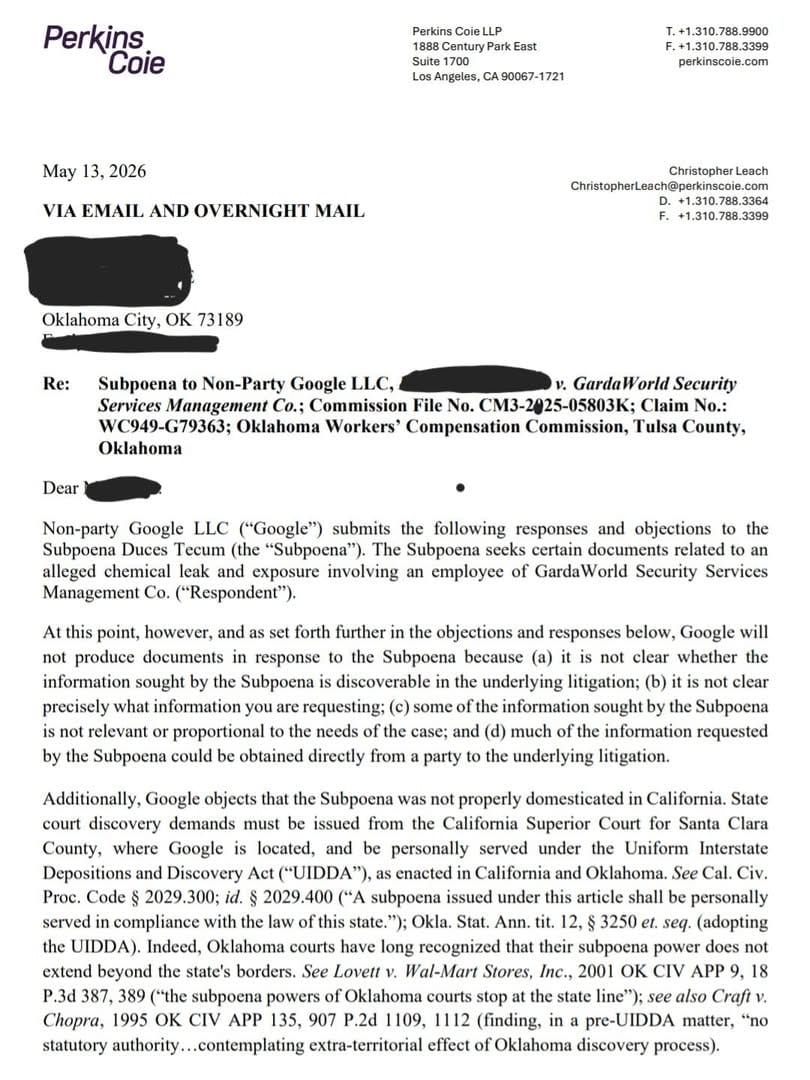
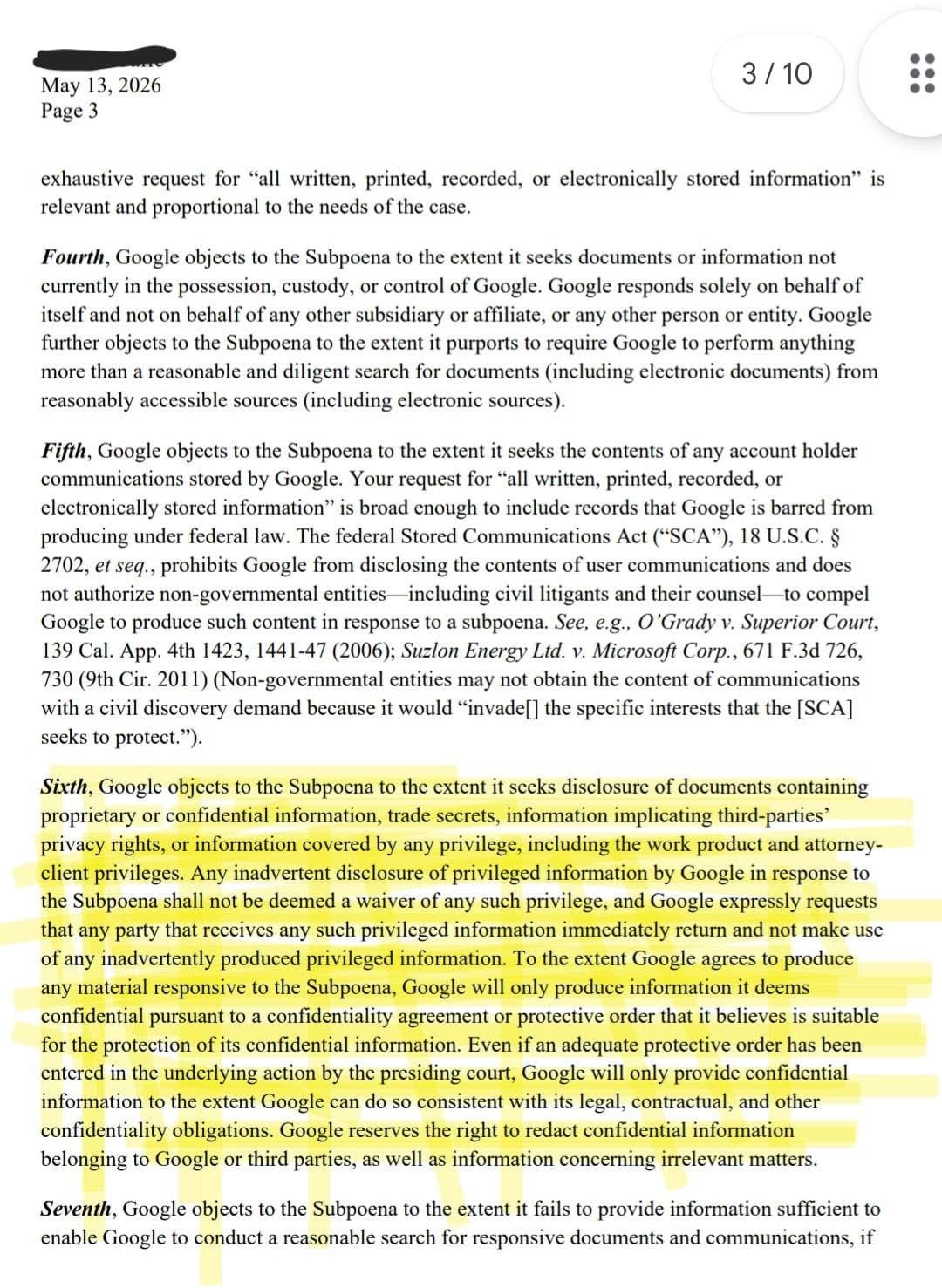
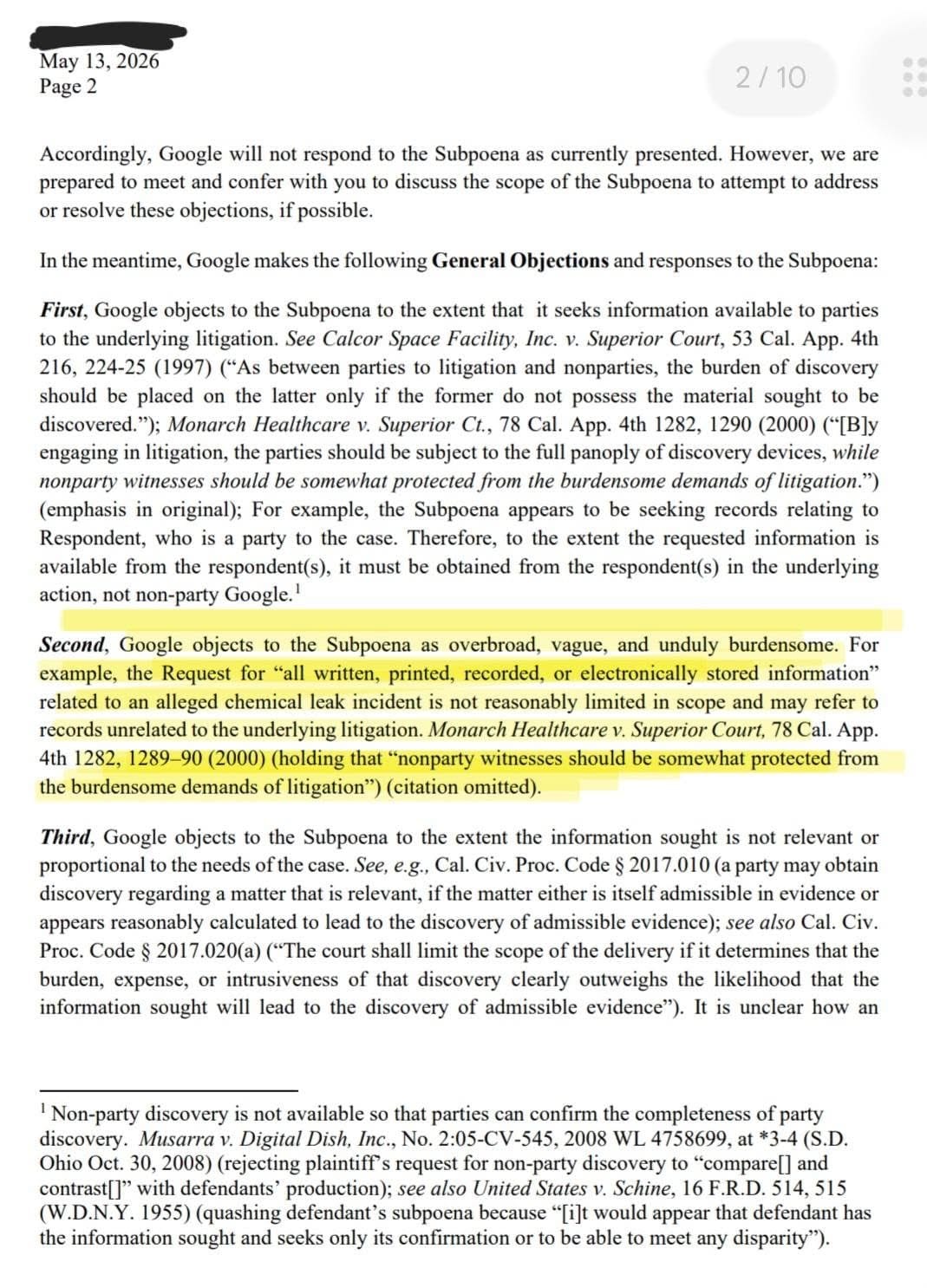
This report is based on the Perkins Coie LLP response letter on behalf of Google LLC dated May 13, 2026, Oklahoma Workers' Compensation Commission File No. CM3-2025-05803K; published reporting from Data Center Dynamics, Data Center Knowledge, KJRH, NewsOn6, the Tulsa World, the Tulsa Flyer, NBC News, Facilities Dive, the Sierra Club, the Bay Journal, the PFAS Observer, Pillsbury's Gravel2Gavel blog, and Schneider Electric's data center blog; Wikipedia entries for MidAmerica Industrial Park and GardaWorld; and the EastOklahoma.com investigation "The Secret Annexation Playbook." Google LLC, GardaWorld Security Services Management Co., and Perkins Coie LLP were not contacted for comment prior to publication of this draft. Final publication should include requests for comment from all named parties, as well as records requests to OSHA, the EPA, ODEQ, and the Oklahoma Workers' Compensation Commission.